John and Steve's Excellent Adventure
Touring the undergraduate teaching labs of Northeastern,
Boston University, and MIT
(Click on any image to open a larger size in a new window)
Thursday, December 15, 2005
|
Northeastern University
|
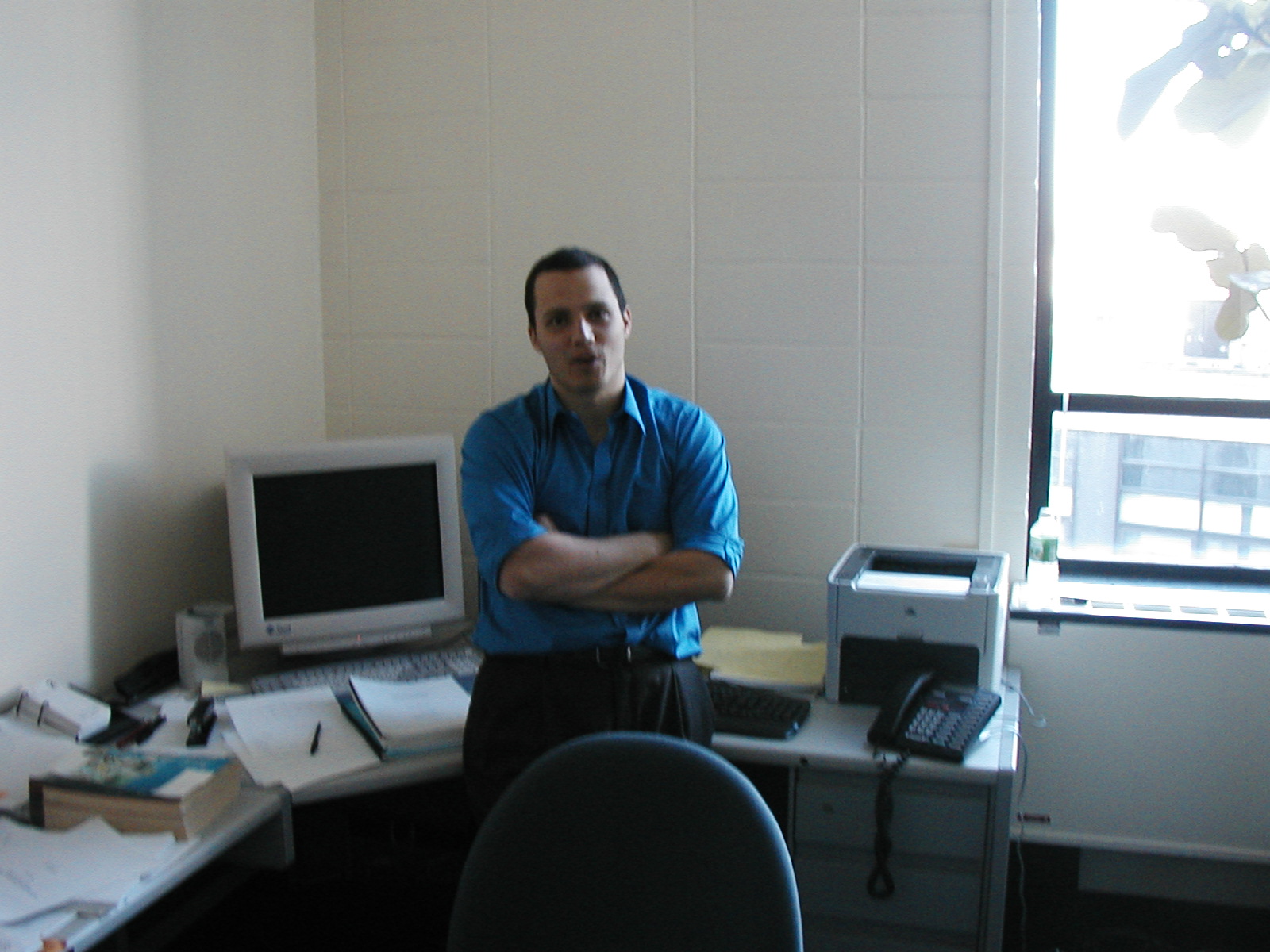
| Our host at Northeastern, Demetrios Papageorgiou |
 |
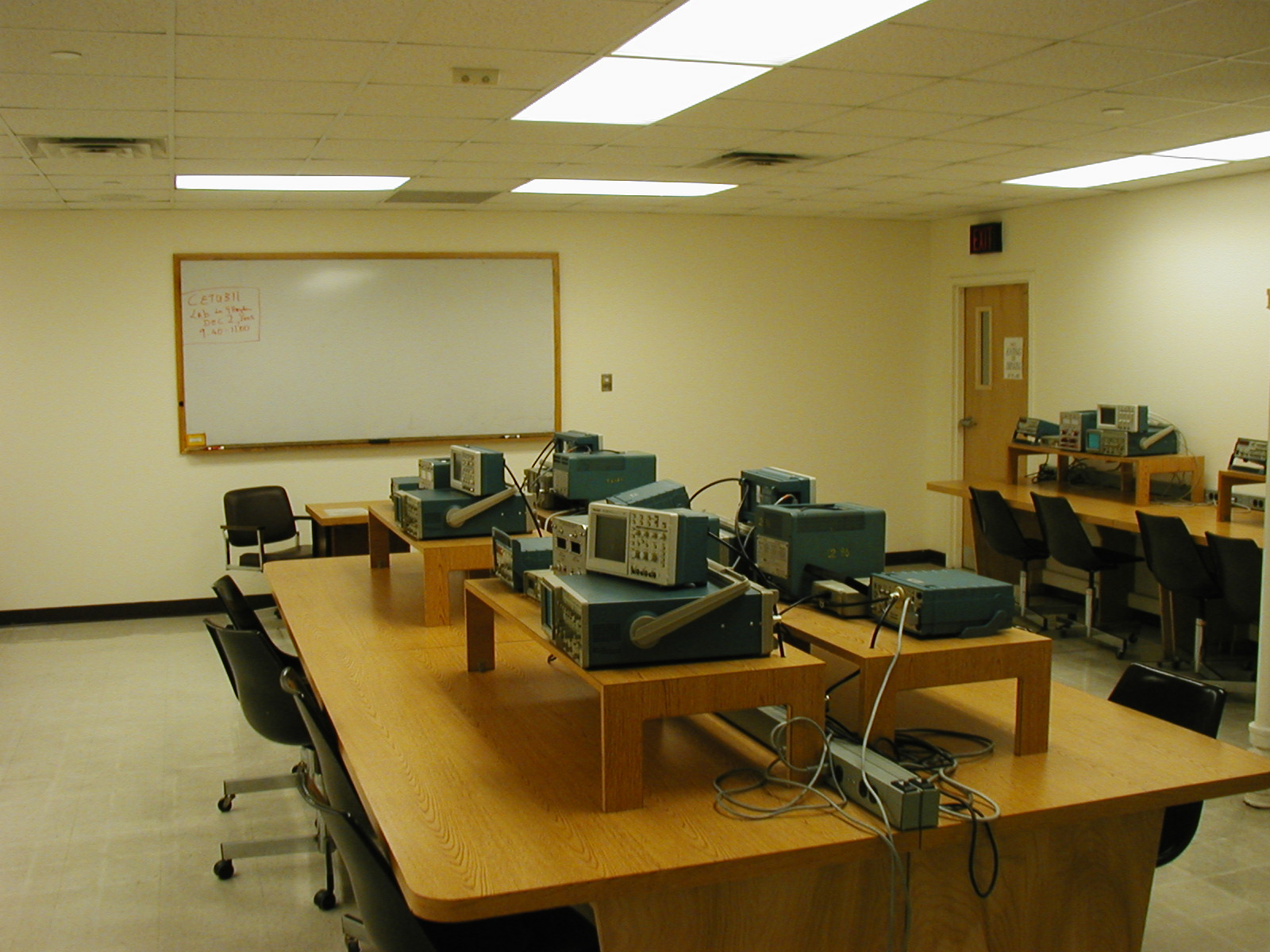
Appearance of Basic Electronics "a" and "b" labs.
Rather than one big lab with 14 stations, they have 2 small labs, 7
stations each, with door between so TAs can circulate if necessary.
Very pleasant
learning environment, low noise level.
|
 |
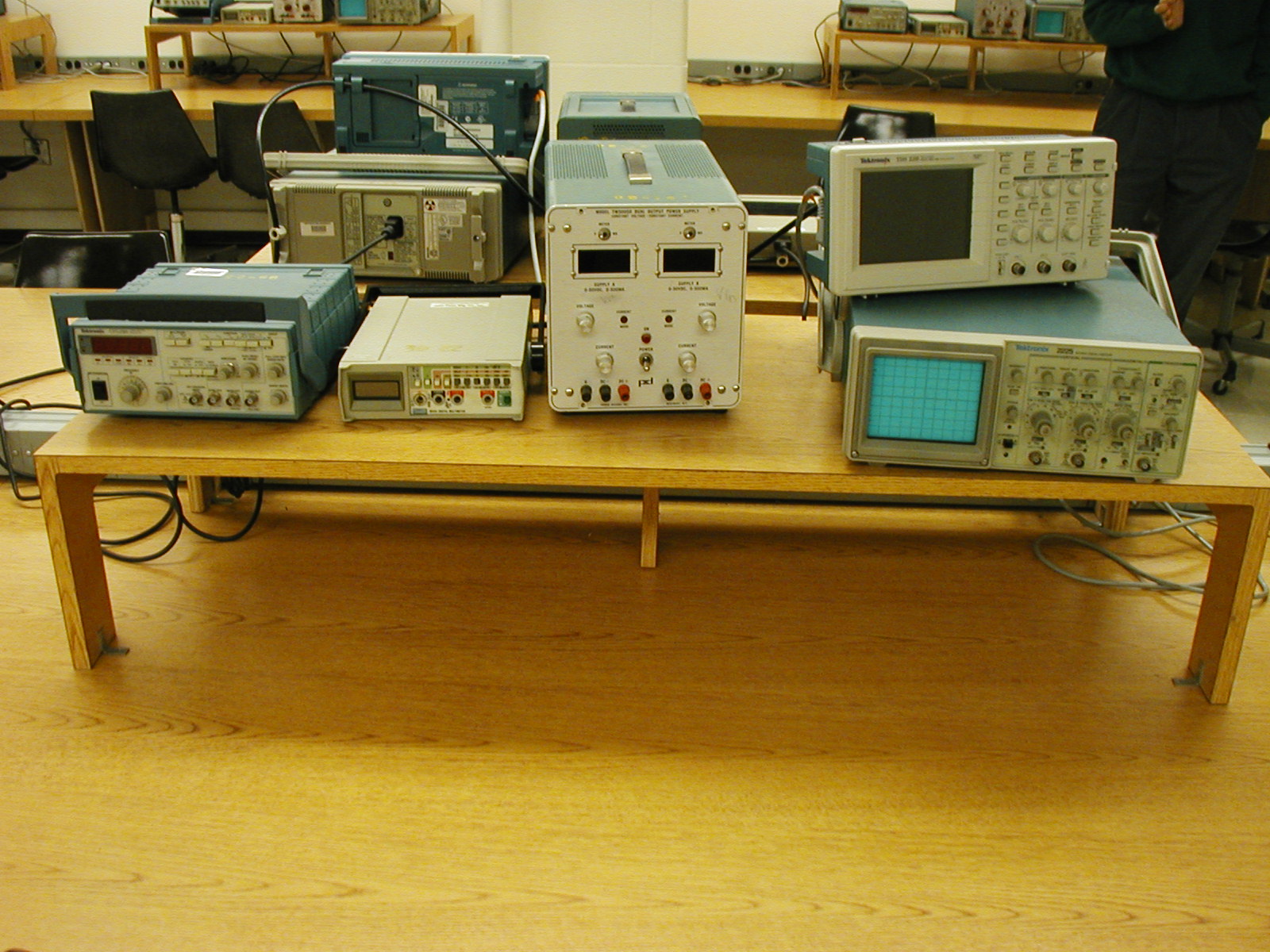
Bench setup in basic lab. Note both analog and
digital oscilloscopes! Warms my analog heart.
|
 |
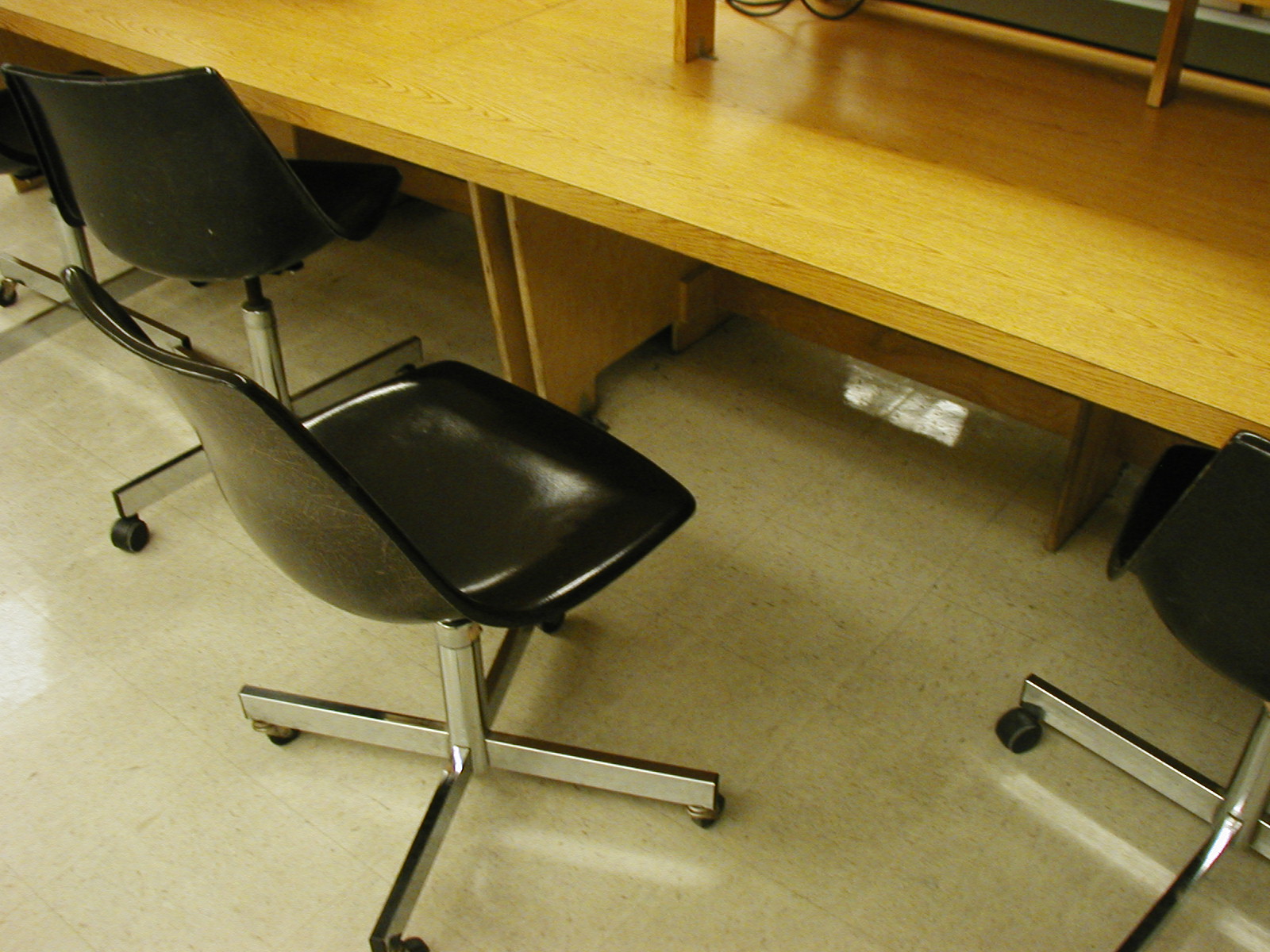
Furniture in basic lab. Hard plastic (not padded or
upholstered), on casters, rolled pretty smoothly.
|
 |
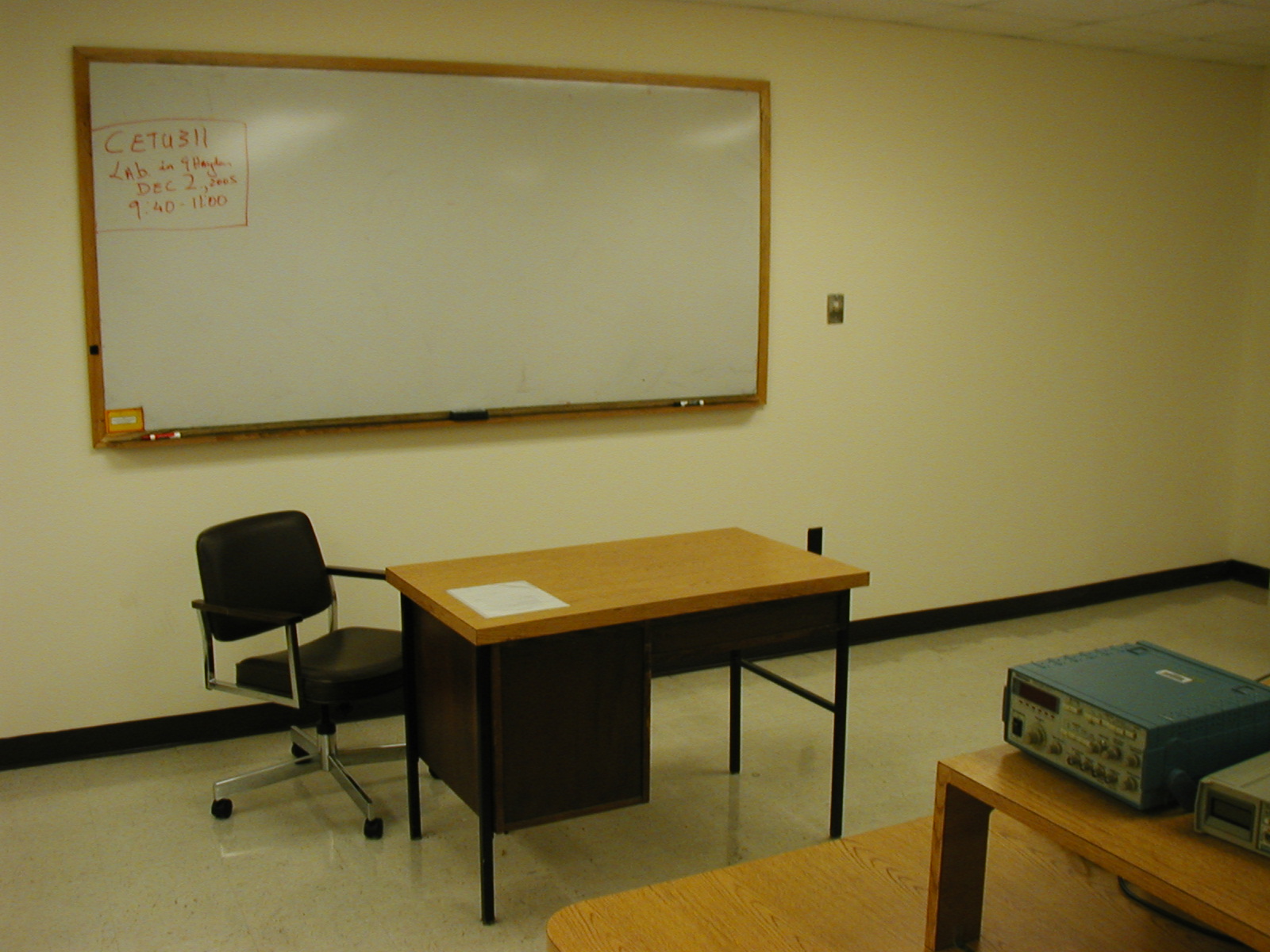
Whiteboard positioned so everyone could see easily
|
 |
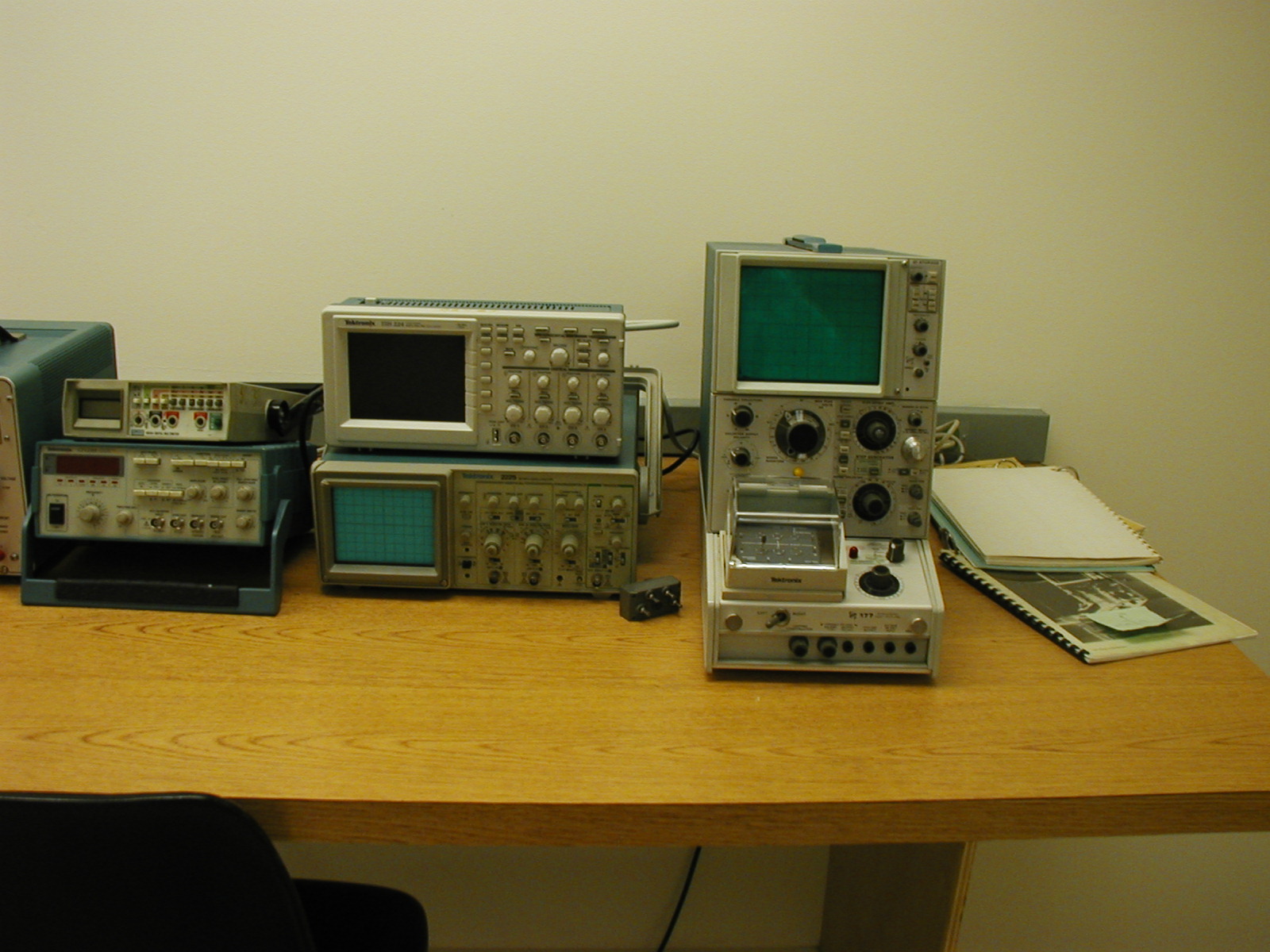
One bench had duplicate of basic setup plus curve tracer.
|
 |
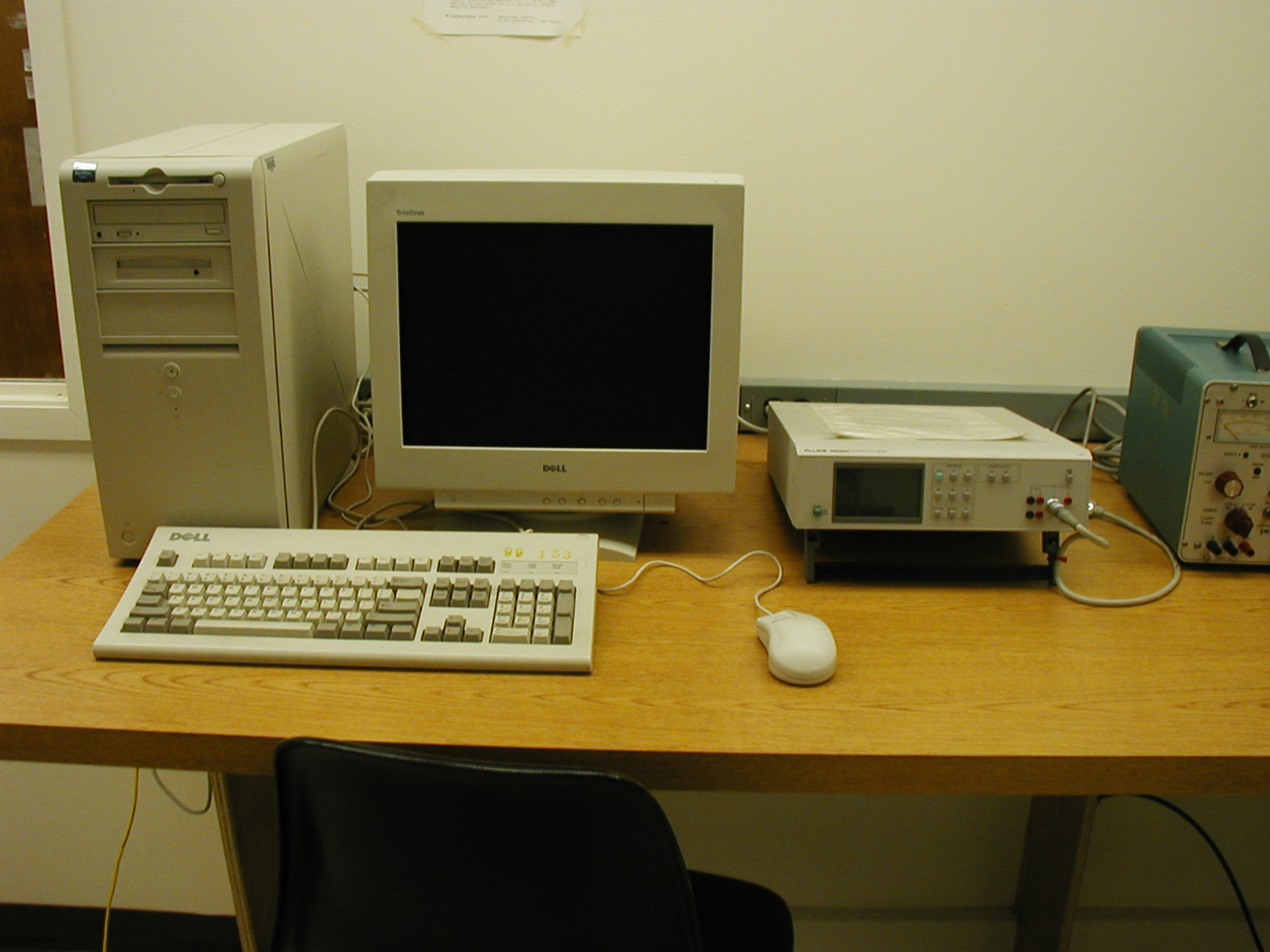
Instructor's bench also had some specialized equipment
connected to a PC.
|
 |
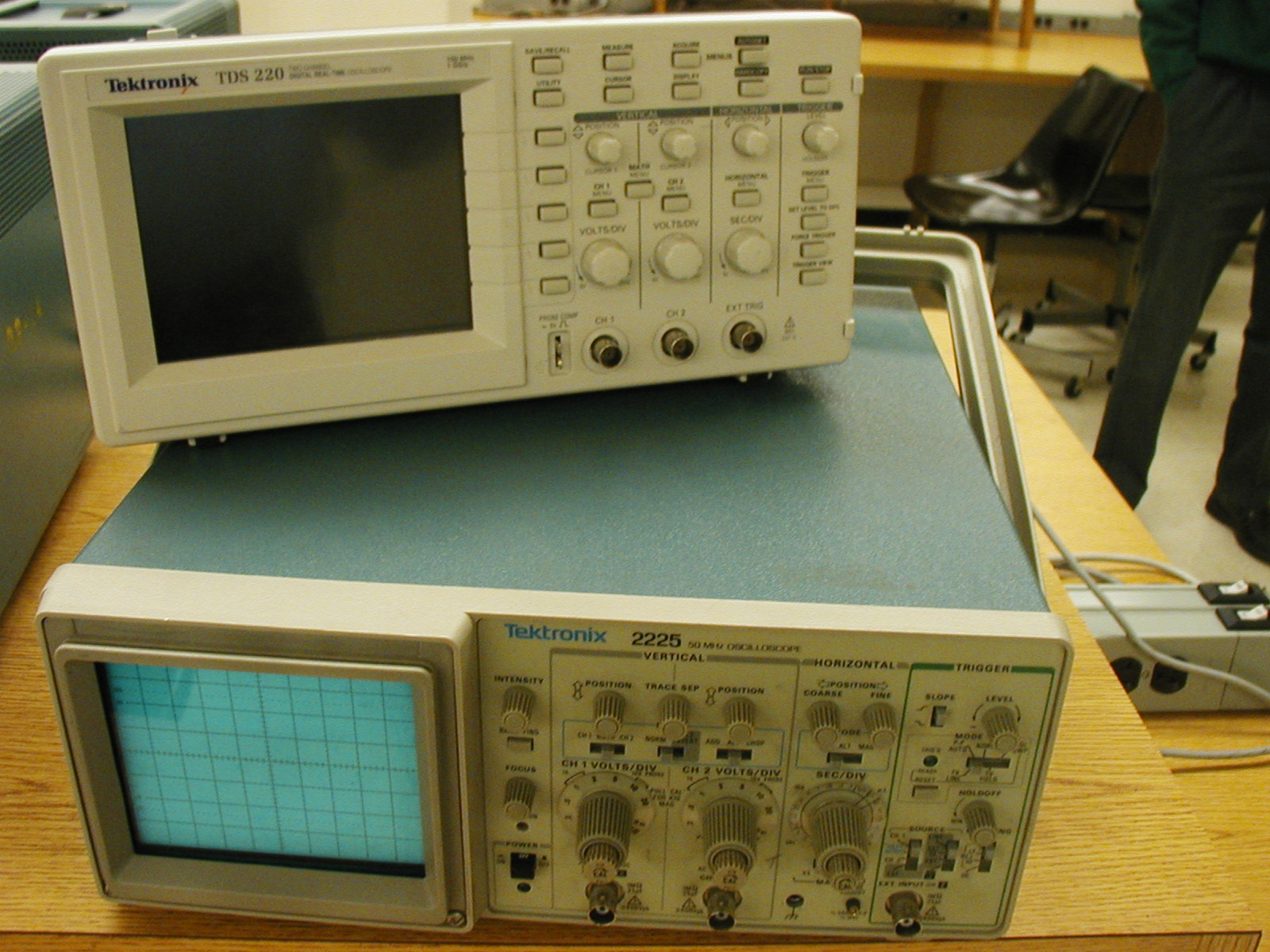
Closeup of TDS220 (digital), 2225 (analog) scopes at basic
bench.
|
 |
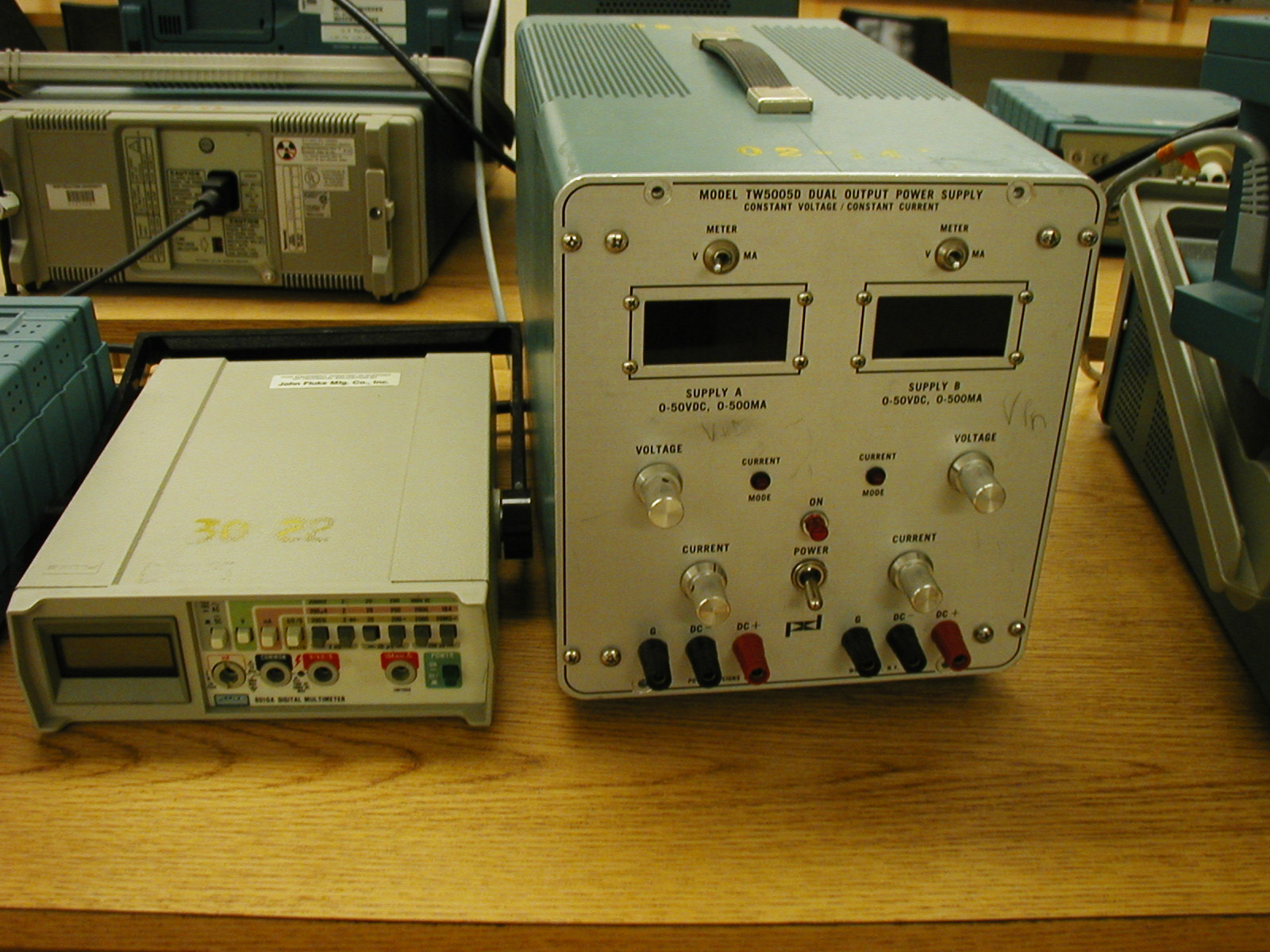
DVM and (old!) power supply at bench in basic lab
|
 |
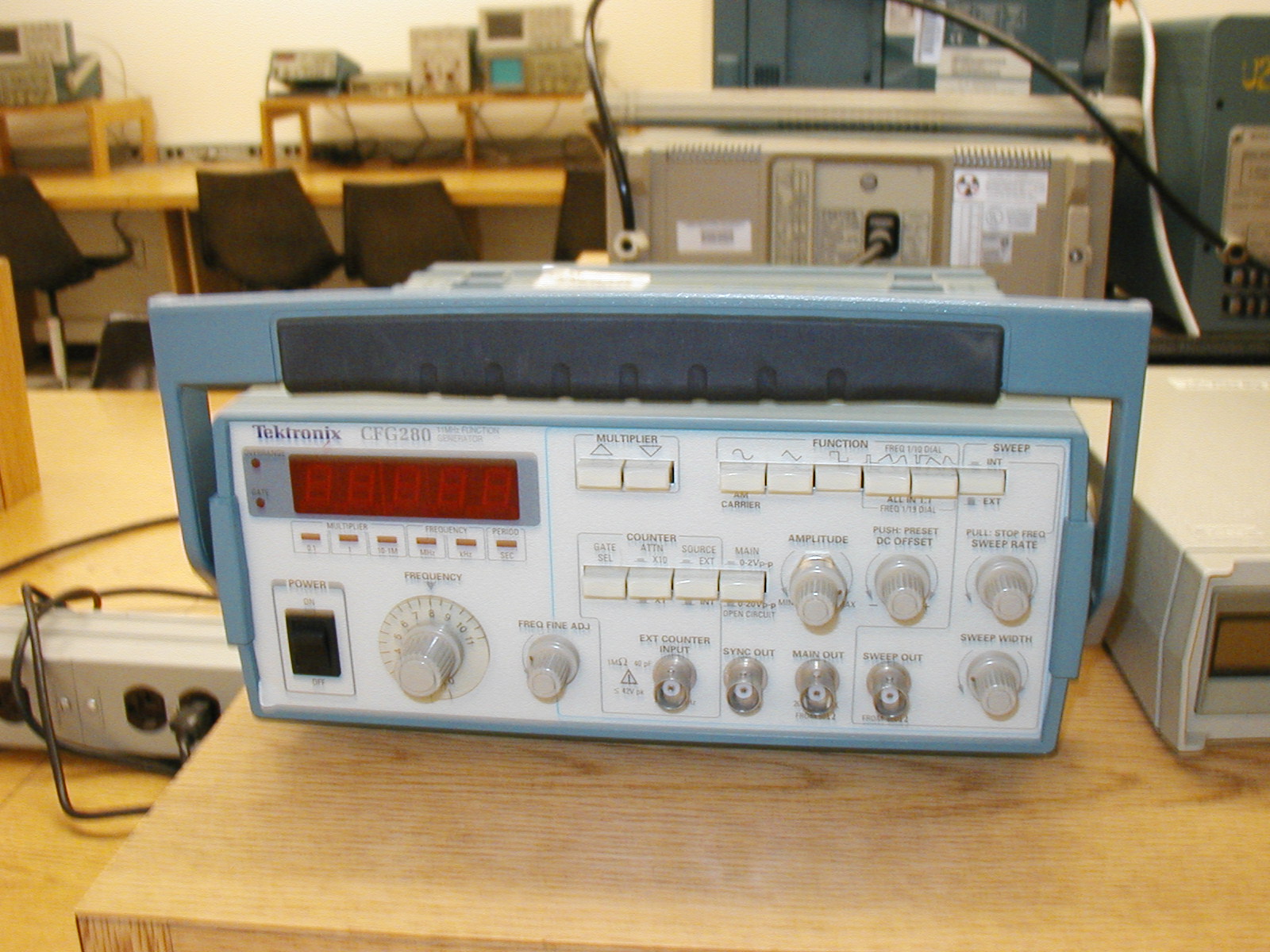
Tek CFG280 function generator at bench in basic lab.
|
 |
| Shop |
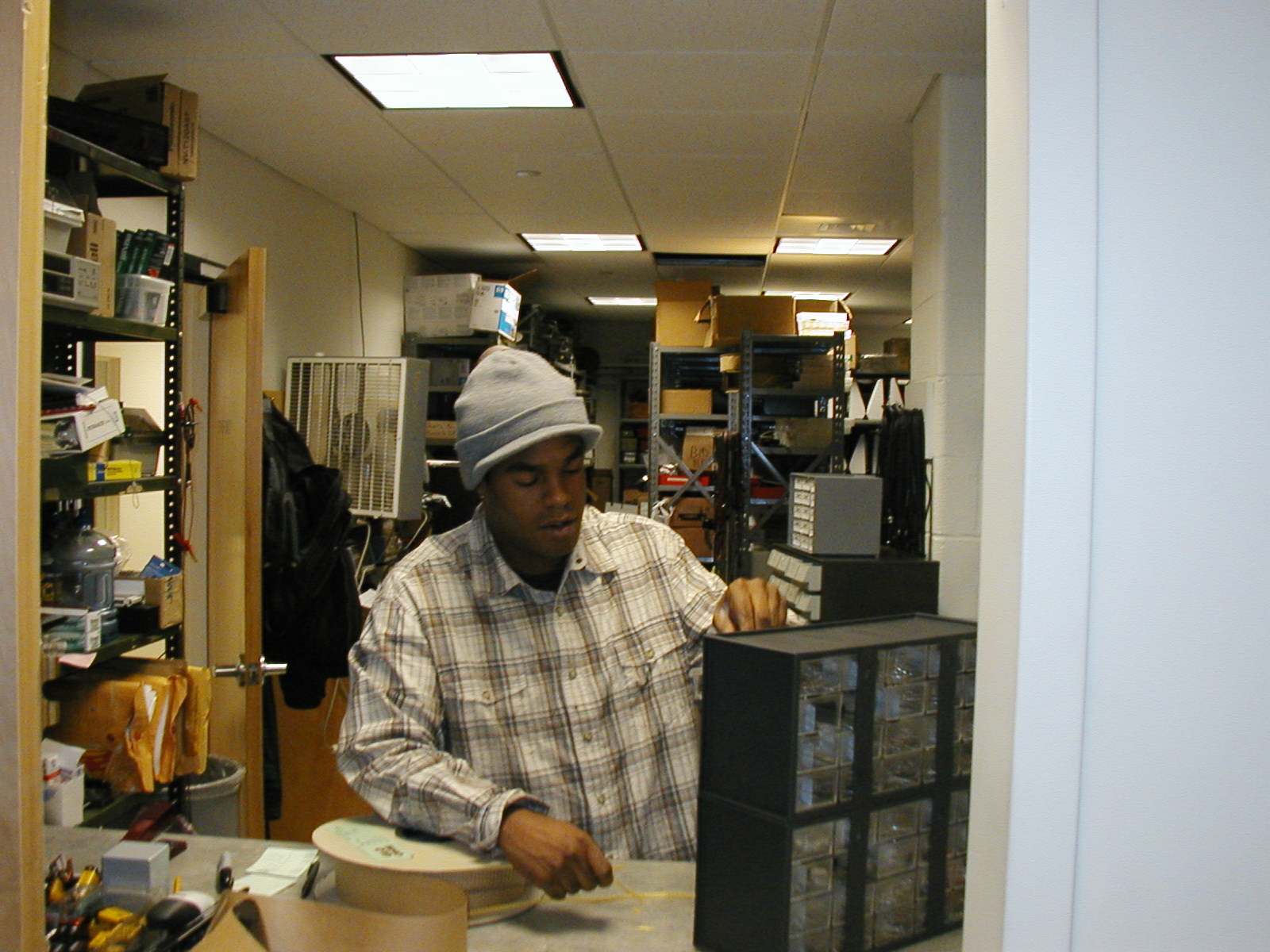 |
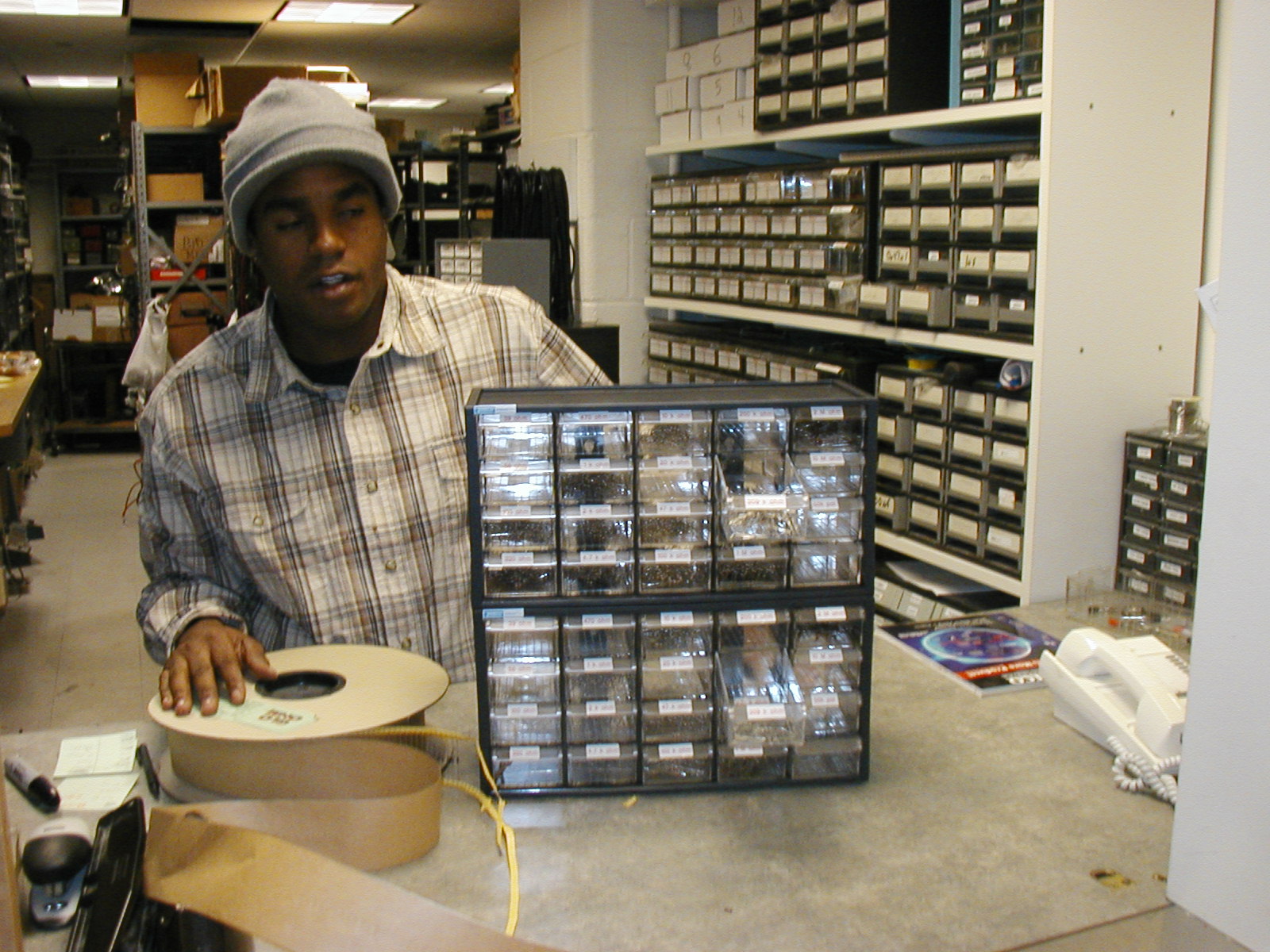
Parts in the shop. In the foreground, their lab
supervisor, Amir Farhat.
|
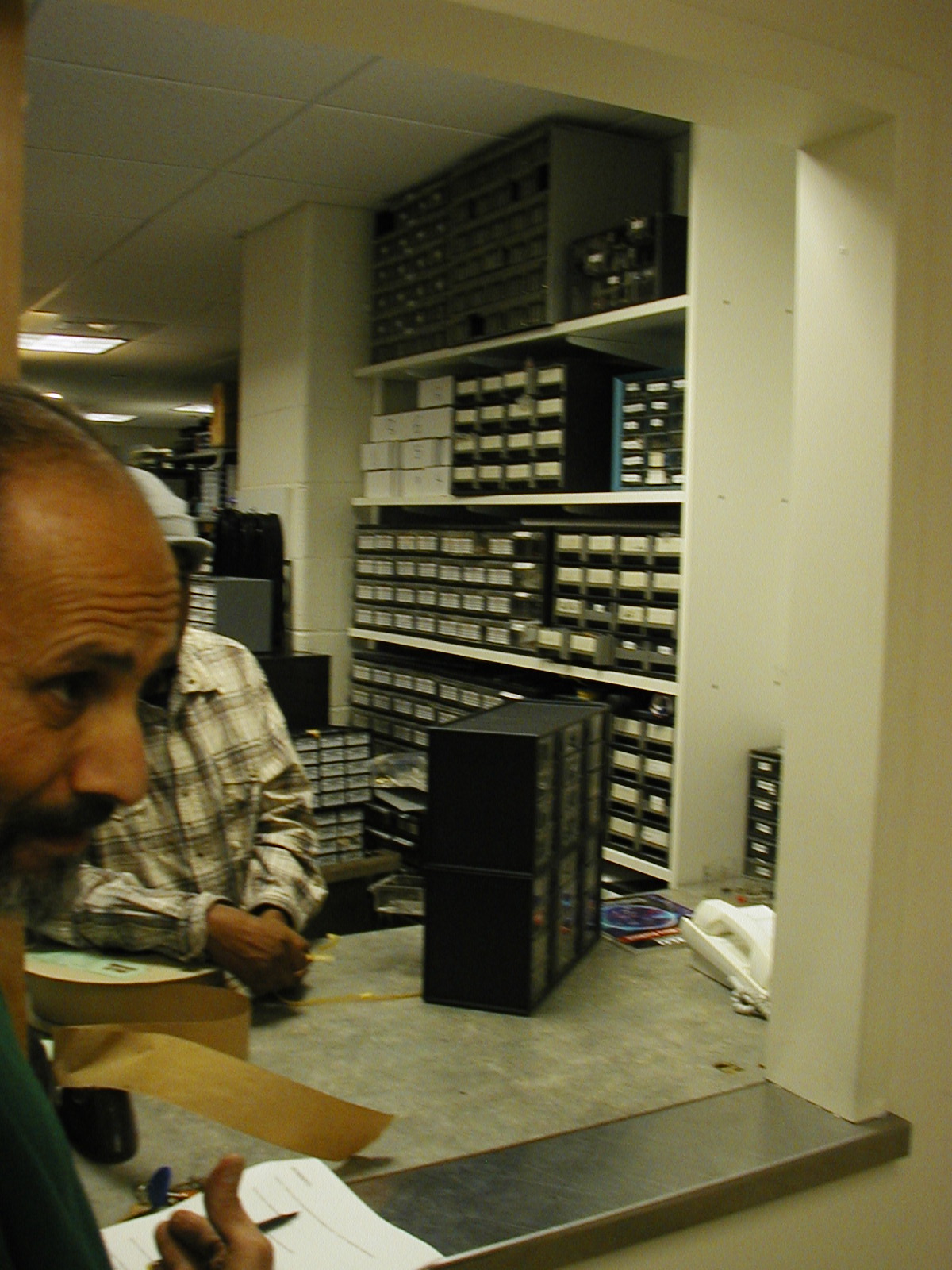 |
Each course gets its own parts cabinet, students sign out
parts. Their shop person was setting up the parts bins for
courses in the coming semester. Lots of work!
|
 |
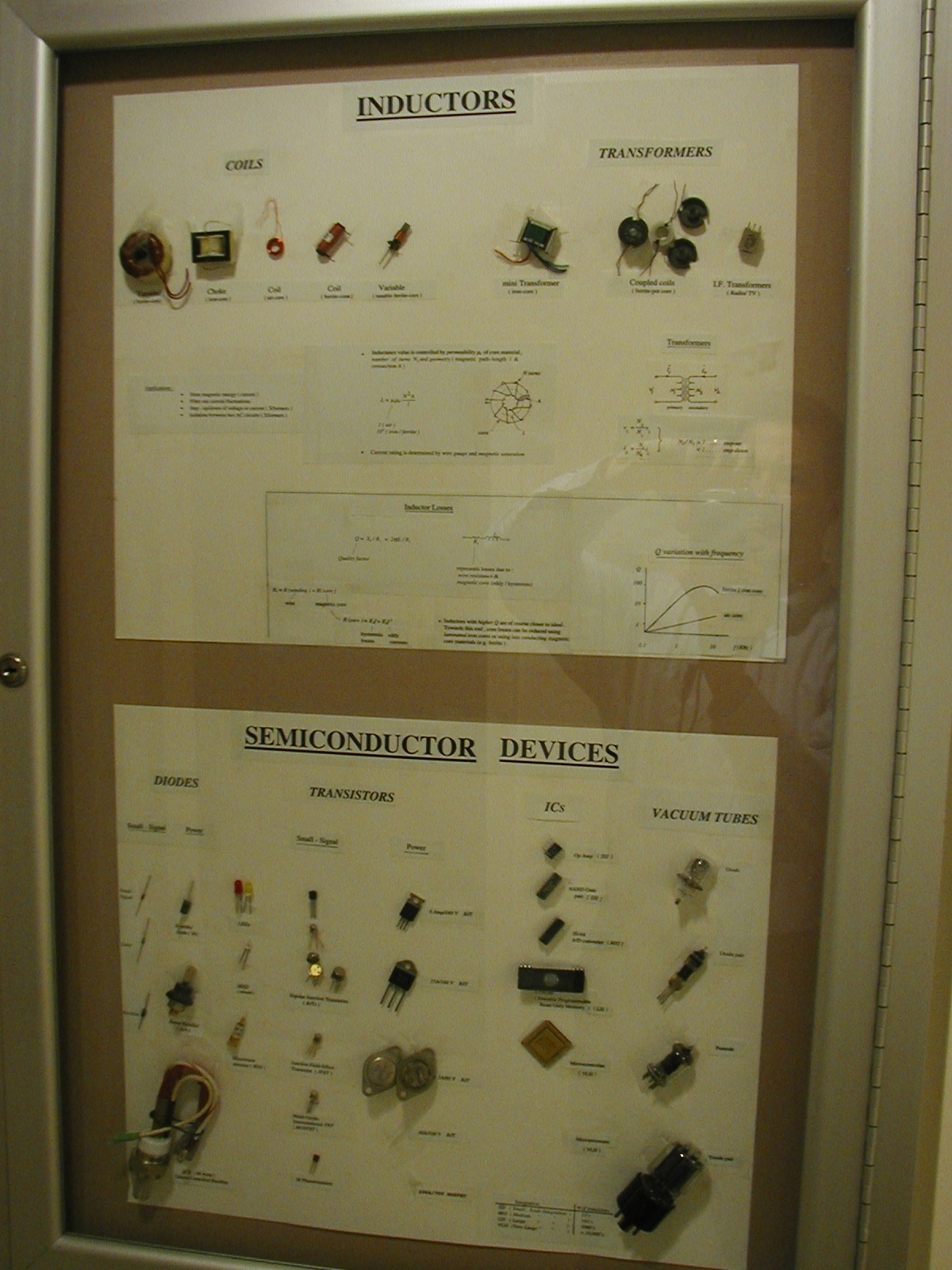
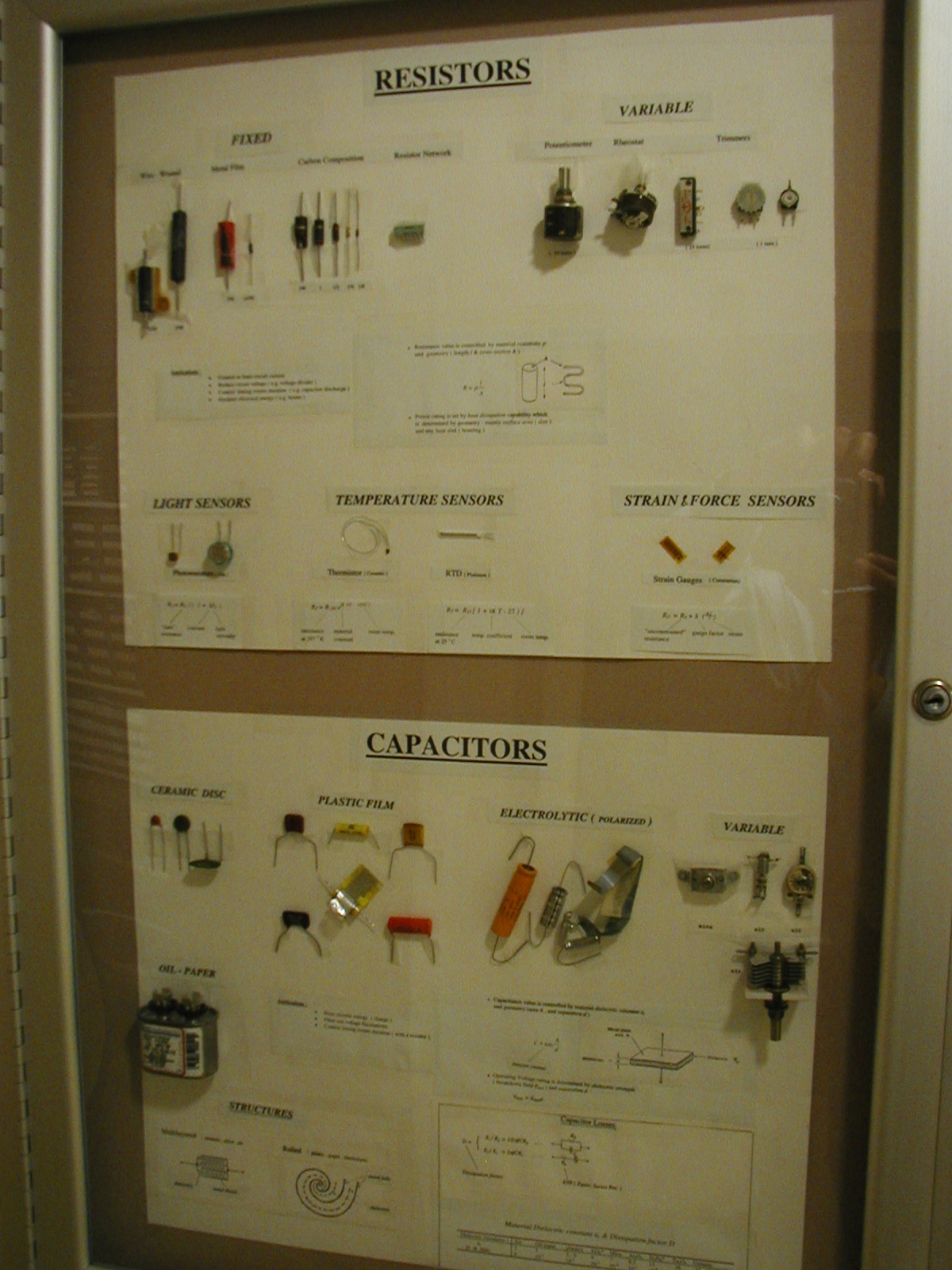
| Outside the basic labs: a display of what R, L, C, ICs look
like |
  |
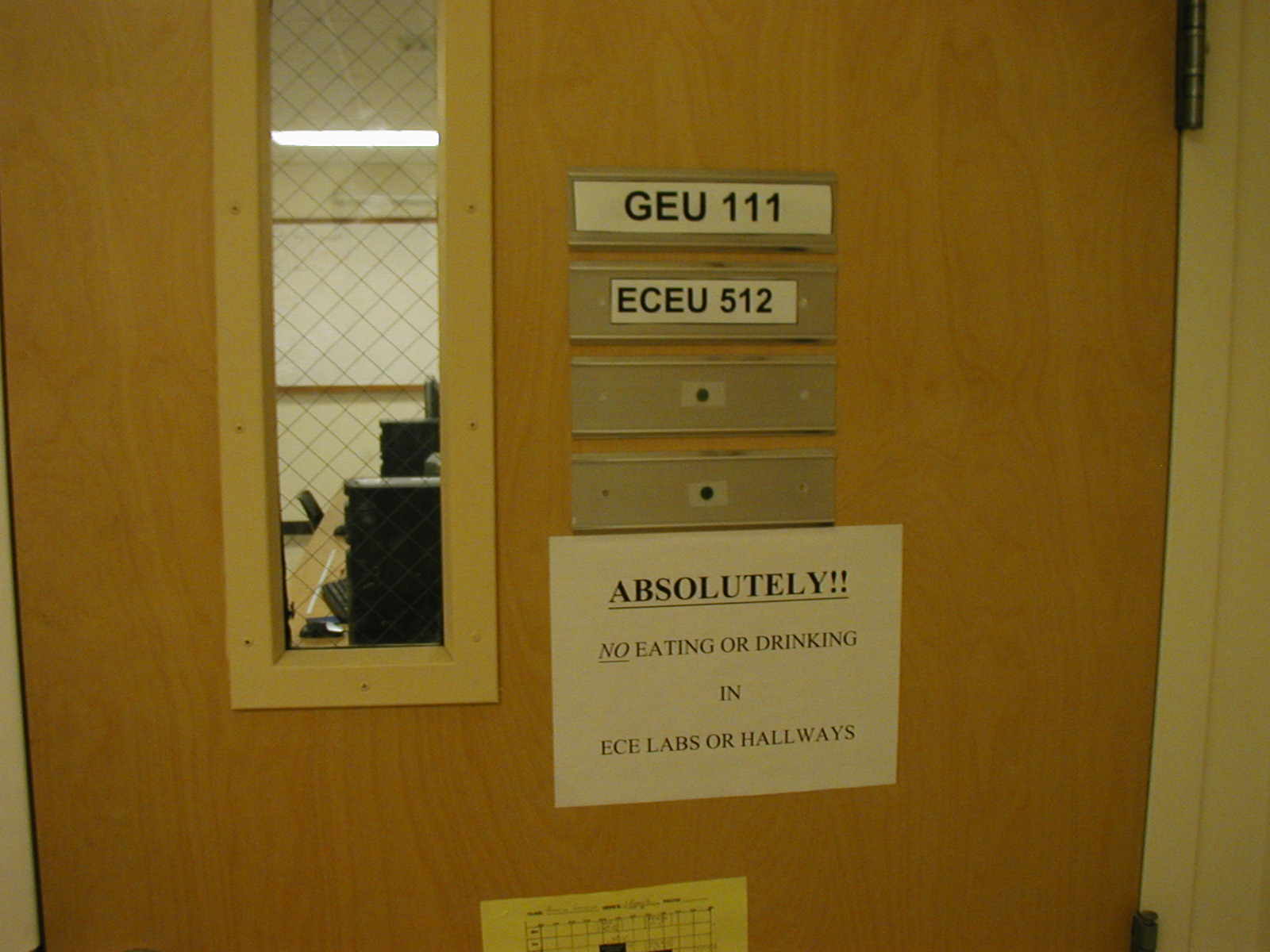
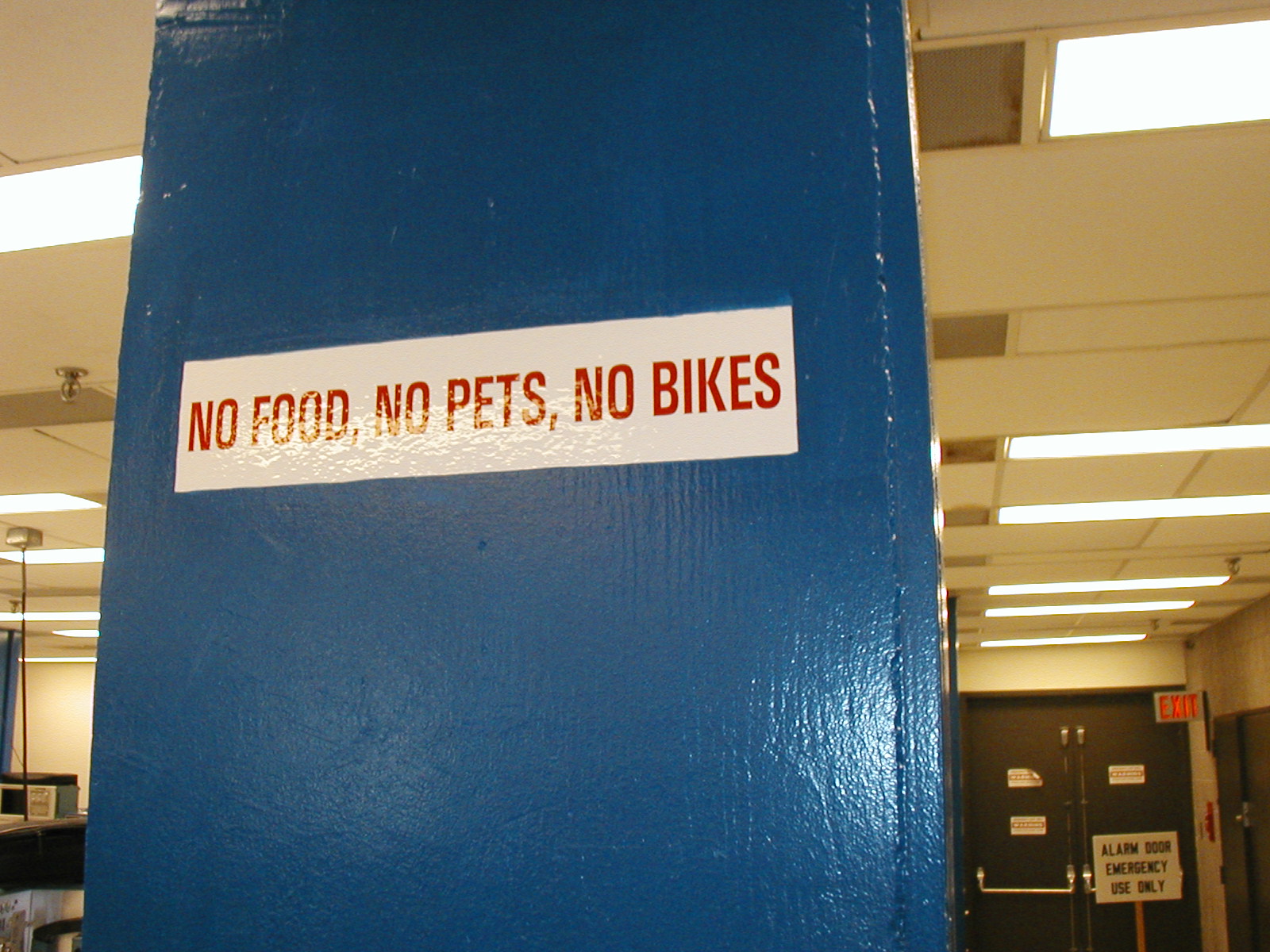
Door to the "Cool Tools" lab. Note food and beverage
prohibition in labs and hallways!
|
 |
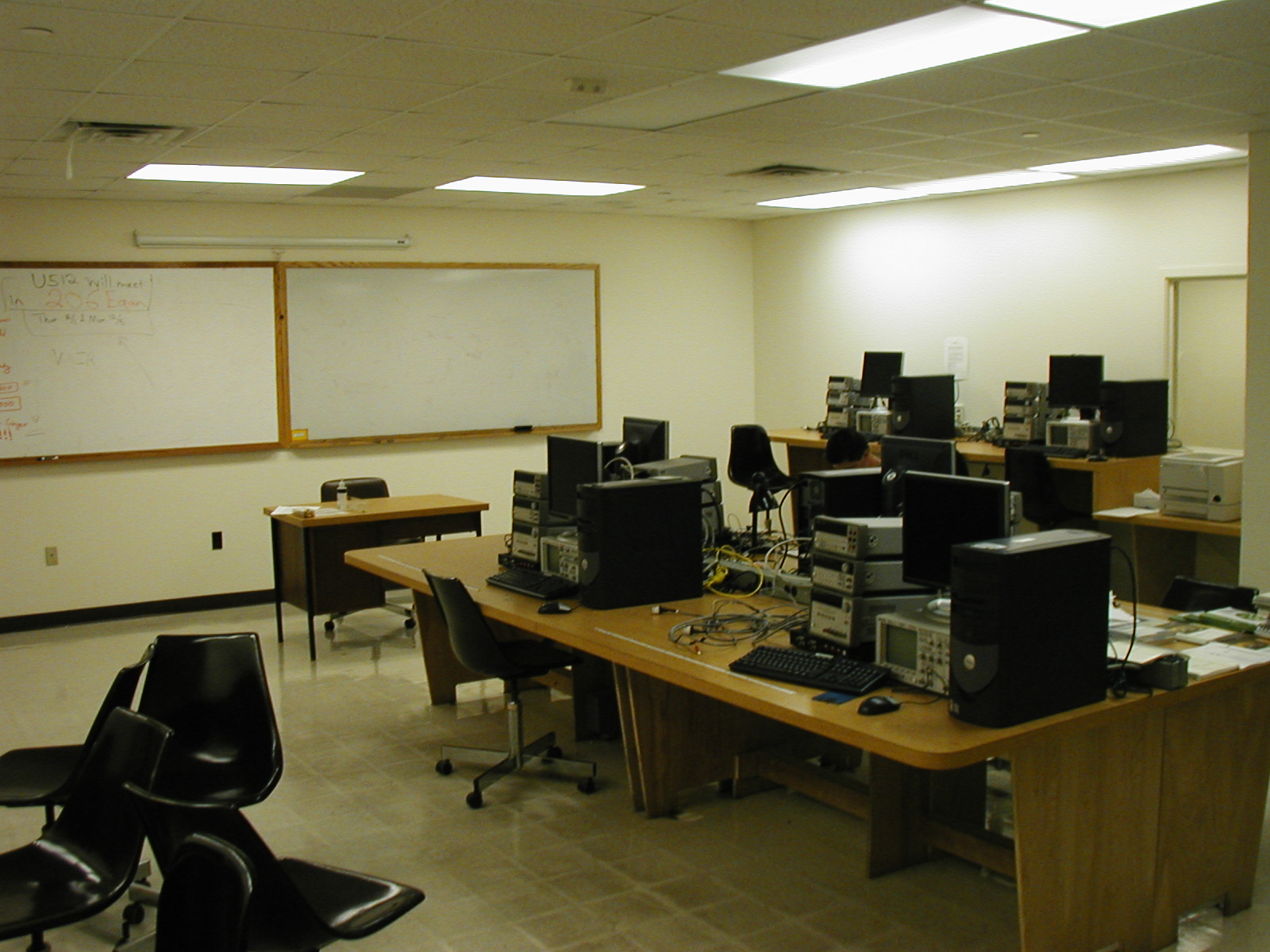
Overview of Cool Tools lab.
|
 |
Bench setup for Cool Tools lab.
|
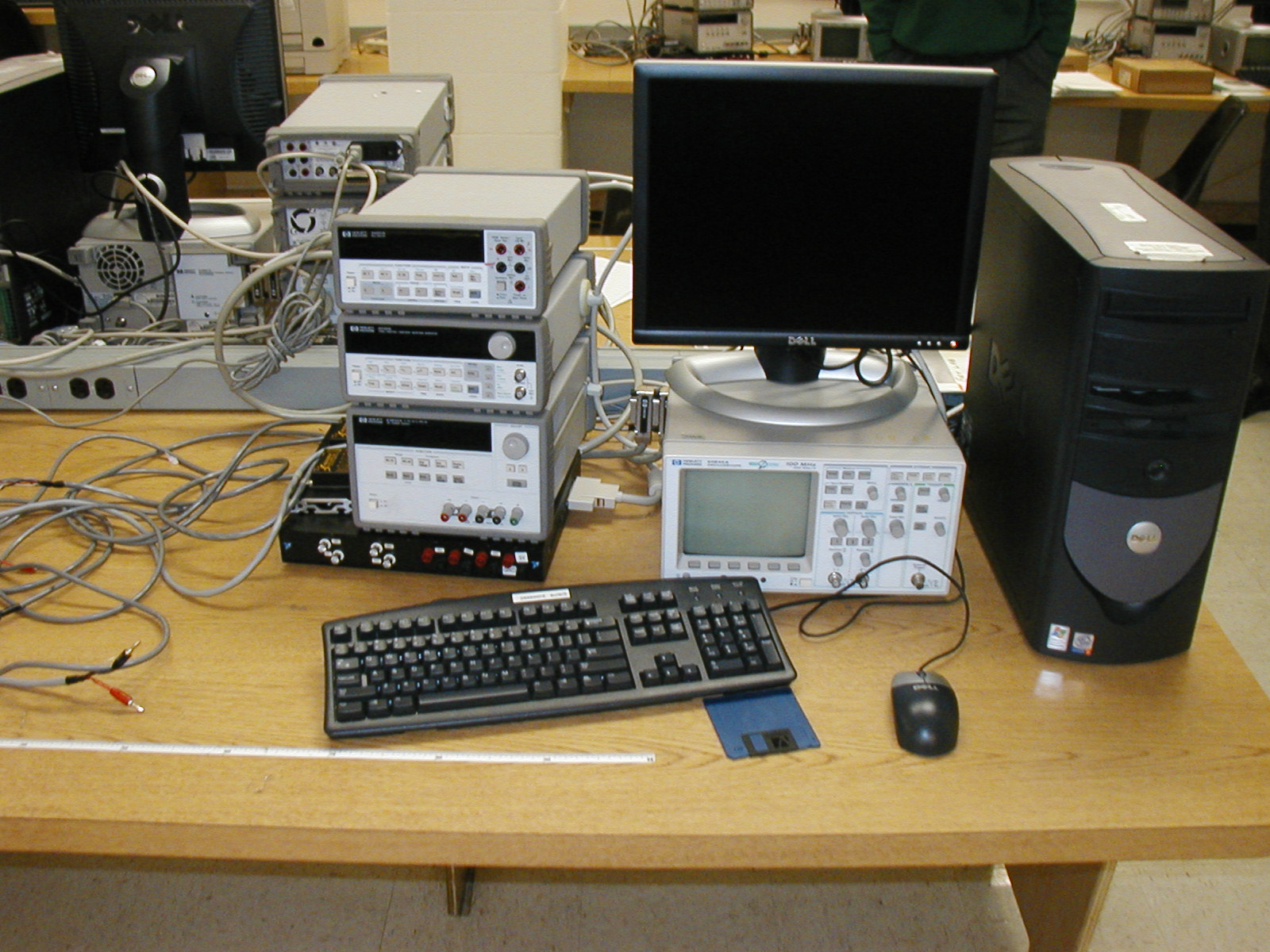 |
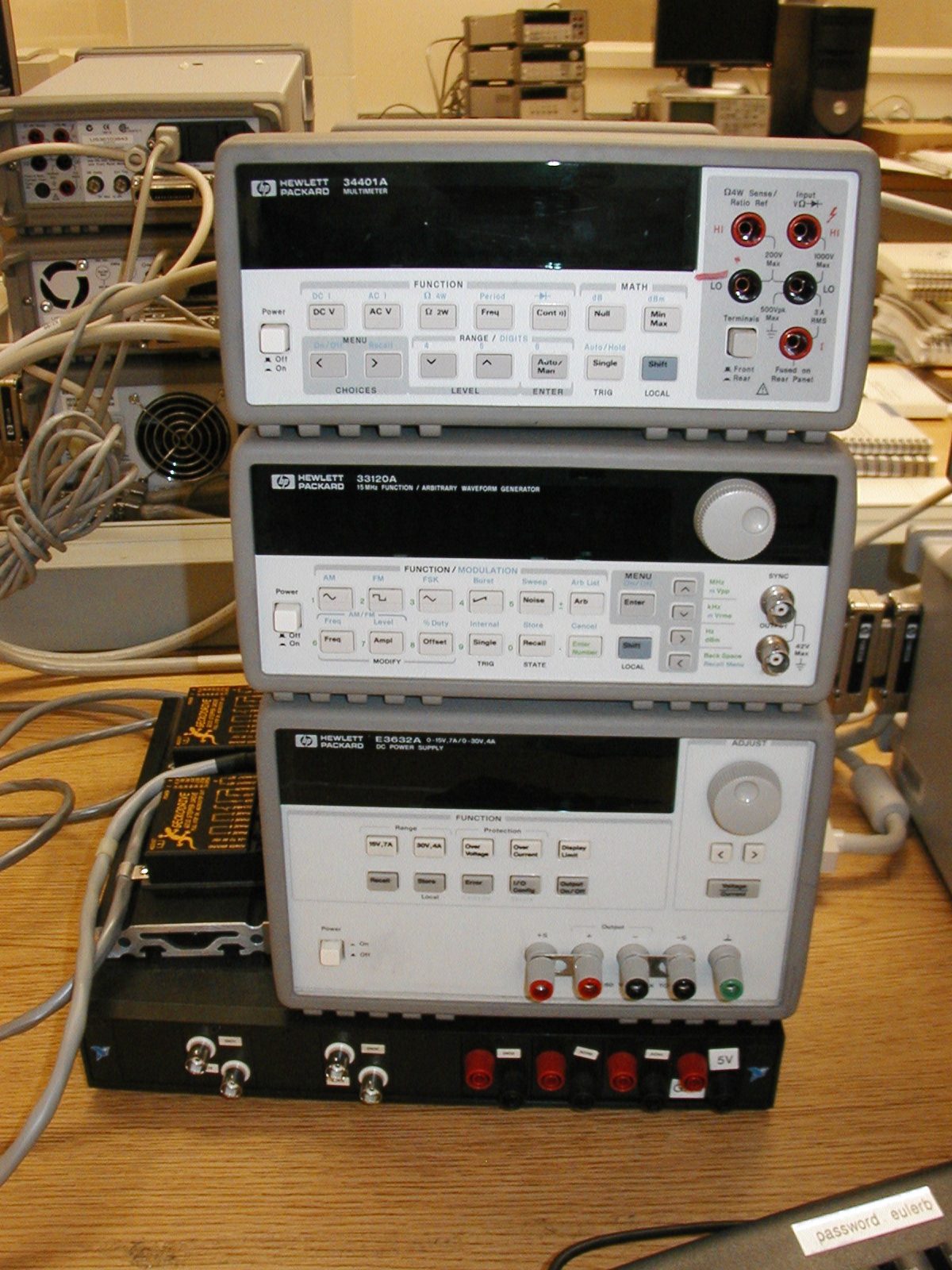
- HP34401A (DMM)
- 33120A (arbitrary waveform generator)
- 3632A (power supply)
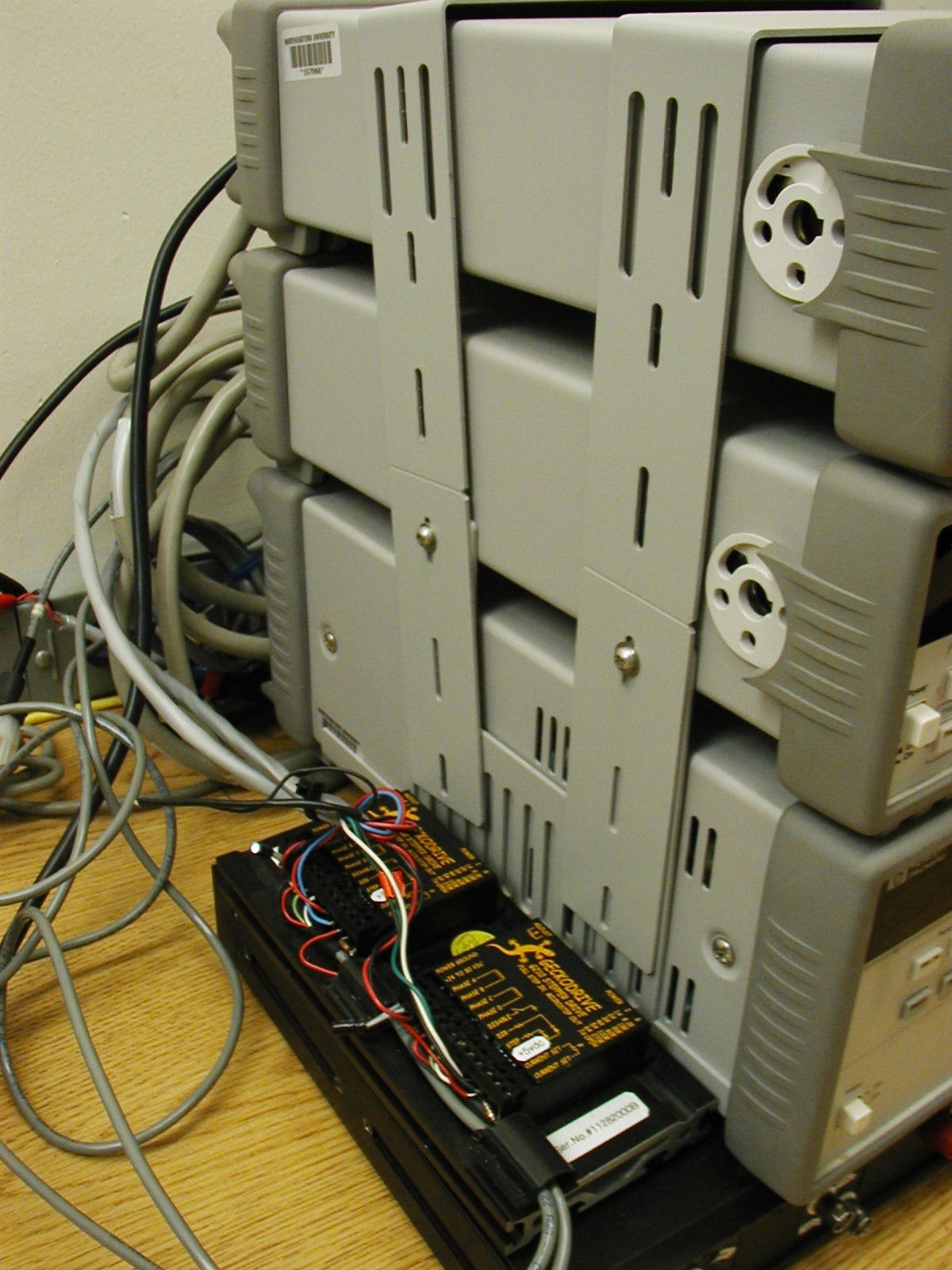
- National Instruments data acquisition unit
Note equipment bolted together for security, dedicated connections to
LabView hardware.
|
  |
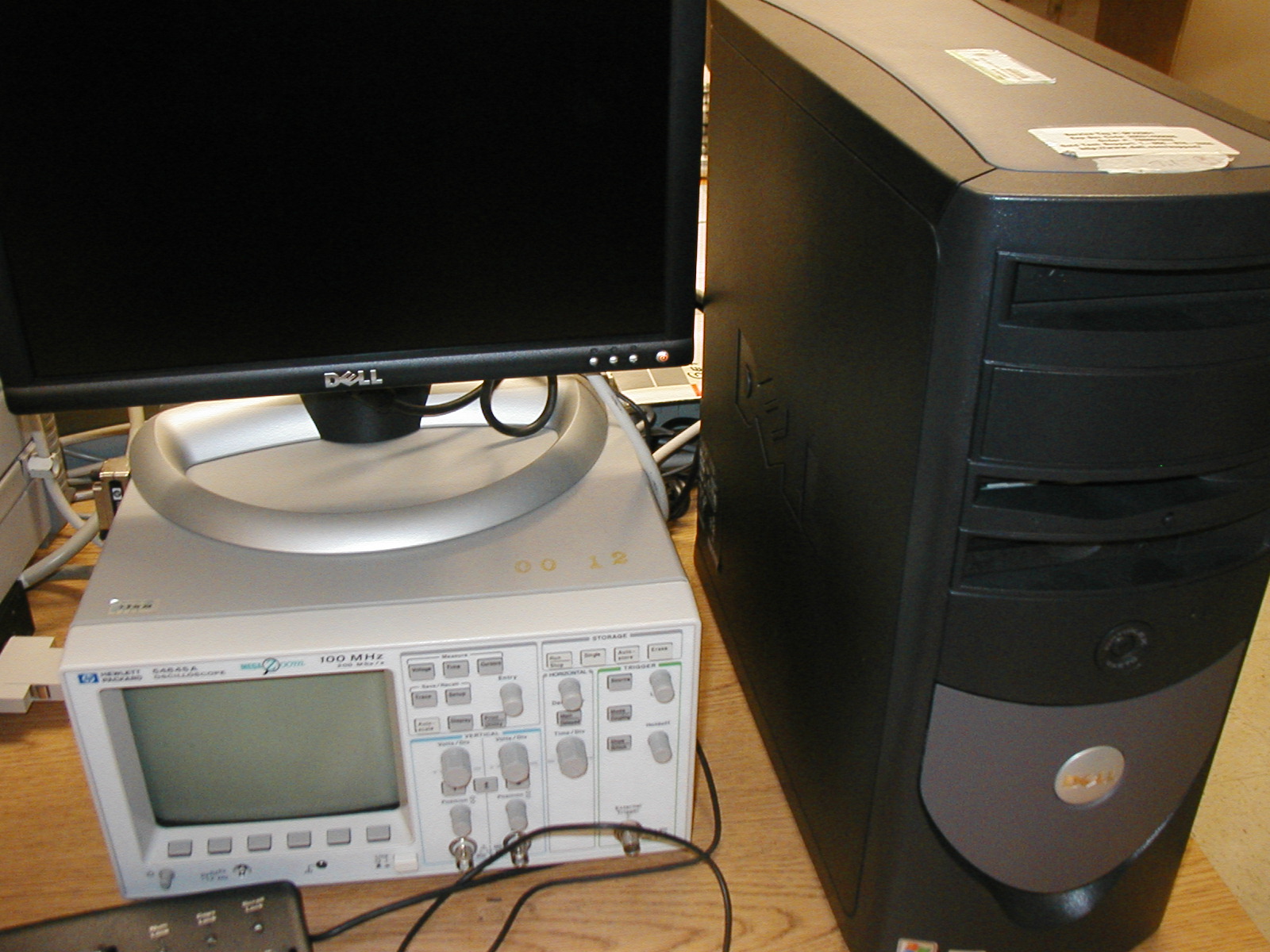
- Dell PC with LabView
- HP 54645A scope
|
 |
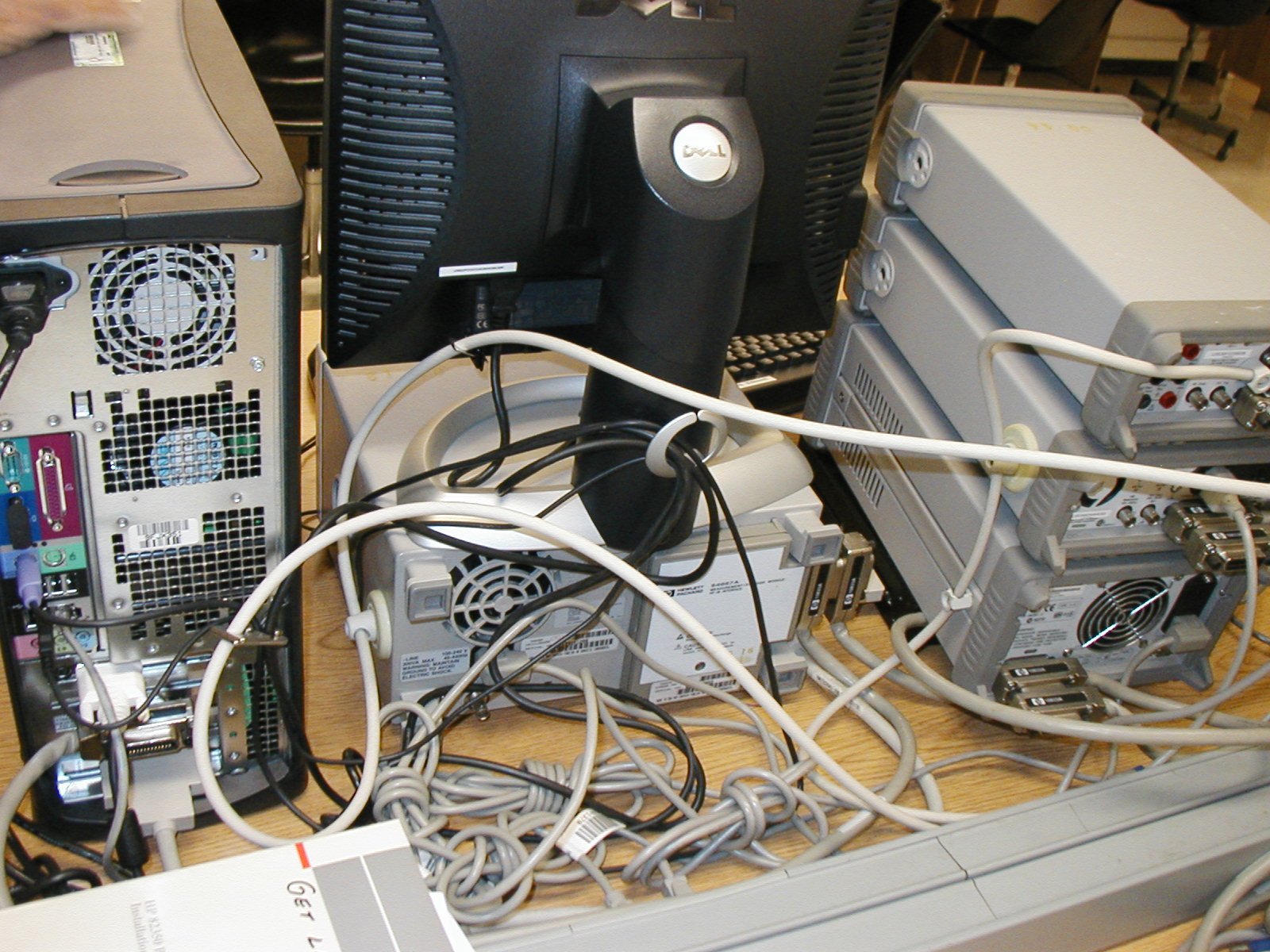
All equipment connected on GPIB bus. As GPIB cables
cost about $40 each, cabling alone on this setup probably costs a few
hundred dollars. Nice thing about the LXI standard is that it
uses plain old Ethernet CAT5 cables, which are much cheaper.
|
 |
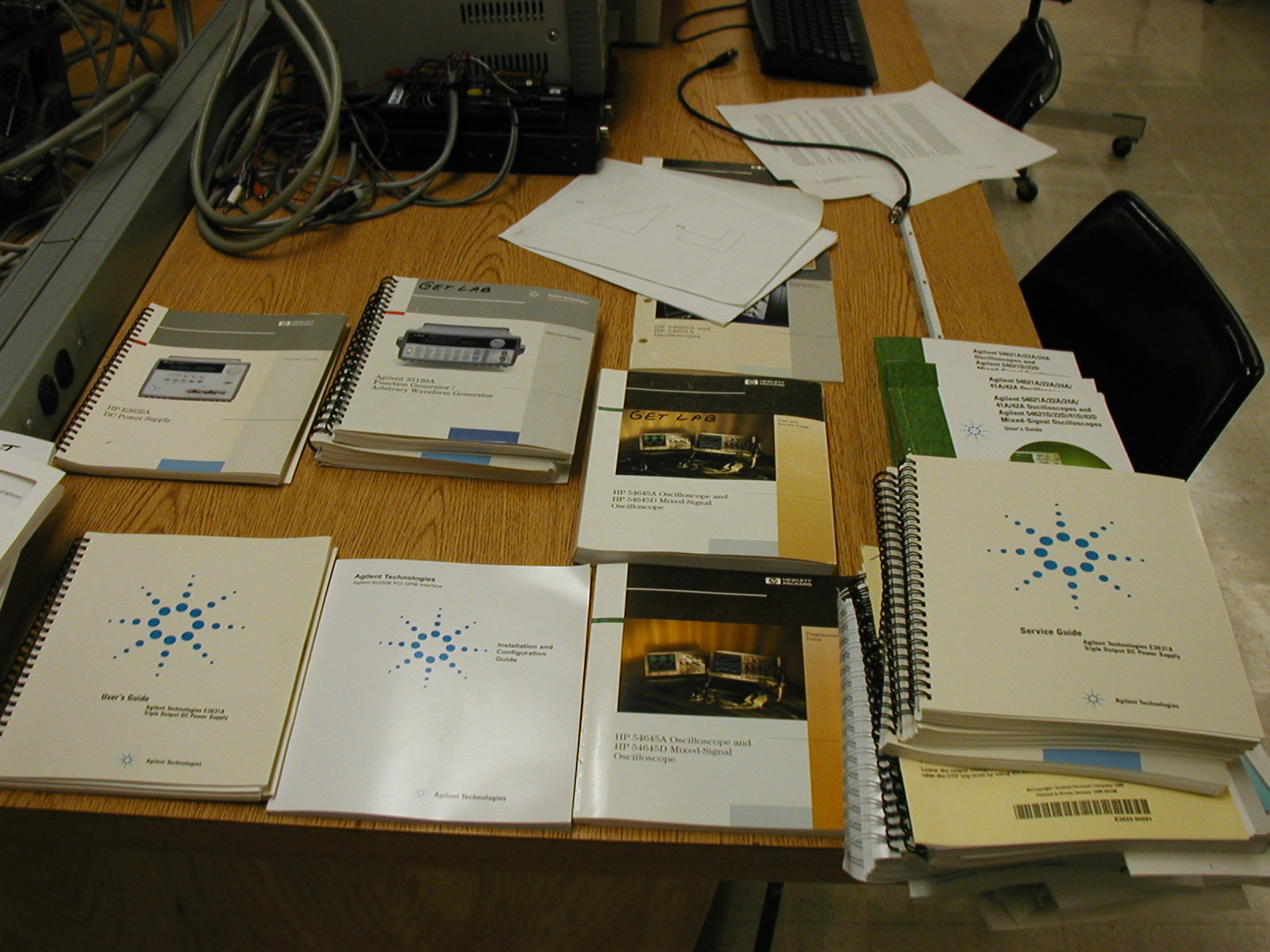
User manuals available.
|
 |
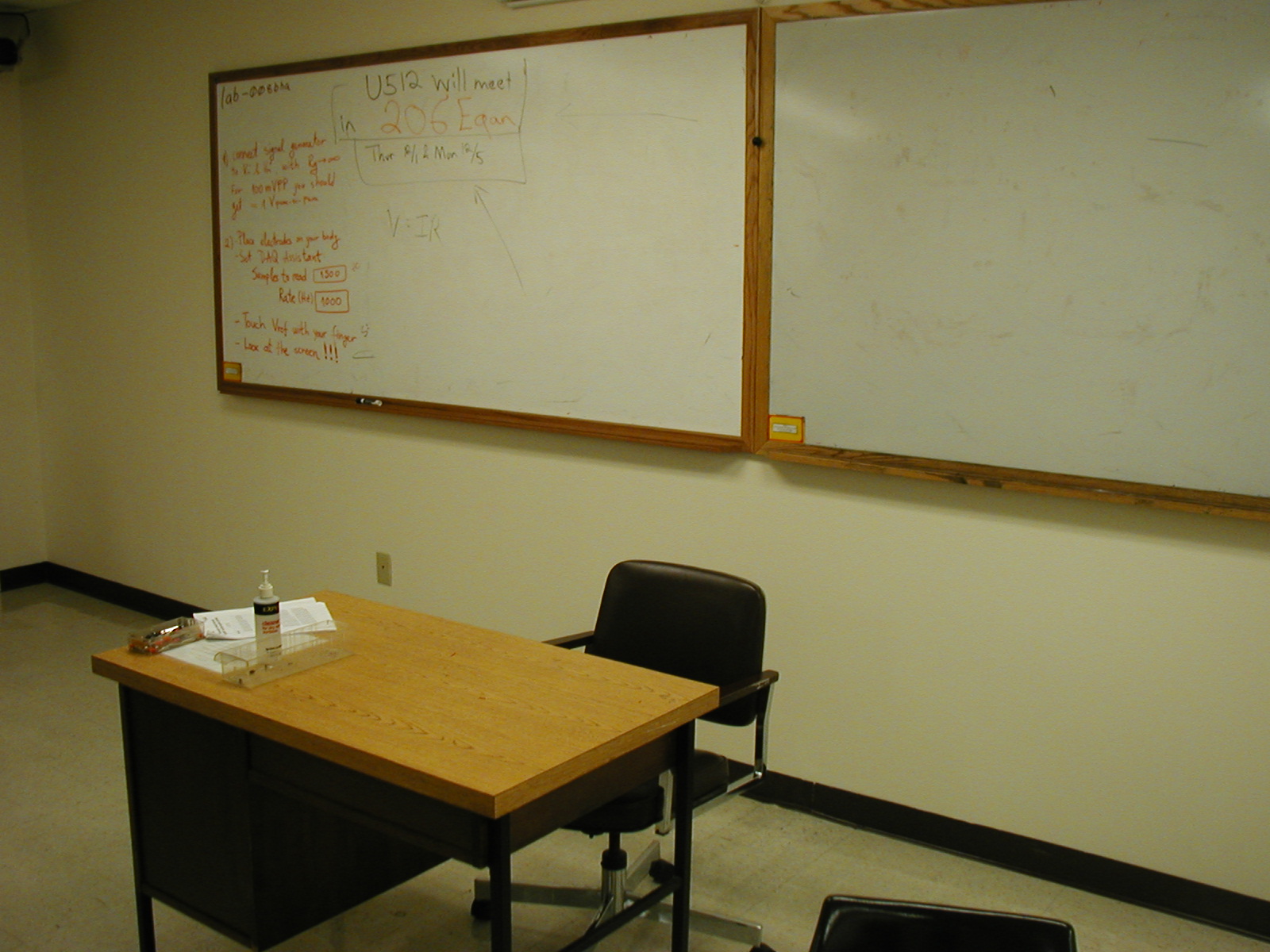
Whiteboards again easily viewable by everyone in the room.
|
 |
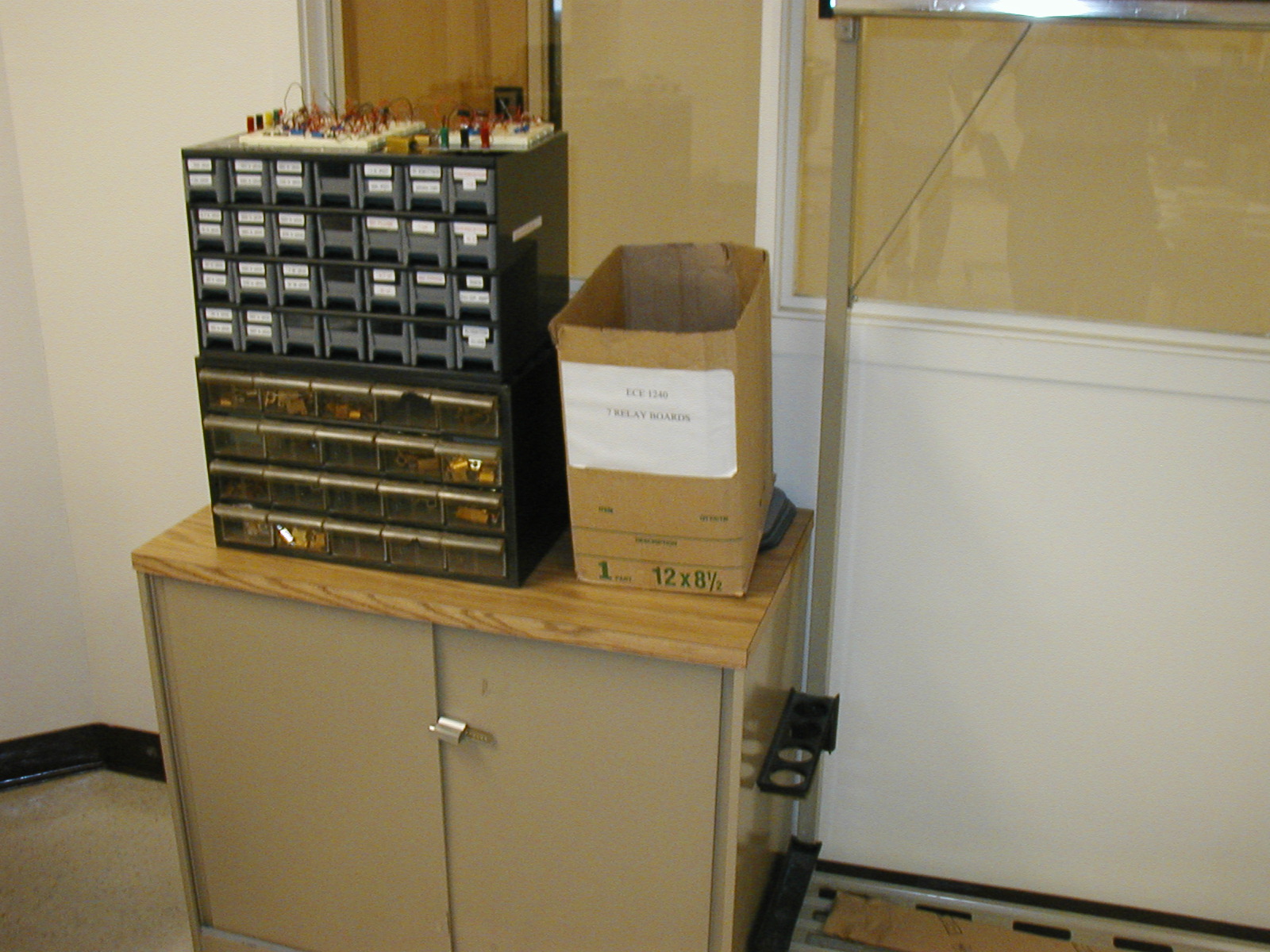
Some parts available
|
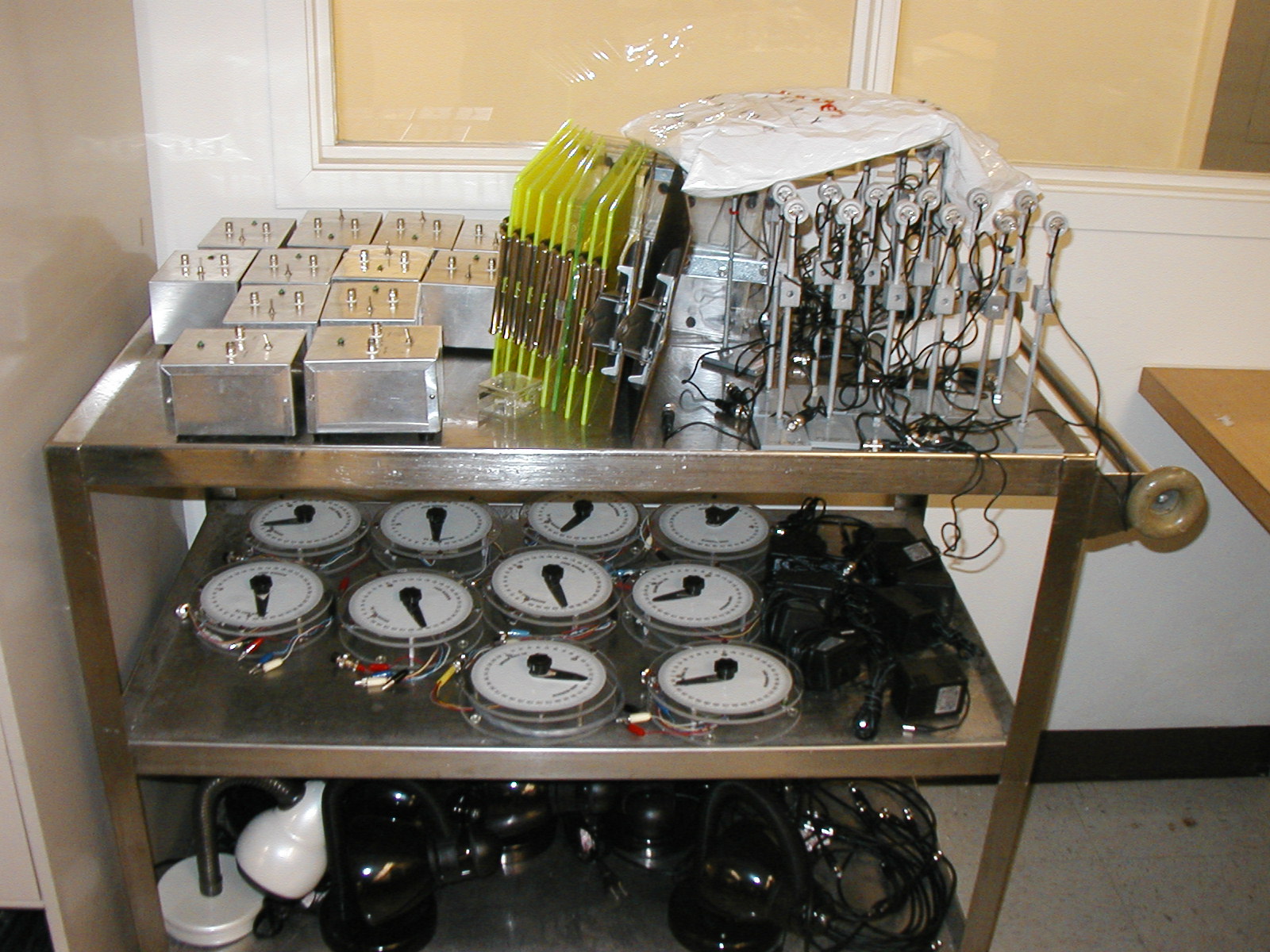
 |
Custom hardware built for use in first-year course that uses
LabView capability for cool experiments. A paper at the
FIE2002 conference talked about this experience.
|
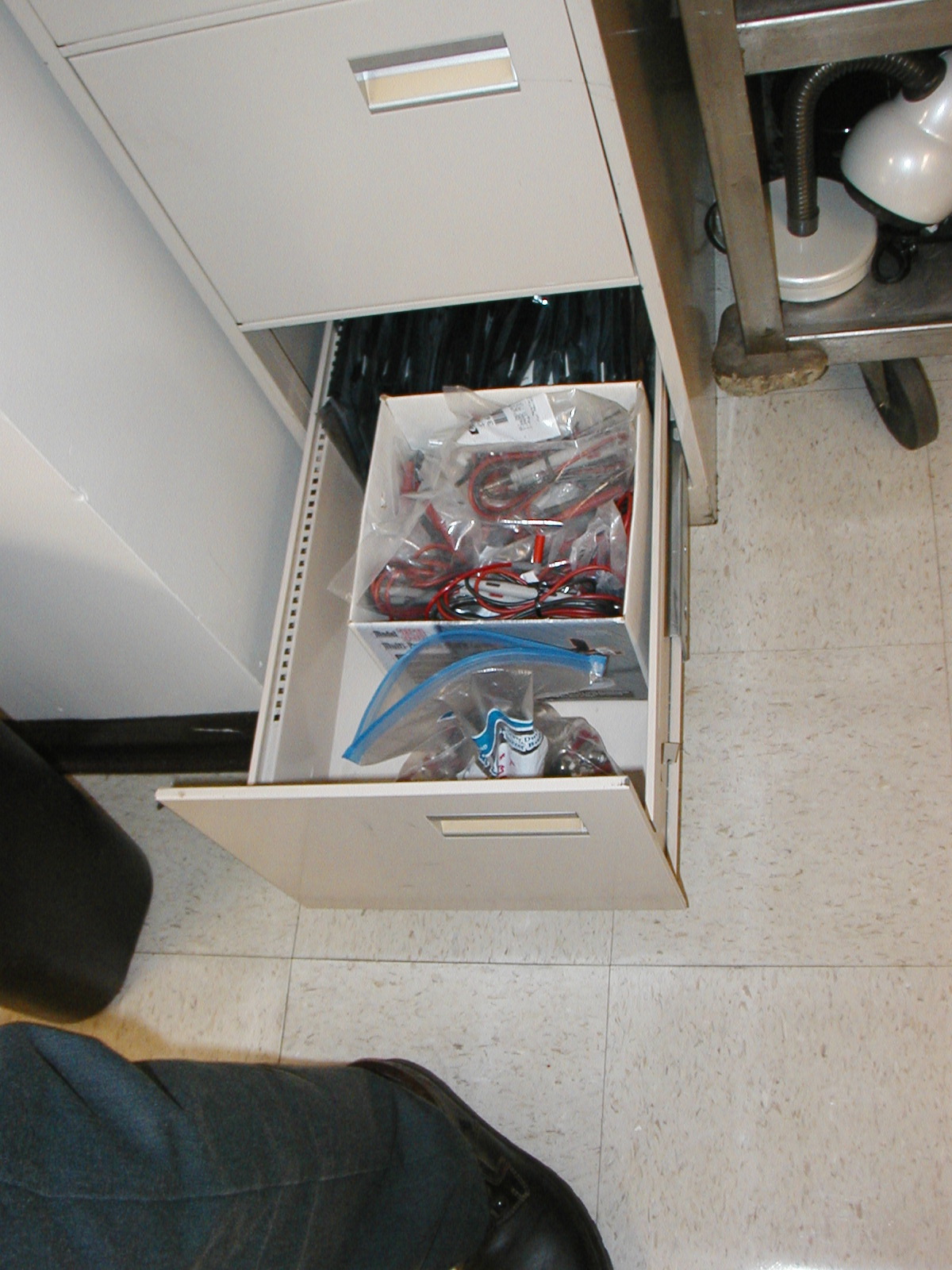
 |
Probes and cables signed out for each lab session; not at
benches.
|
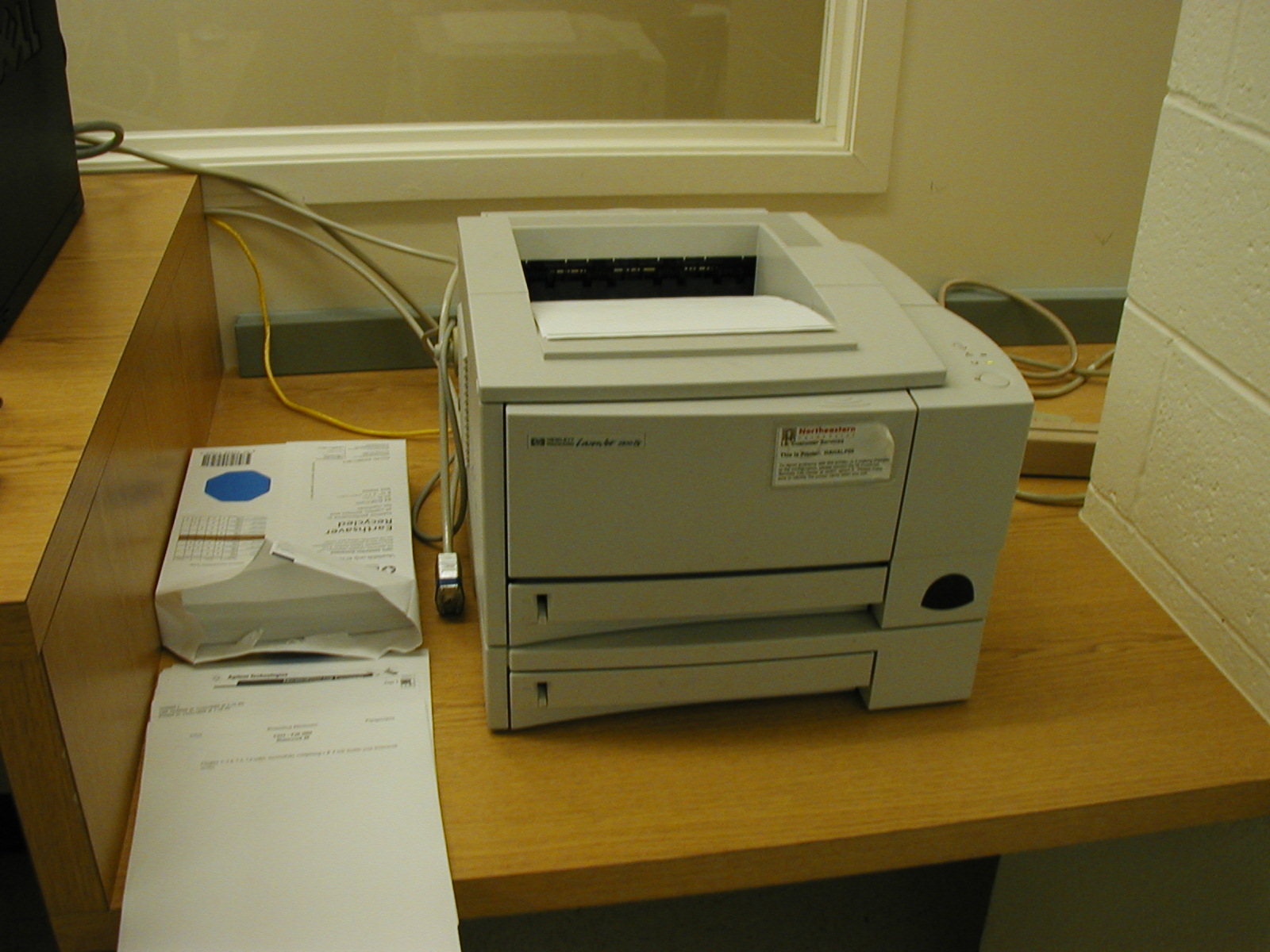
 |
Laser printer for use in Cool Tools lab
|
 |
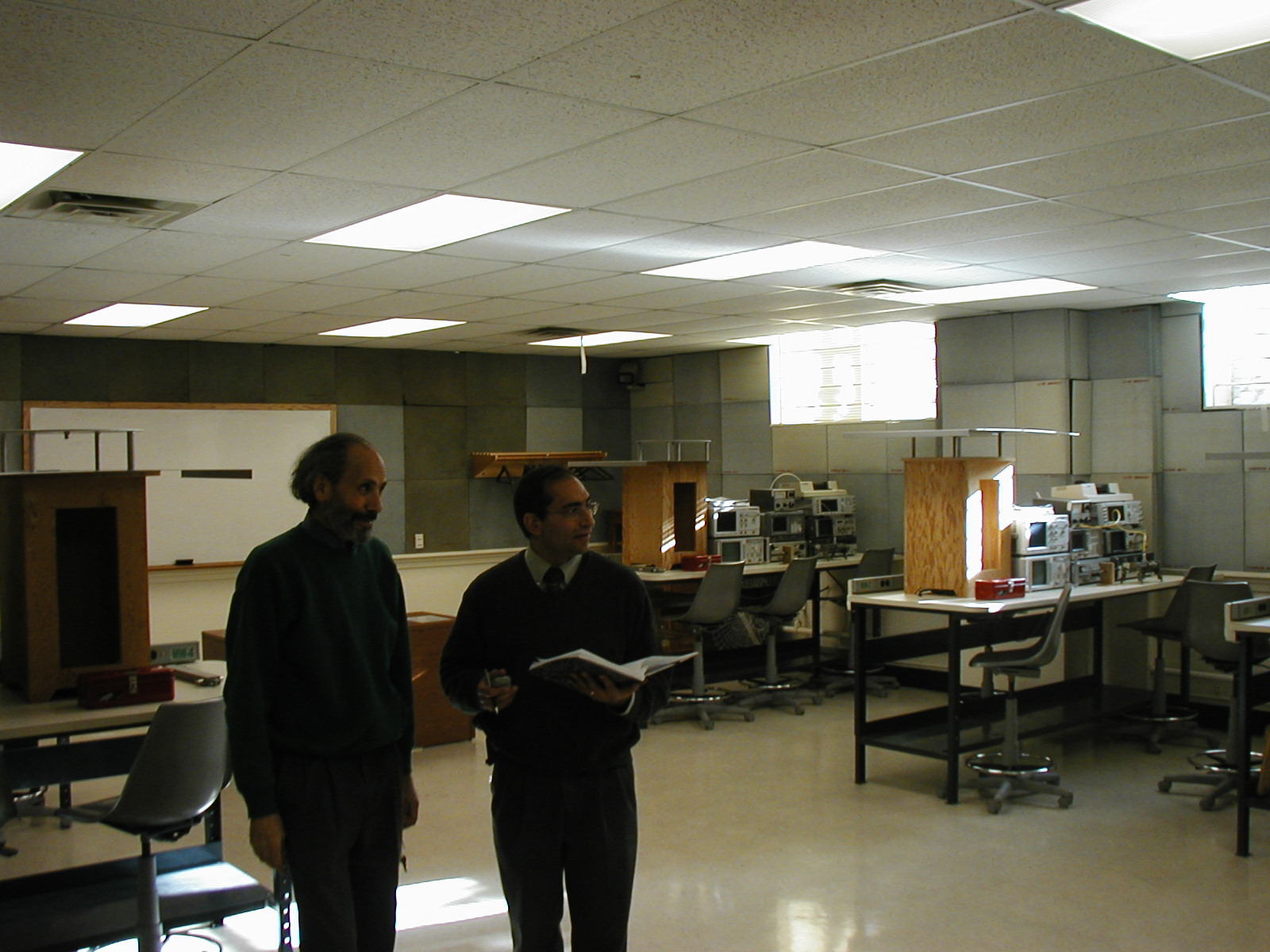
Amir and Steve in the RF lab.
|
 |
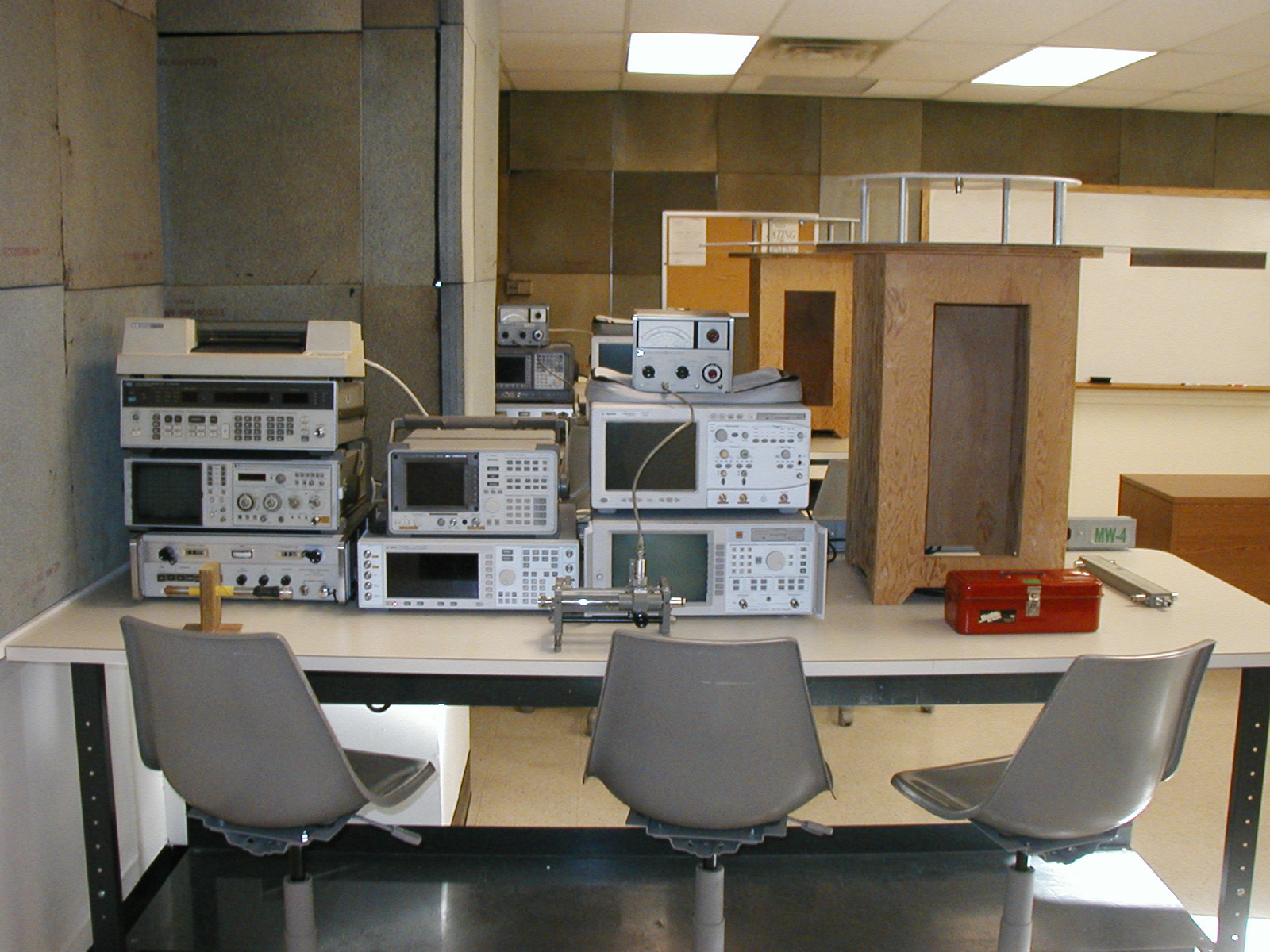
Bench in RF lab. The only teaching lab that had 3
students per station, justified by the enormous cost of instrumentation
at each station.
|
 |
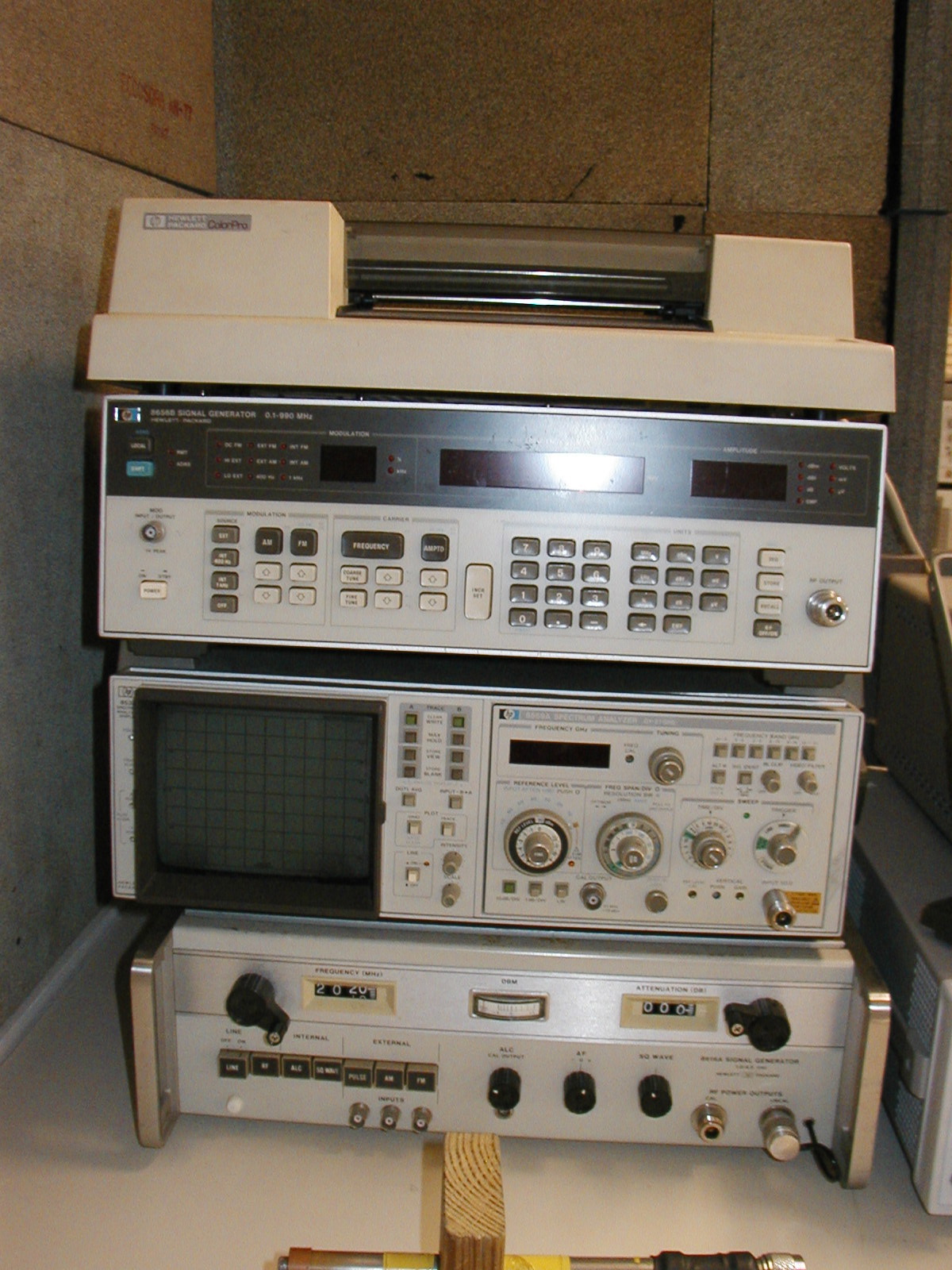
Color pen plotter
8656D signal generator (0.1MHz to 990 MHz)
8559A spectrum analyzer
Modulating signal generator
|
 |
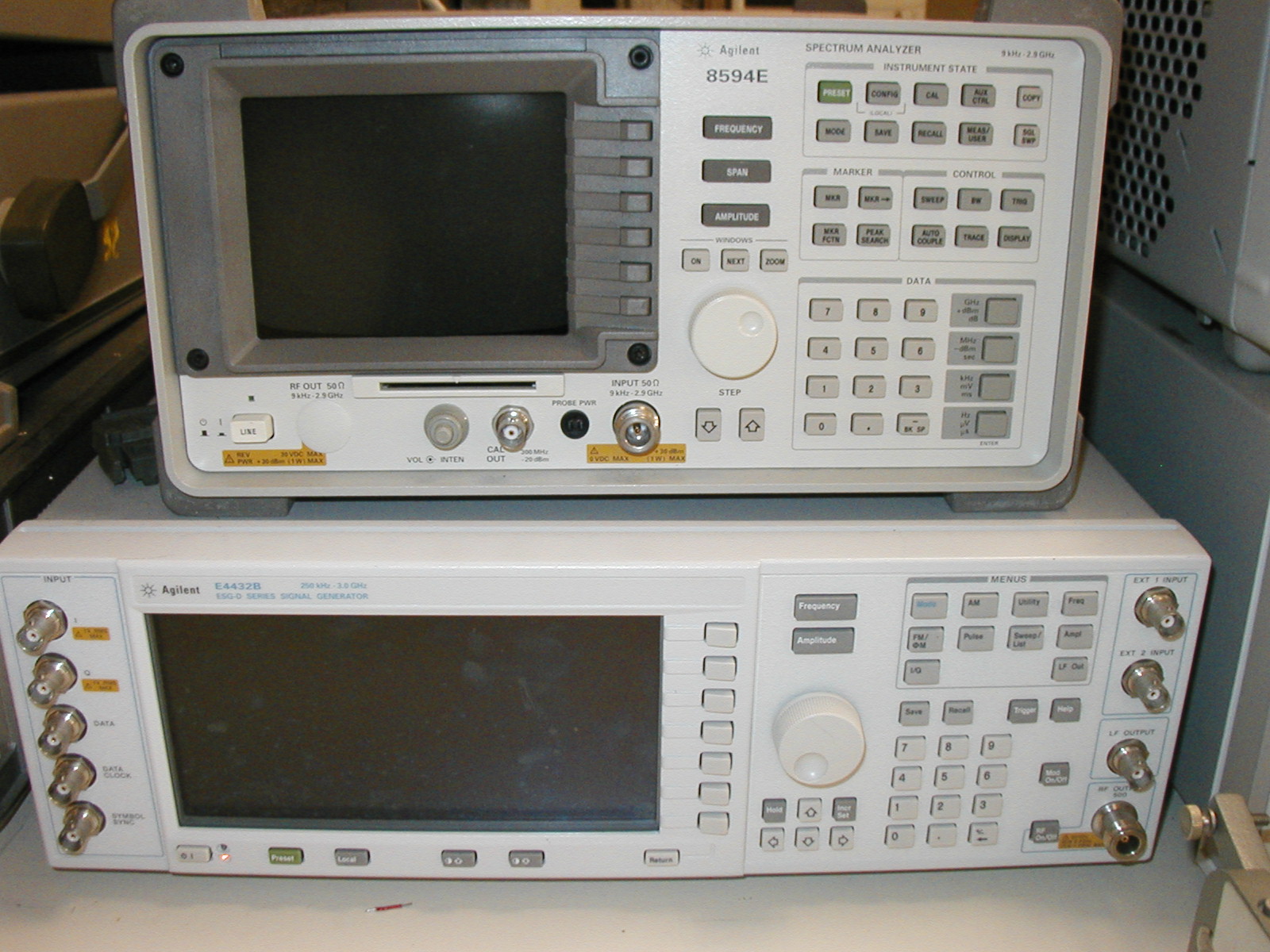
Agilent 8594E spectrum analyzer
E4432B signal generator (250kHz to 3.0GHz)
|
 |
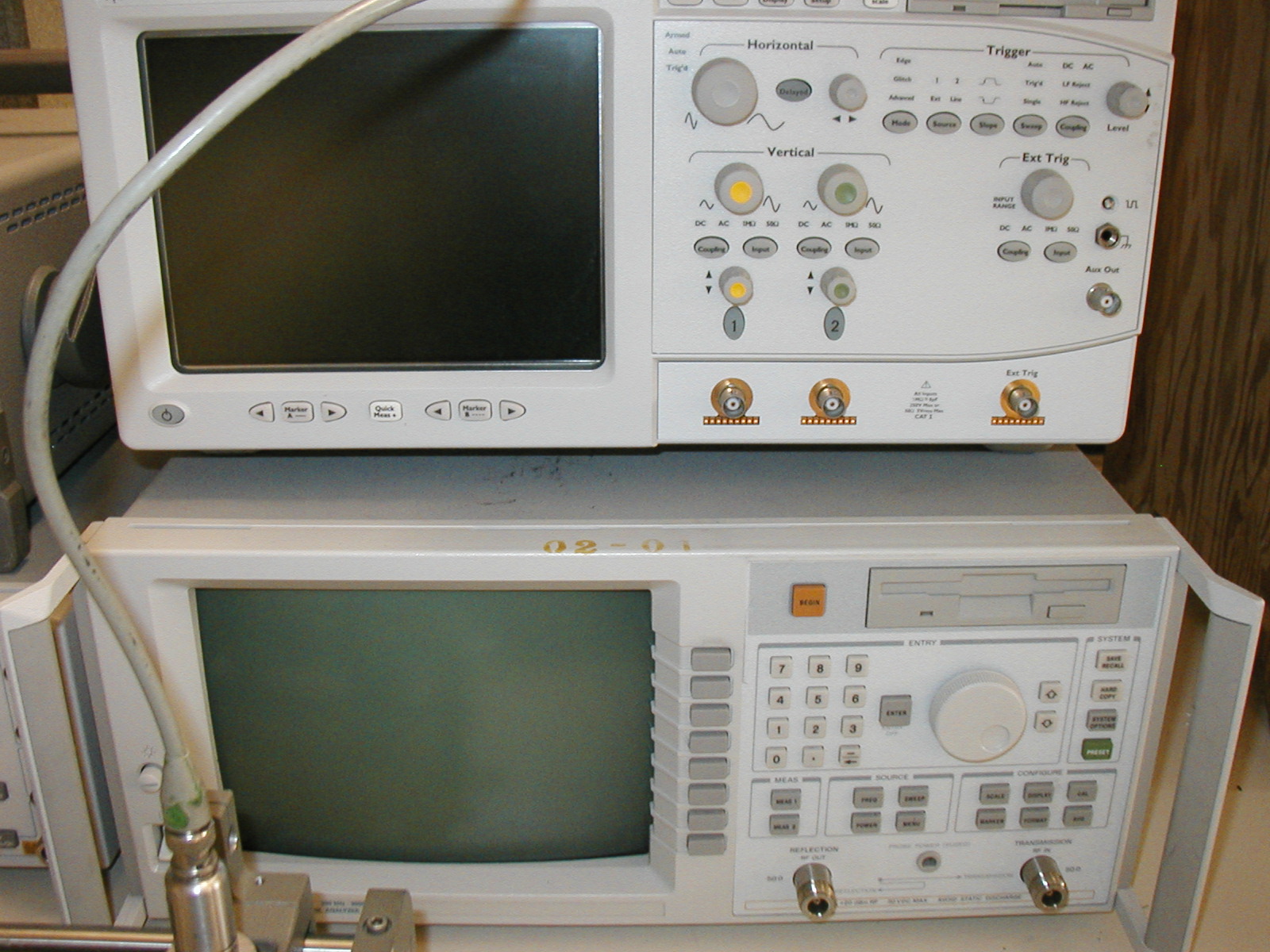
High speed Agilent scope
Network analyzer
|
 |
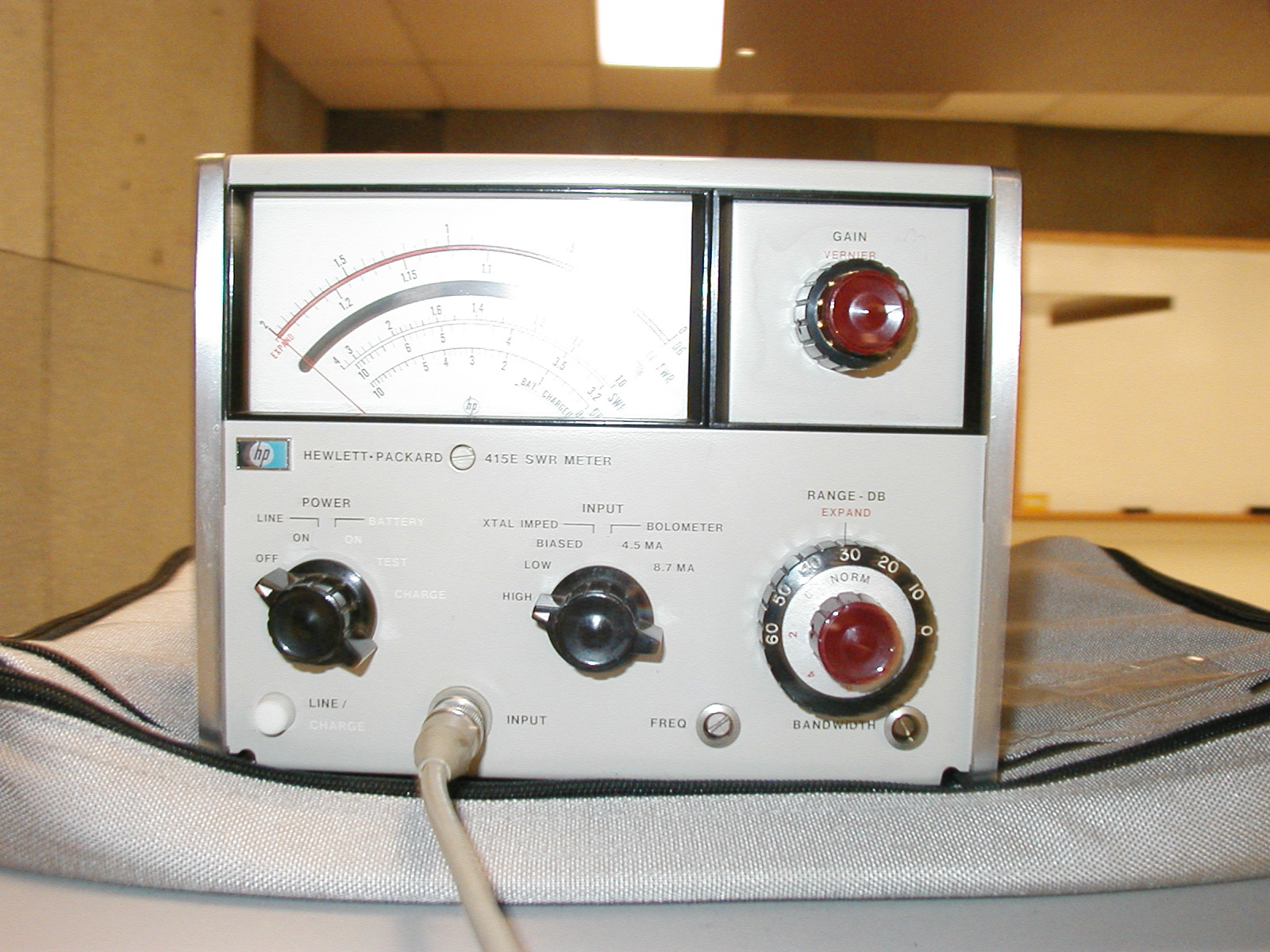
HP415E SWR meter
|
 |
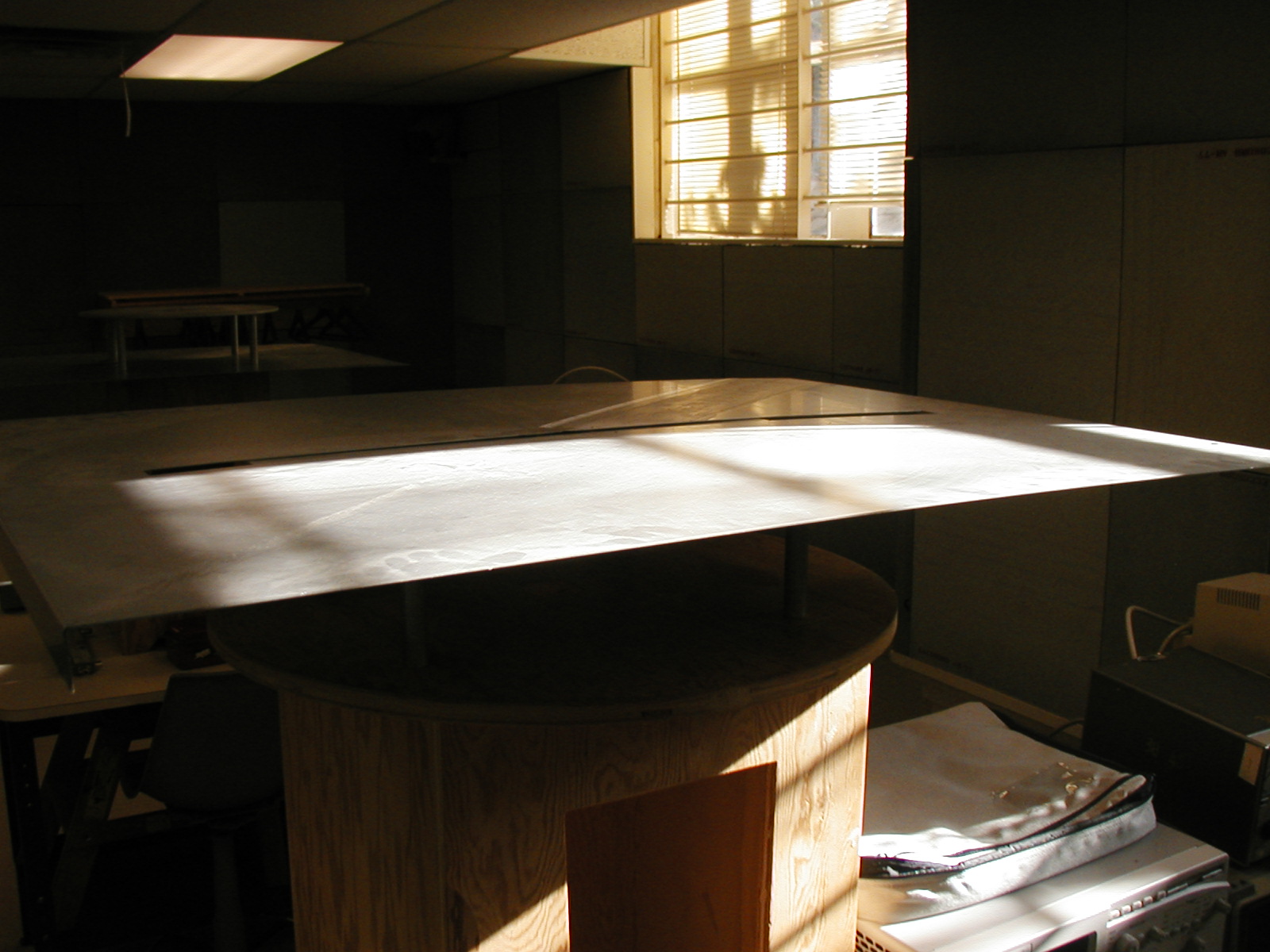
Ground plane for use in antenna measurements.
|
 |
Old equipment in storage alcove outside ...
|
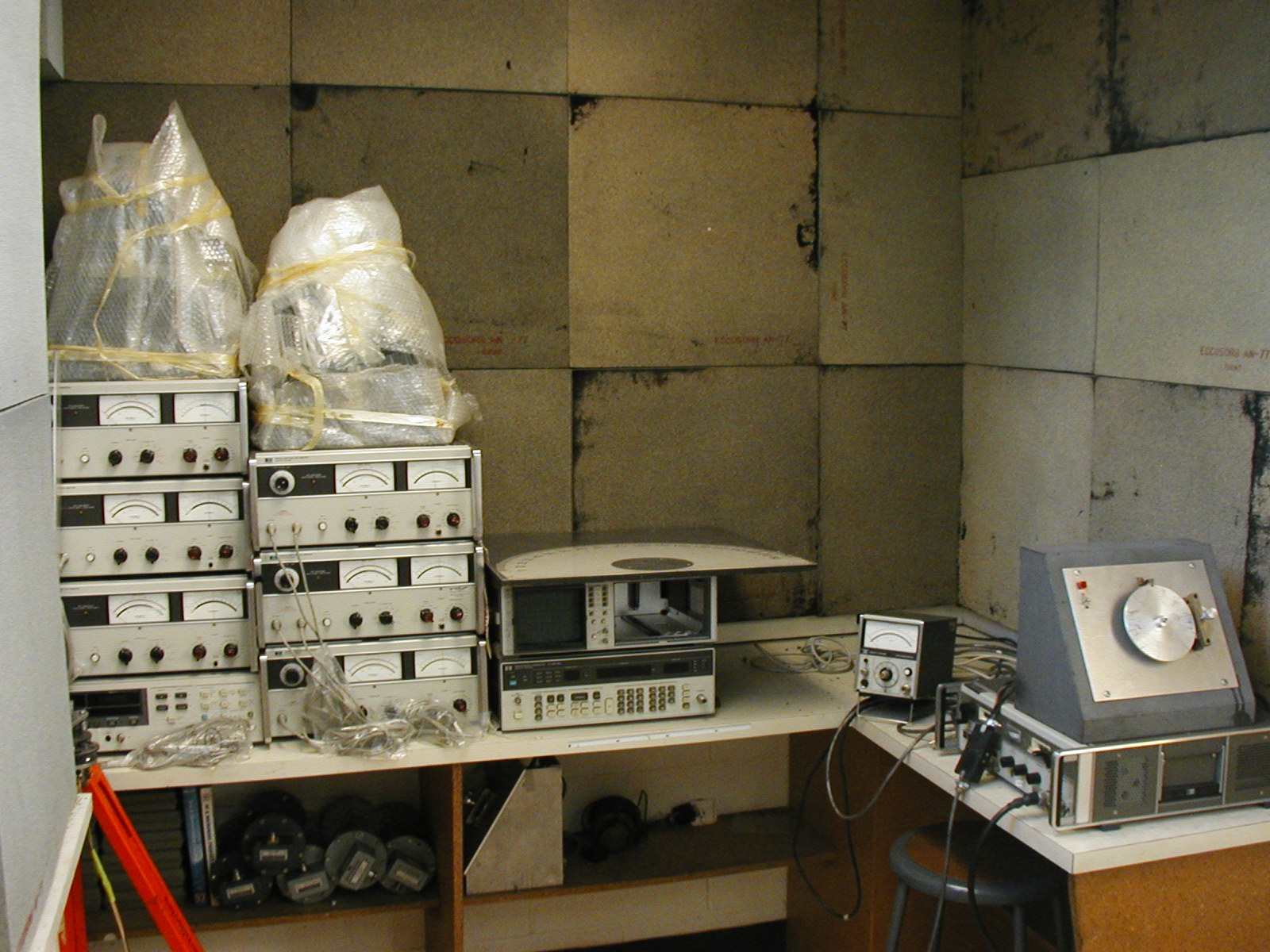 |
... entrance to ...
|
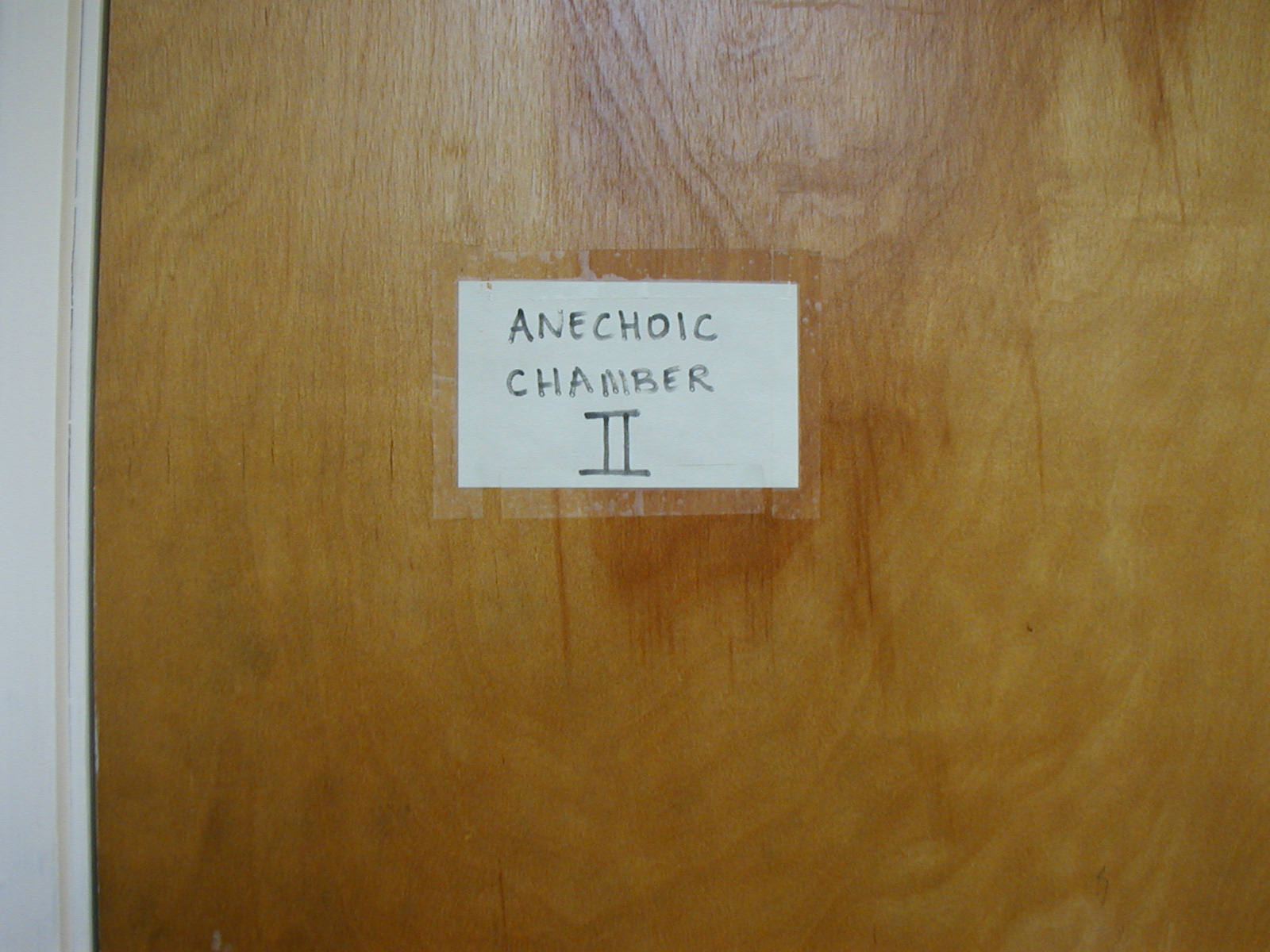 |
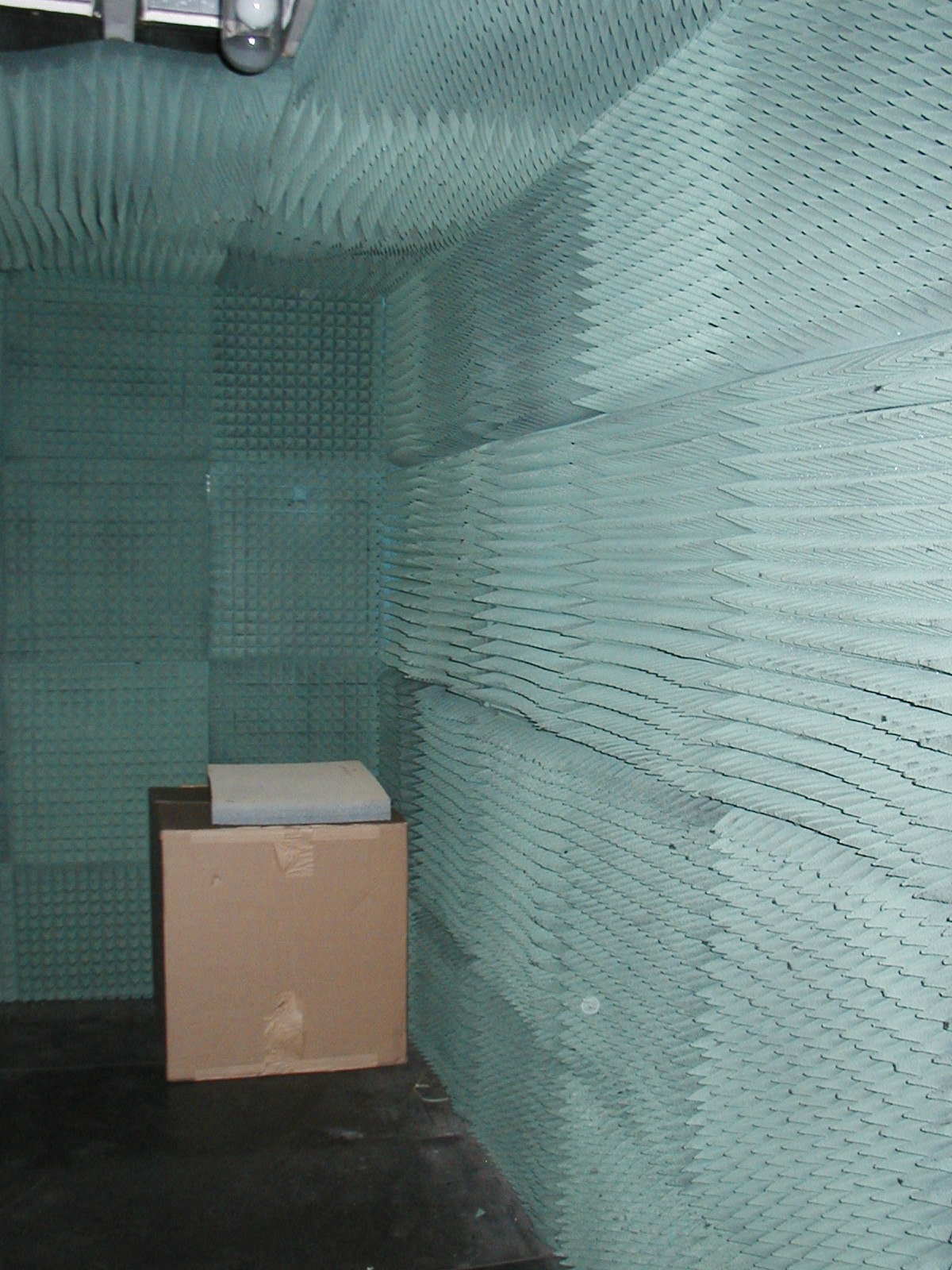
Anechoic chamber
|
 |
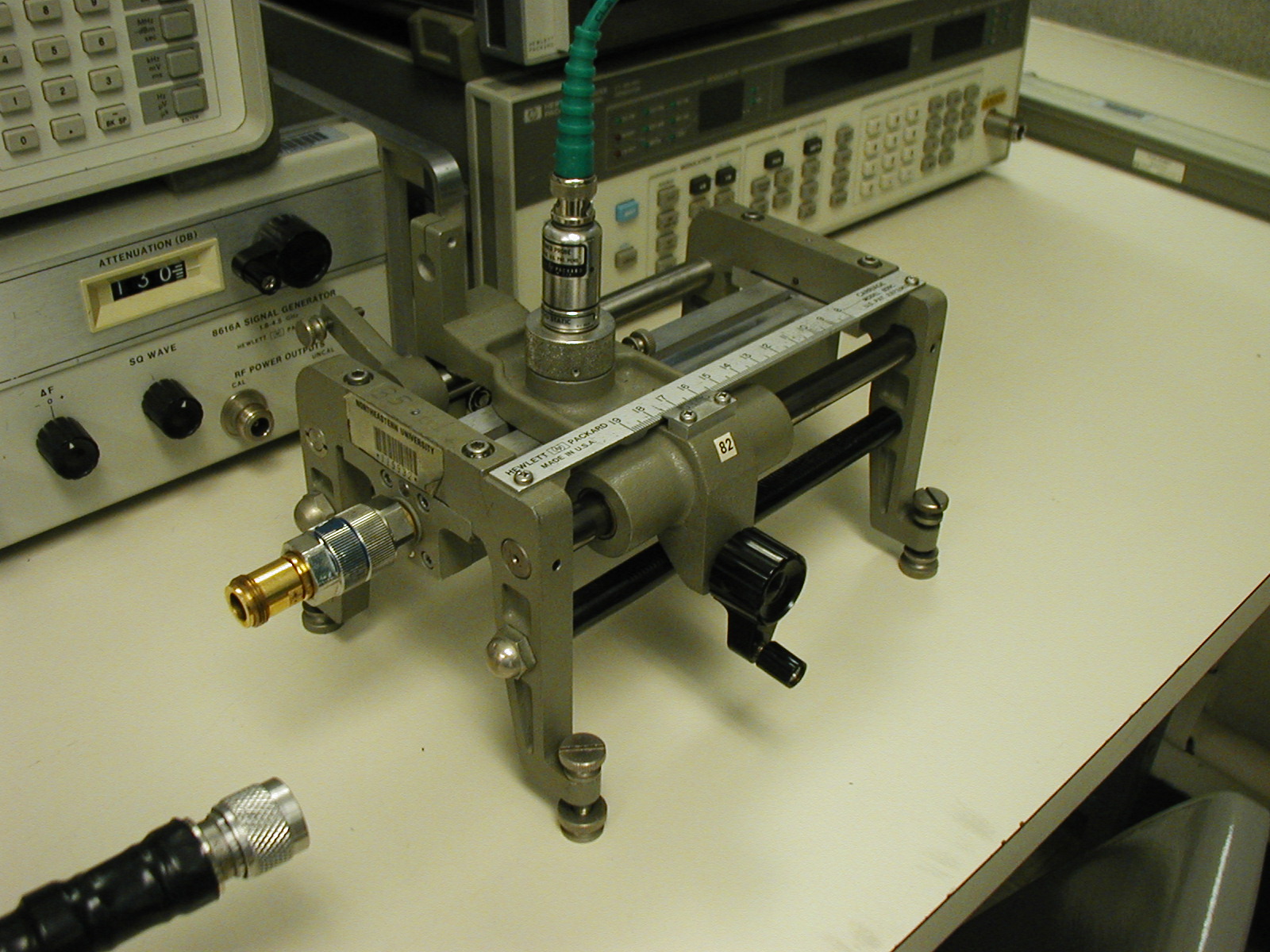
The no-longer-obtainable but still-useful Slotted Line for
students to measure and verify standing waves on a transmission line.
|
 |
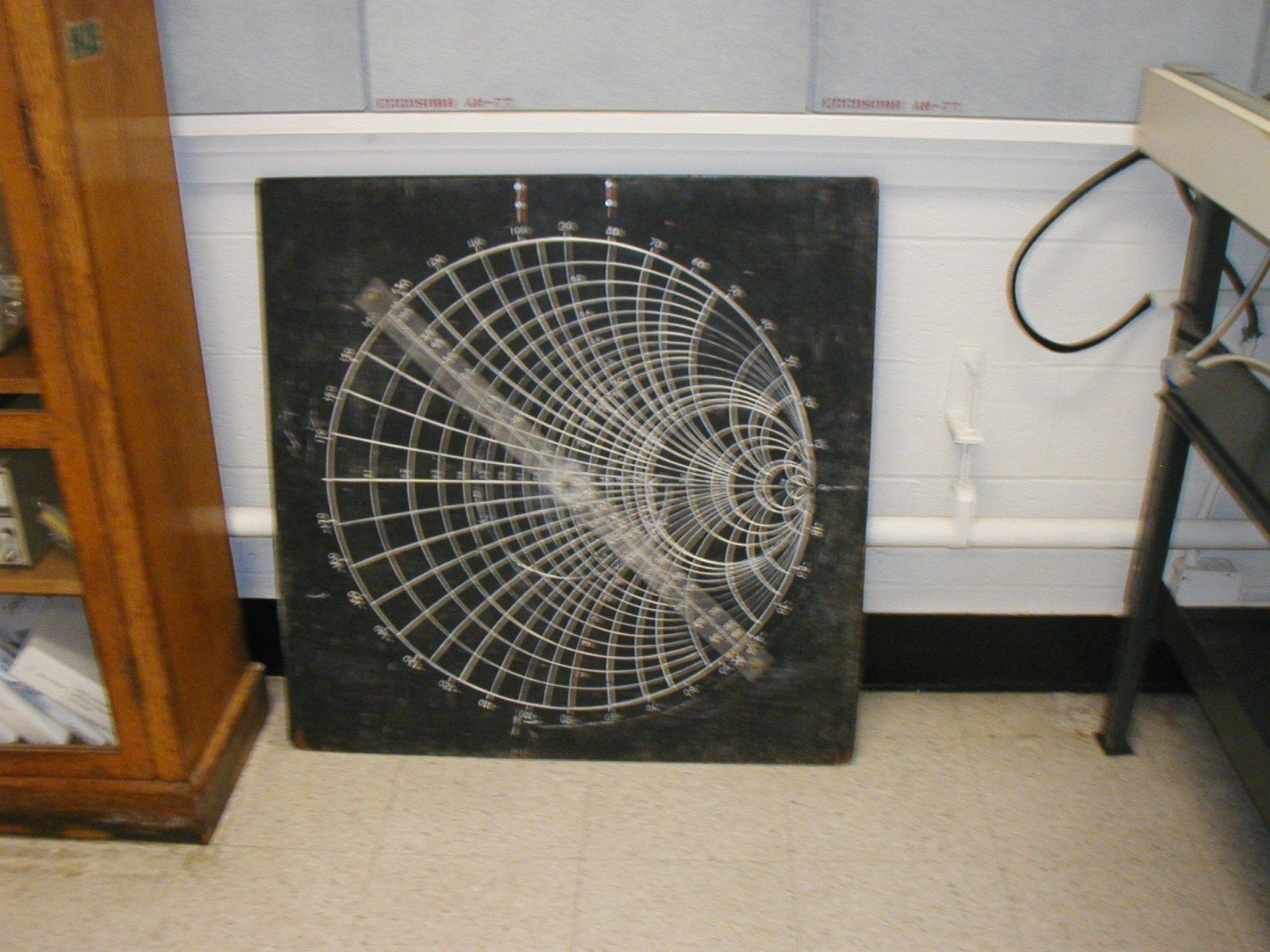
Smith chart chalkboard - will Reinhold insist that one of
these be installed in every classroom in AK?
|
 |
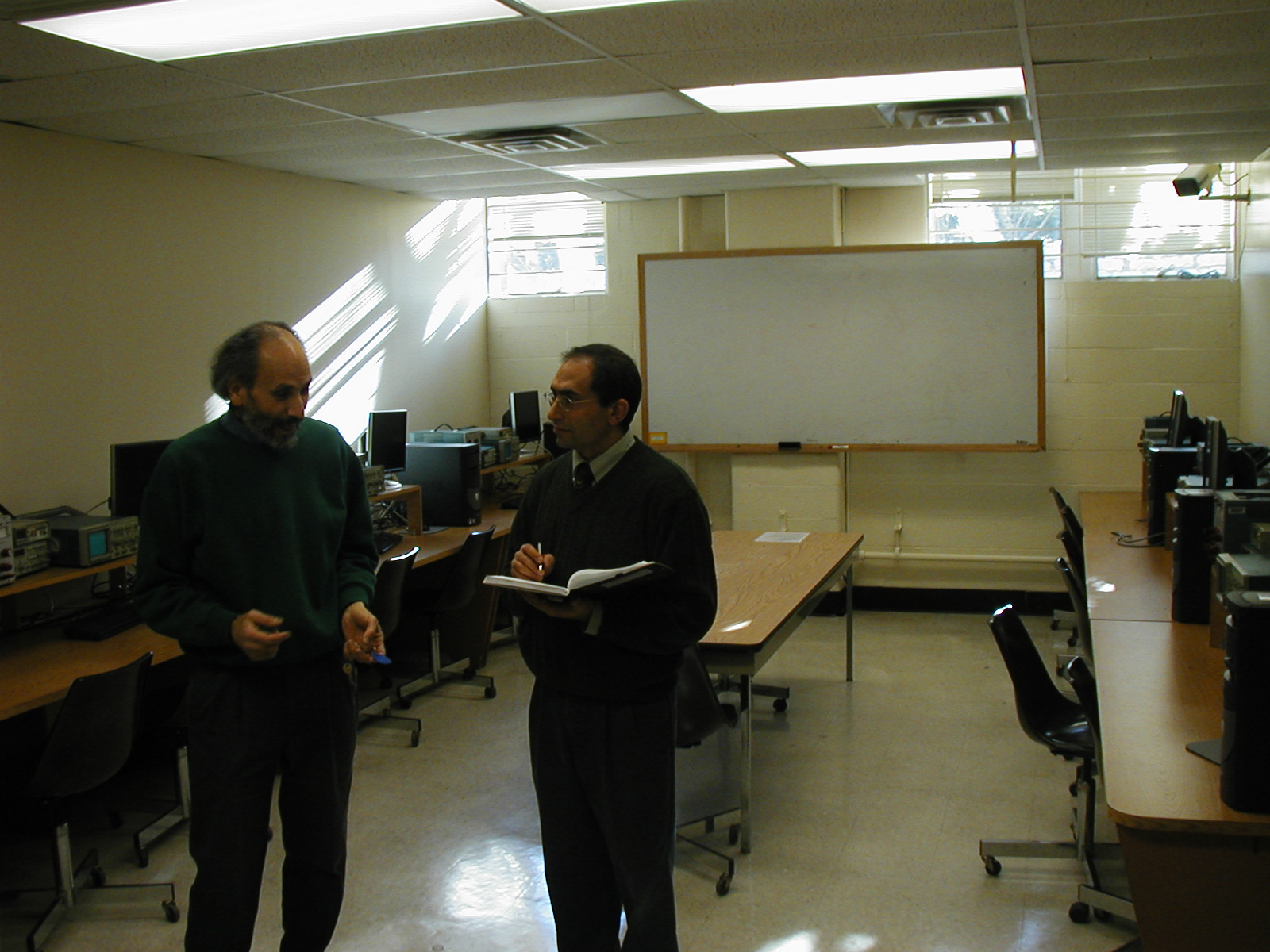
Amir and Steve in the DSP lab. Each station outfitted
with Analog Devices BlackFin DSP boards.
|
 |
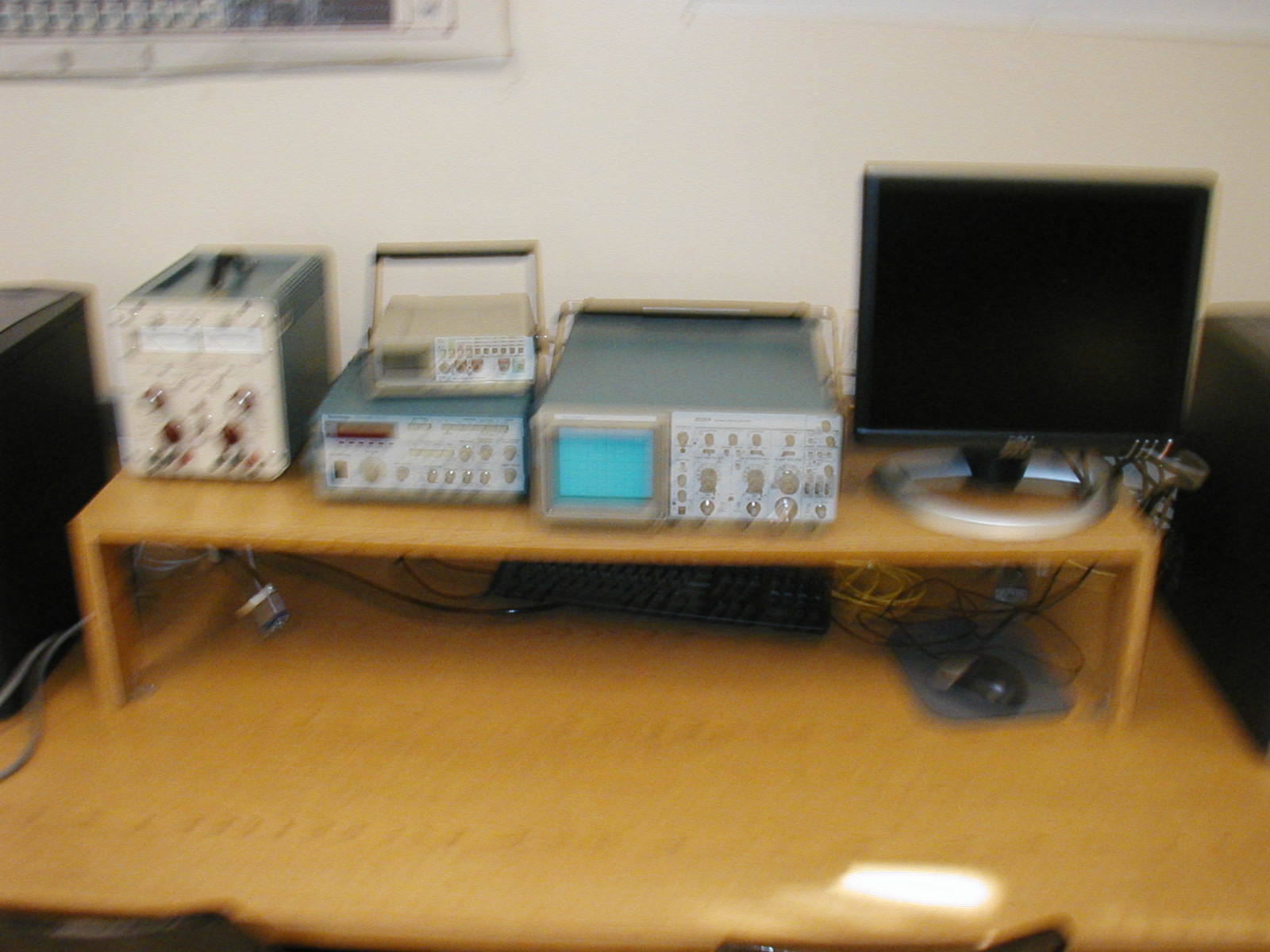
DSP bench setup (boards are signed out for lab session).
|
 |
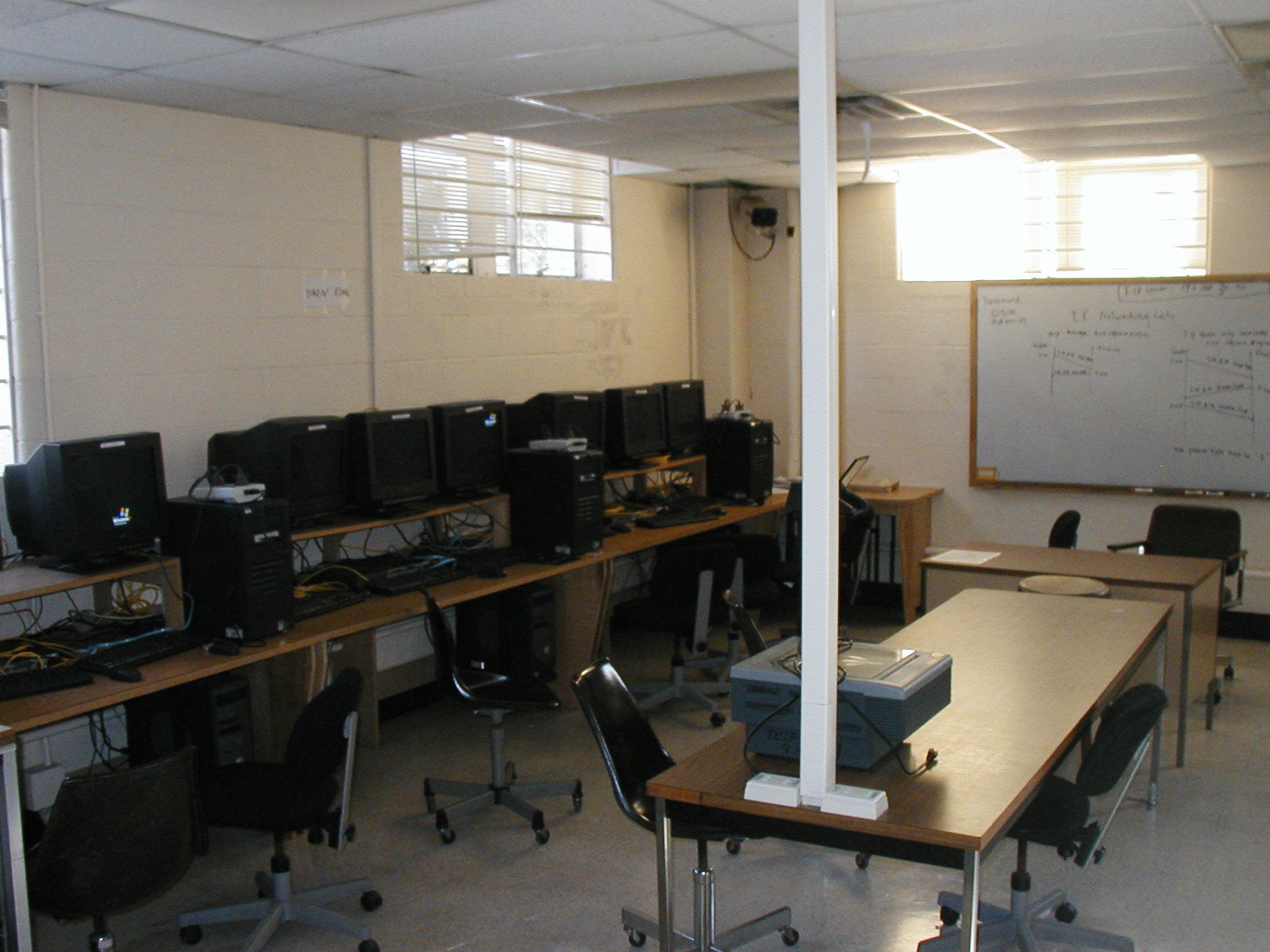
Networking lab: 6 stations, each with 3 PCs
|
 |
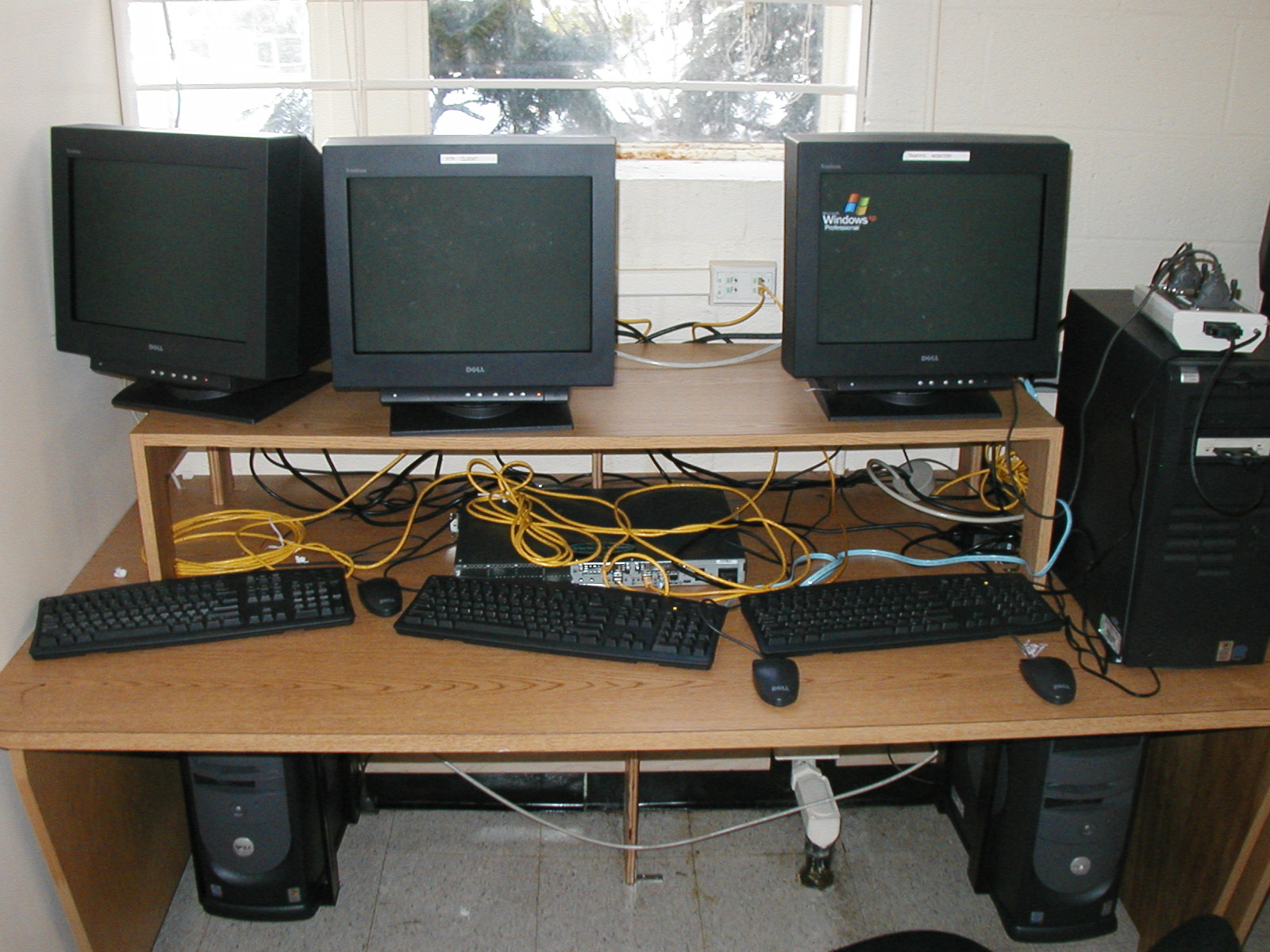
PCs in networking lab: one PC sends, one recevies, one is
network monitor.
|
 |
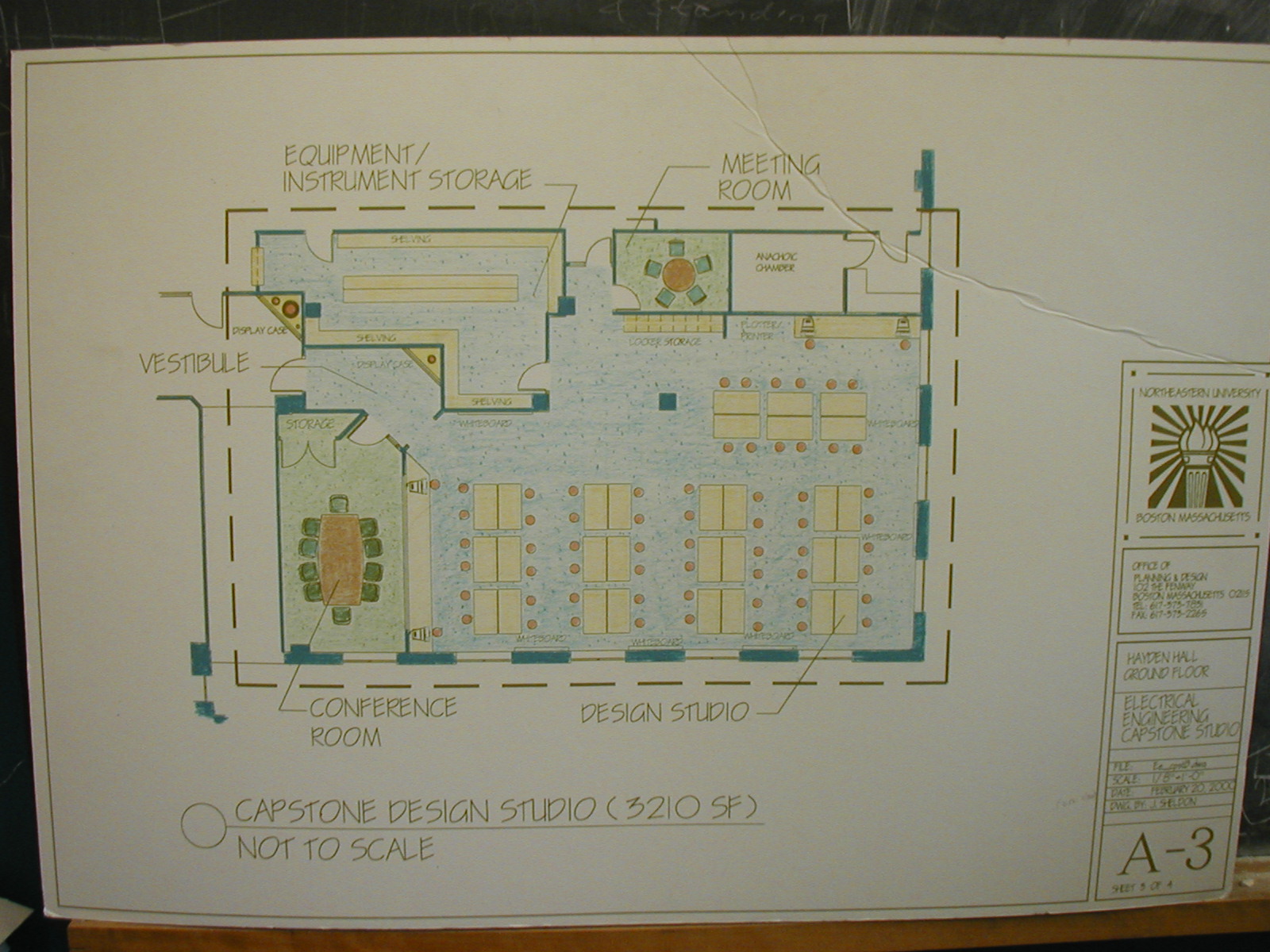
Layout of capstone design lab. Capstone project is one
semester of senior year; with ~100 graduates per year that means ~50
students in lab at any one time, divided into 15 projects.
Each project group gets 2 benches (only one with instruments).
Project groups are from 3 to 6 students, 15 projects per semester, 3
faculty are assigned advising of 5 projects which counts as their one
course load for that semester.
Also has large conference room and small meeting room for student use.
|
 |
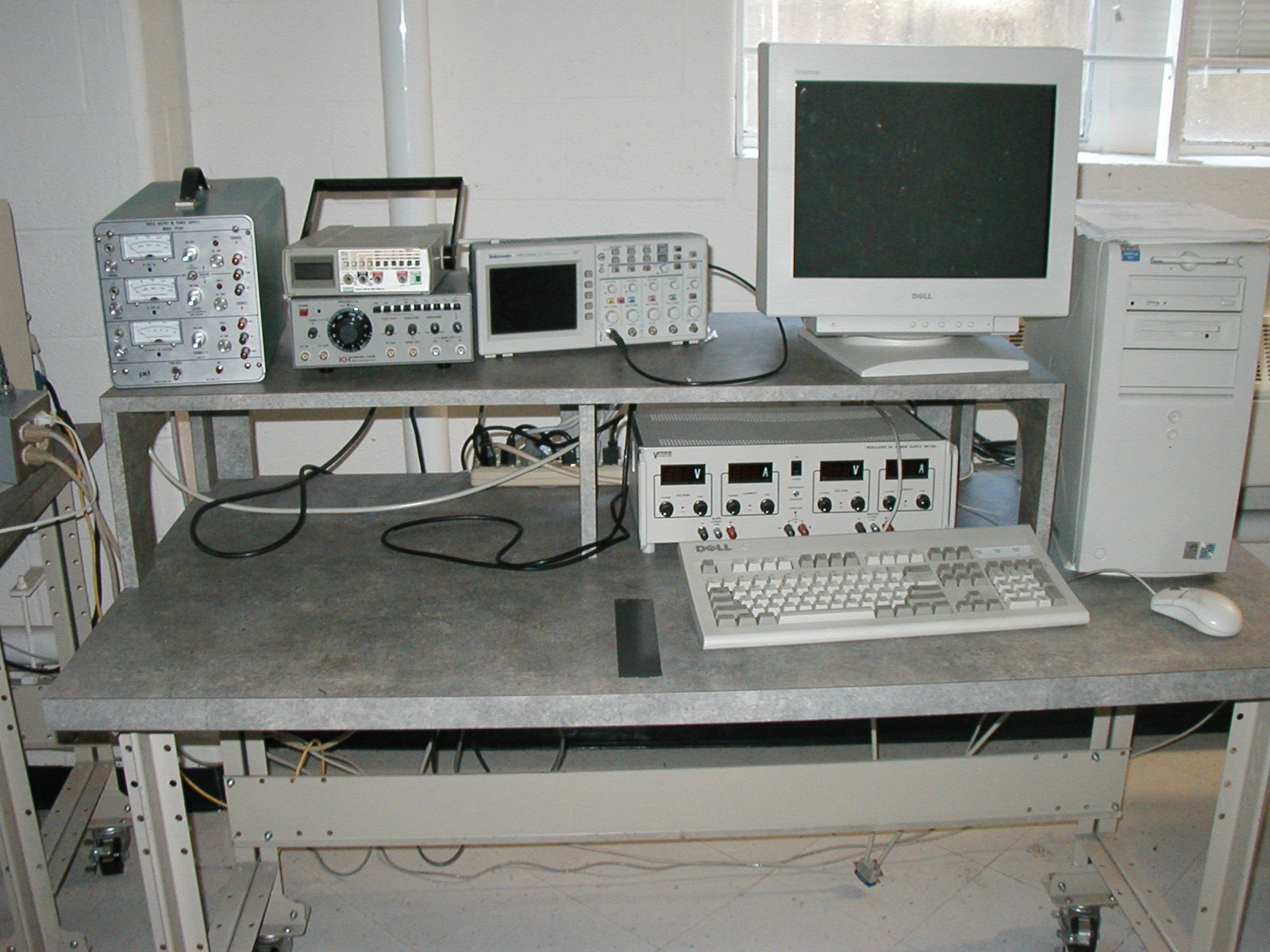
Typical bench in capstone lab. Benches are on wheels so
lab can be reconfigured depending on project lab space needs
|
 |
Boston University
|
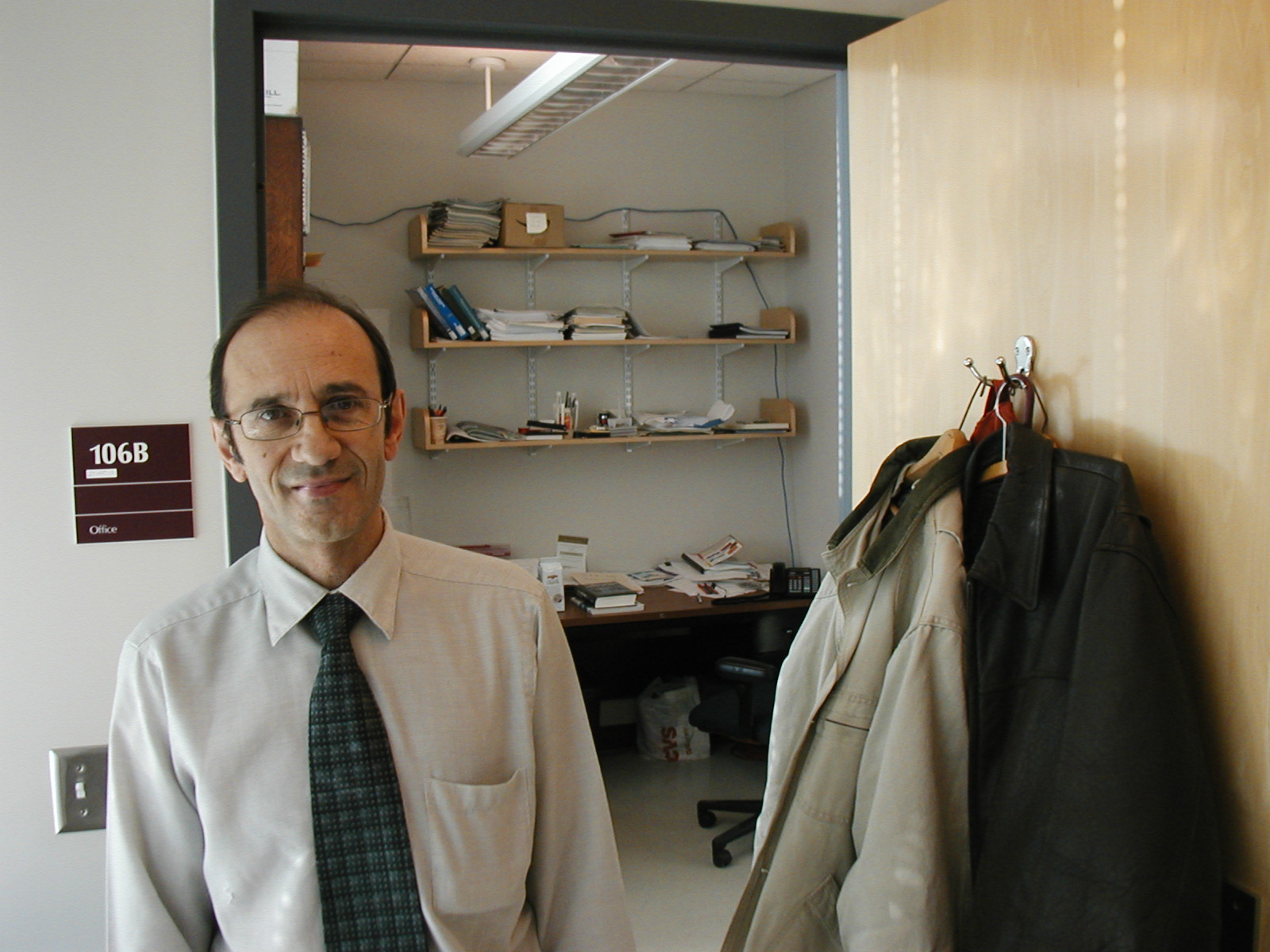
Our host at BU, Vladimir Kleptsyn.
|
 |
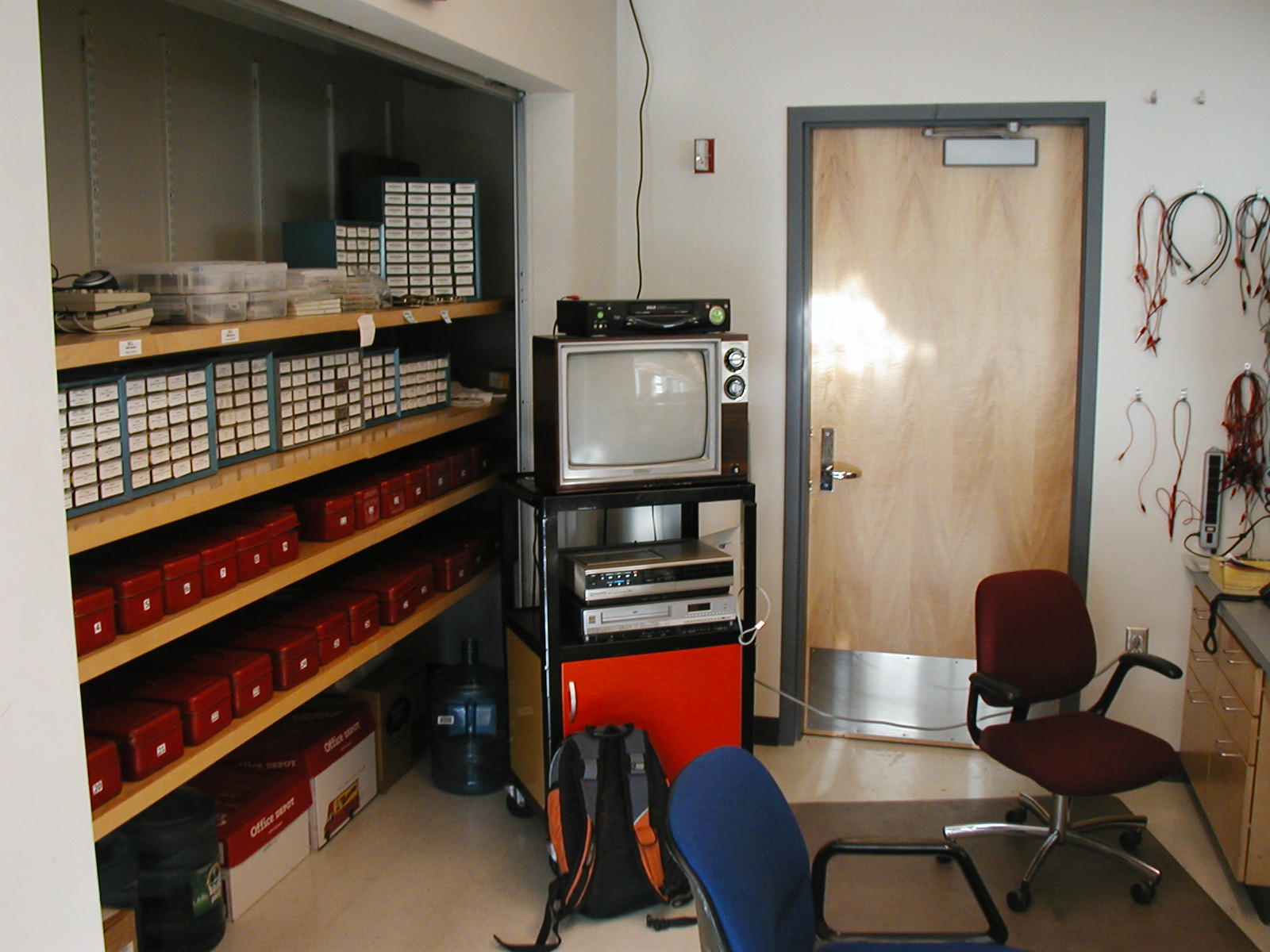
Shop area. Work-study students staff this area whenever
lab is open. Not visible, on the right, is a countertop and
window opening into the general lab area where students come to sign
out cables and parts.
|
 |
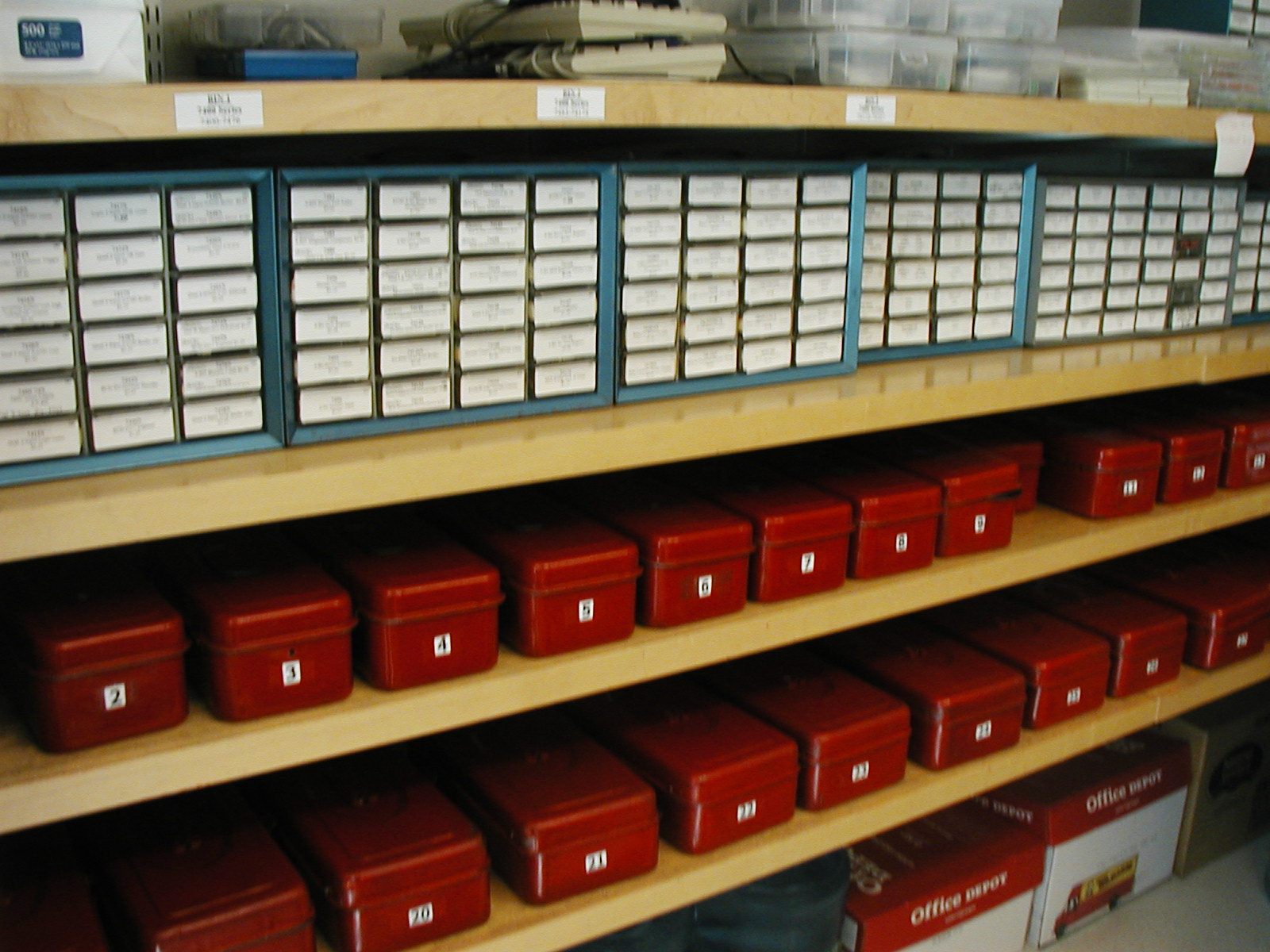
Red boxes are for cable sets for each station. Students
sign out cables, scobe probes, etc. at start of lab and leave their
ID. To get ID back they have to return entire cabling set in good
condition.
|
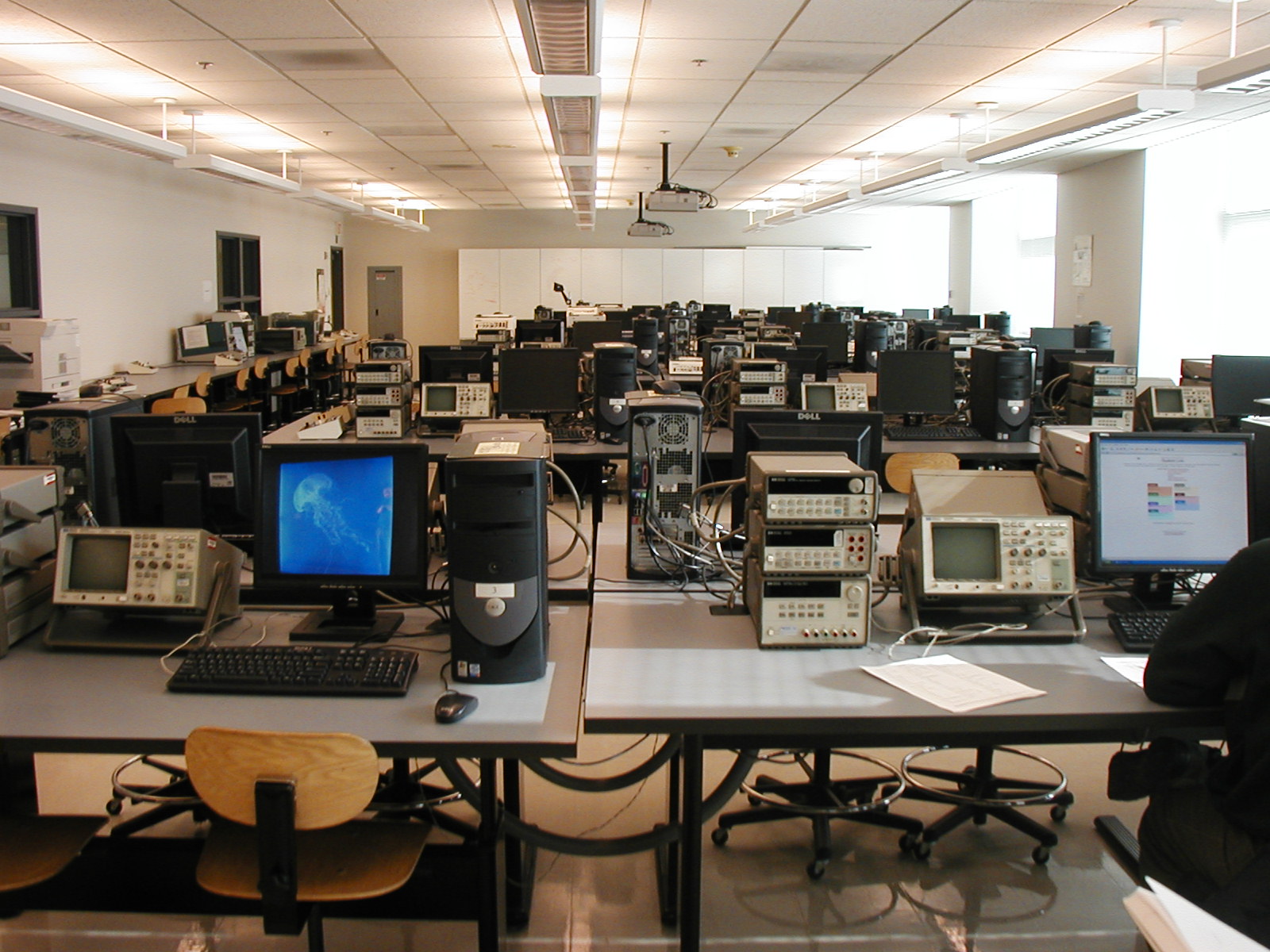
 |
Overview of microelectronics lab environment. 31
stations, much bigger than Northeastern. Note projection
facilities.
|
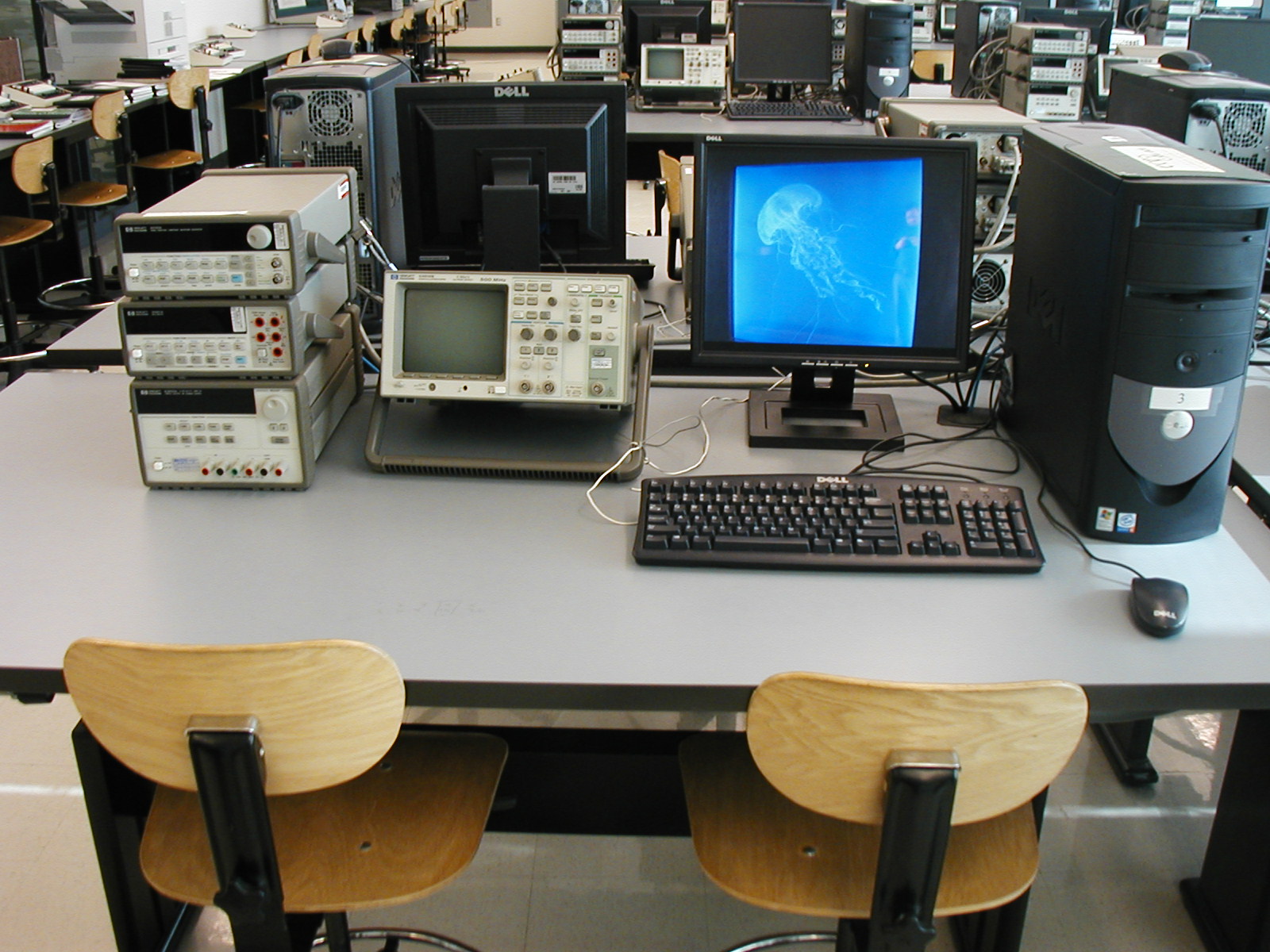
 |
Lab bench setup very similar to NU "Cool Tools" lab.
Makes sense, since BU had a co-author in FIE paper
that included similar NU lab.
|
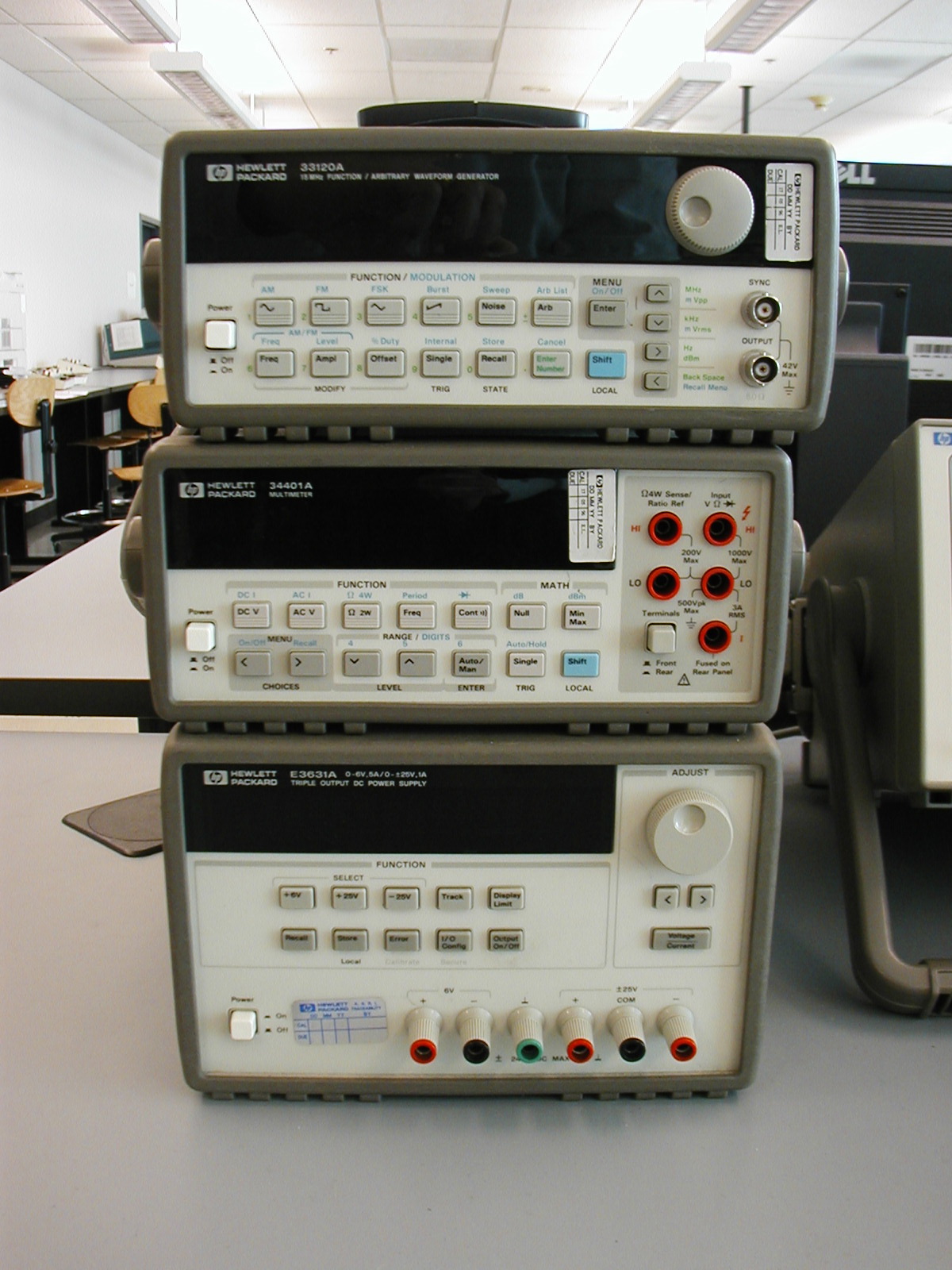
 |
Same suite of HP bench instruments ...
|
 |
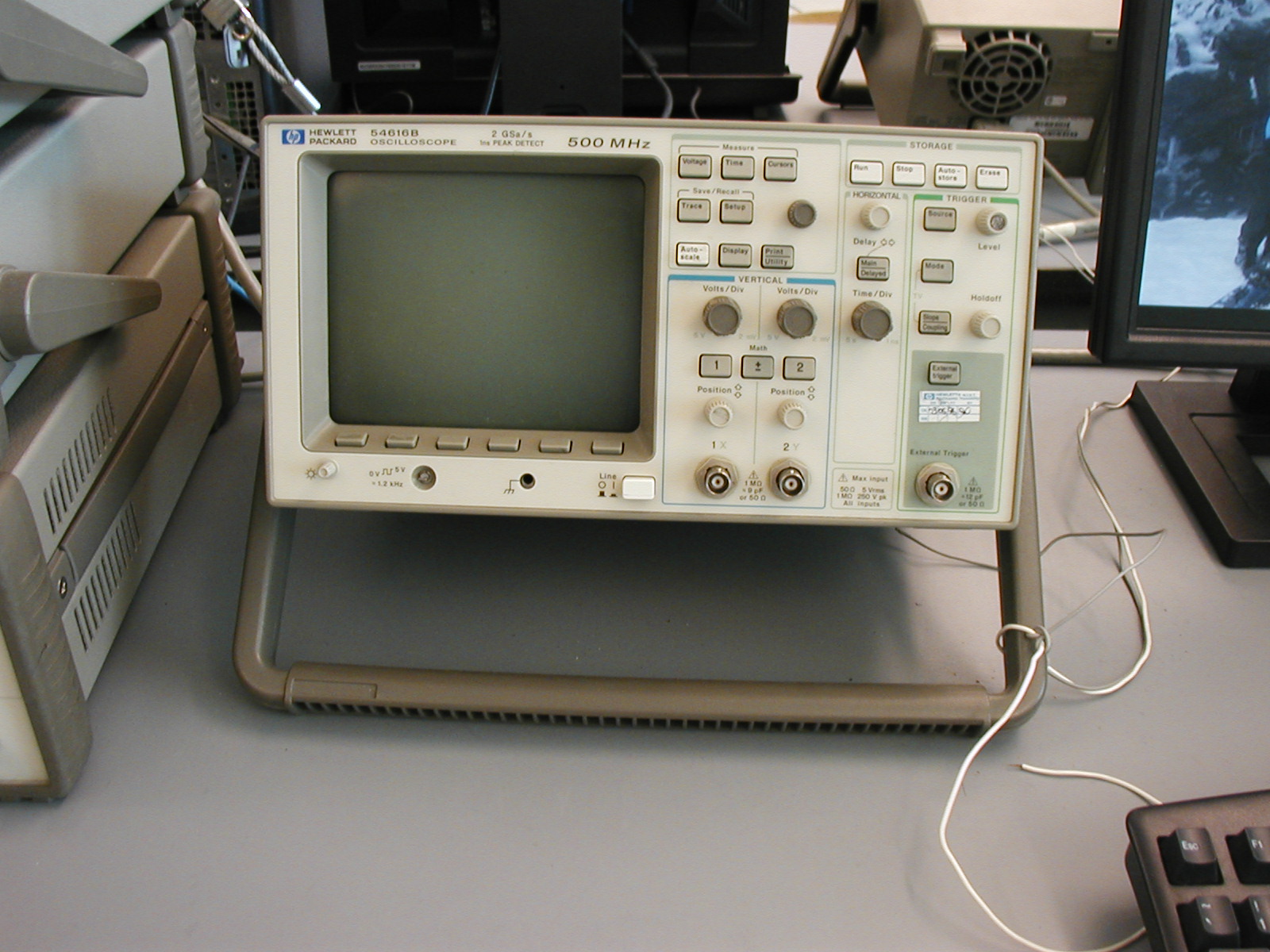
... and scope ...
|
 |
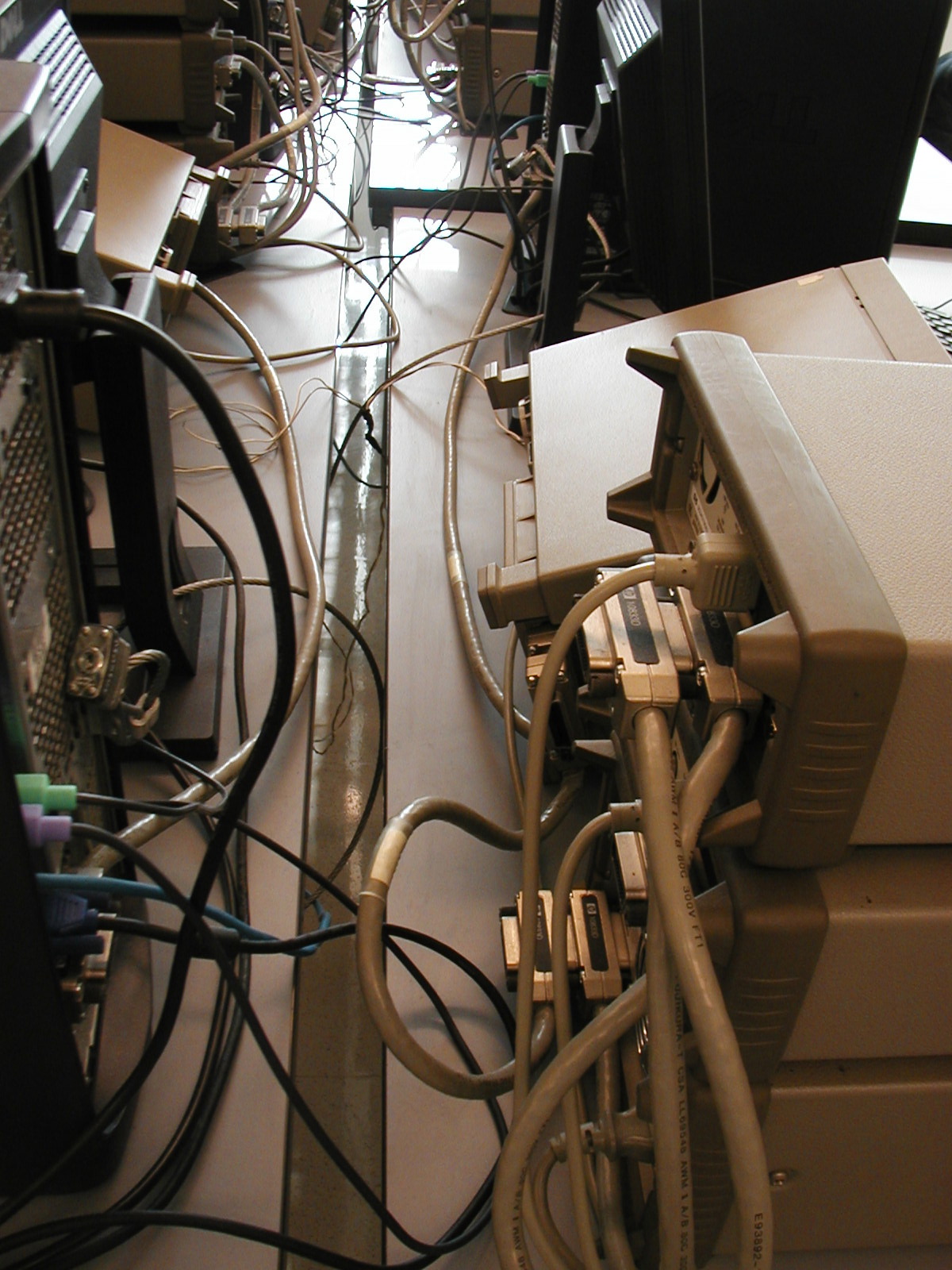
... connected to PC on GPIB bus.
|
 |
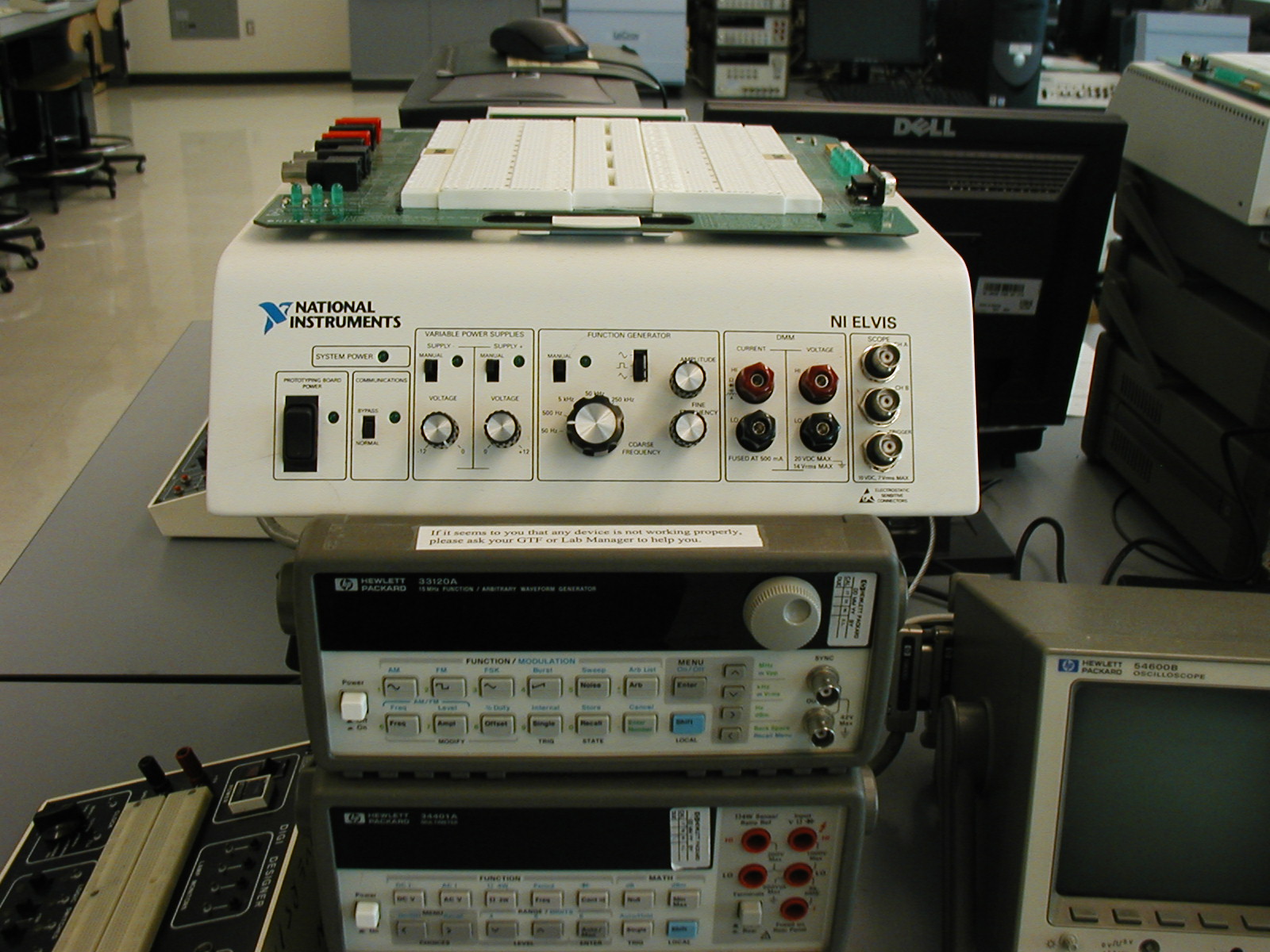
ELVIS
is in the building. Vladimir, our host, noted
that these are not used very much (only one professor).
|
 |
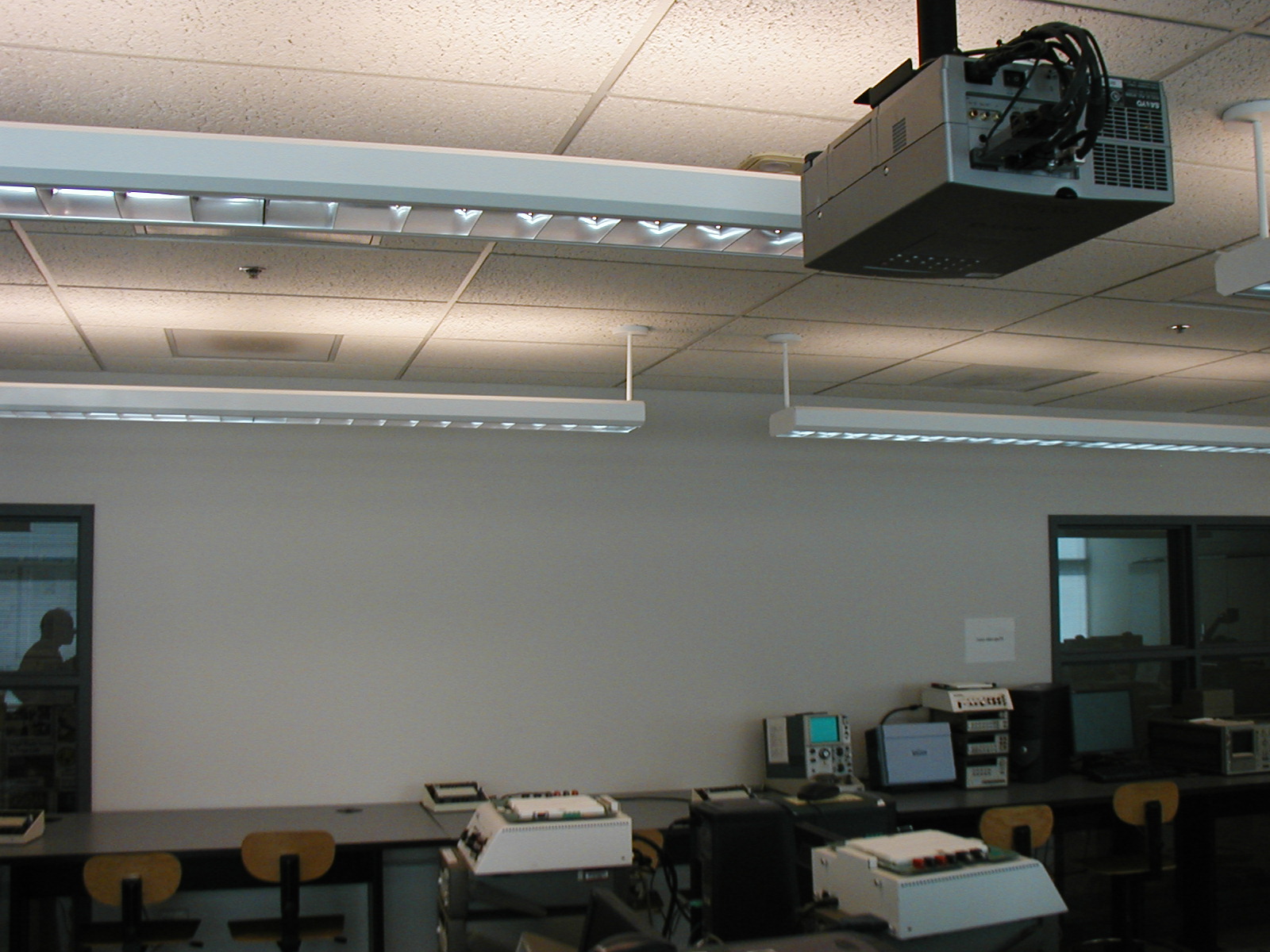
Overhead projection capability.
|
 |
Laser printer available in lab.
|
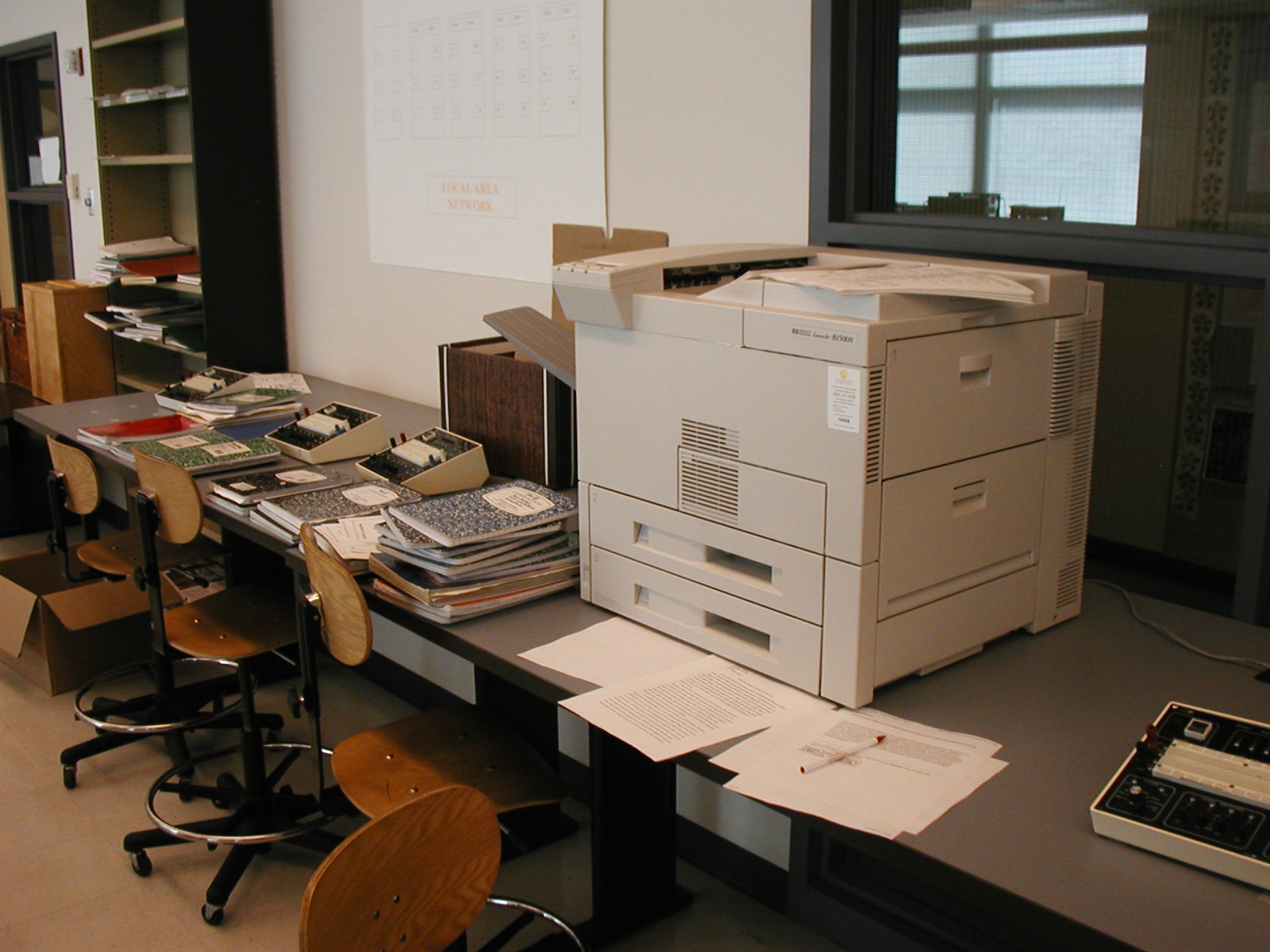 |
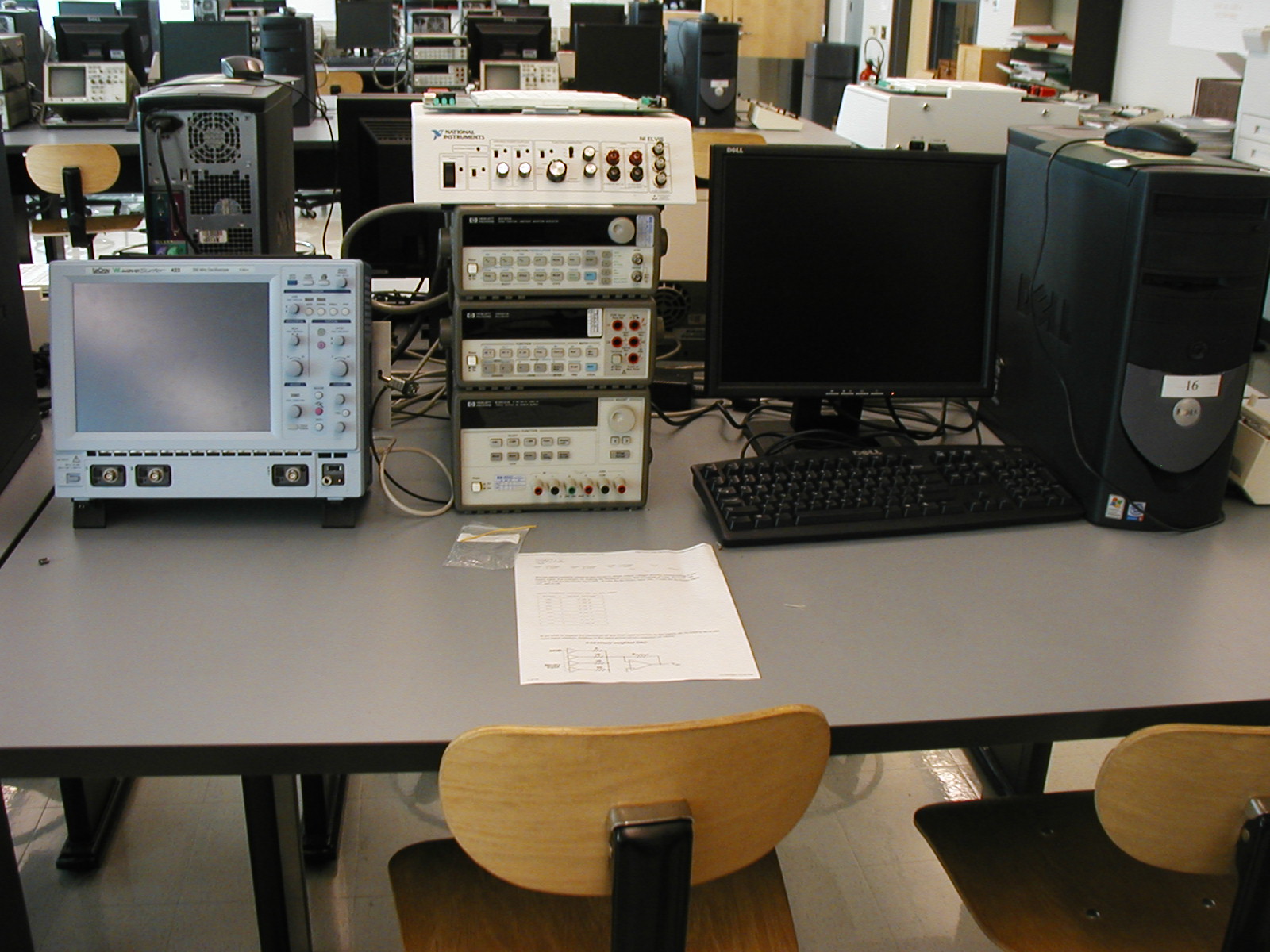
Some ELVIS stations have newer LeCroy scopes. Vladimir
noted that LeCroy scopes run on PC operating system and are a major
security hole!
|
 |
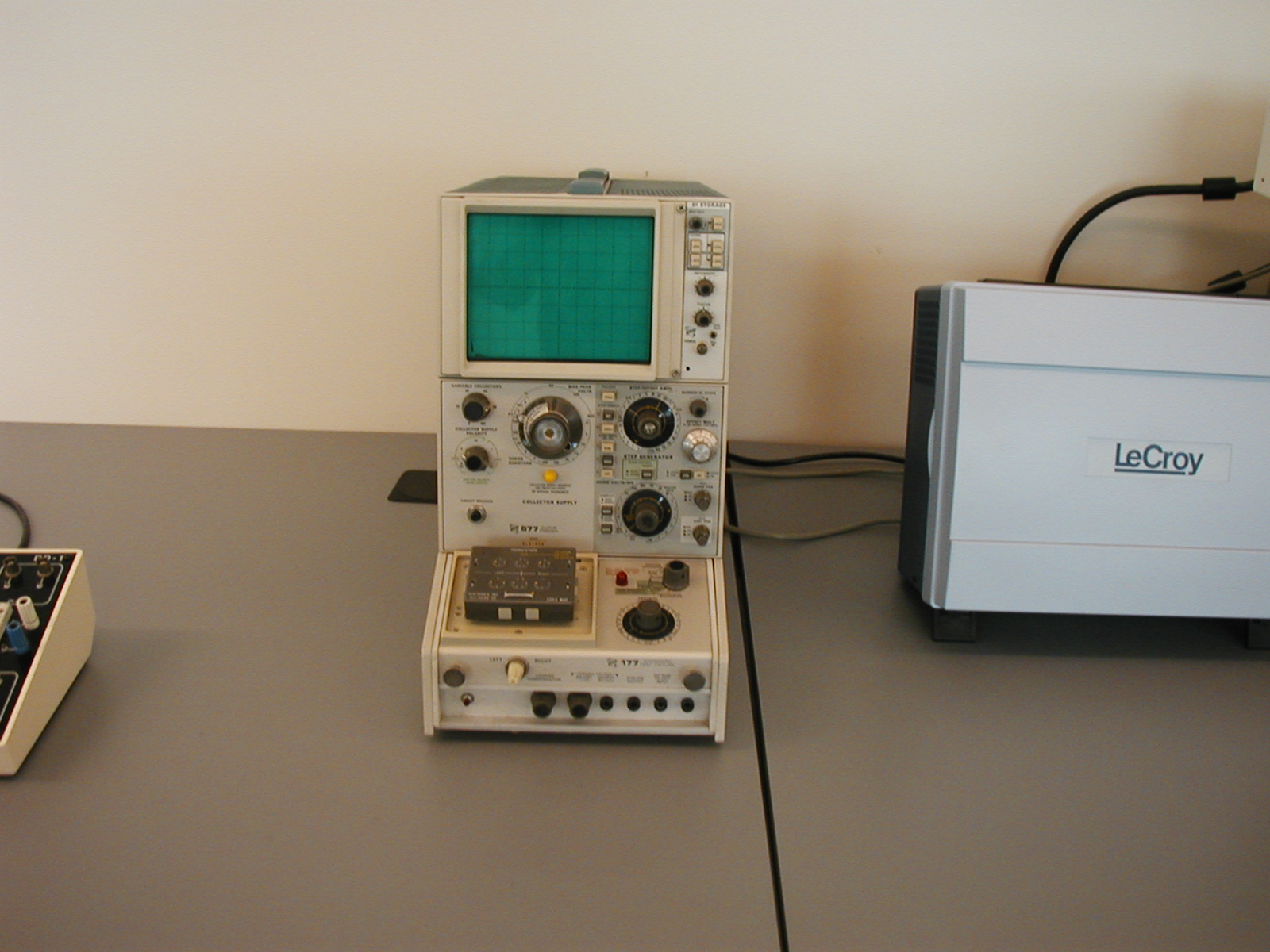
Available at one location in microelectronics lab: curve
tracer ...
|
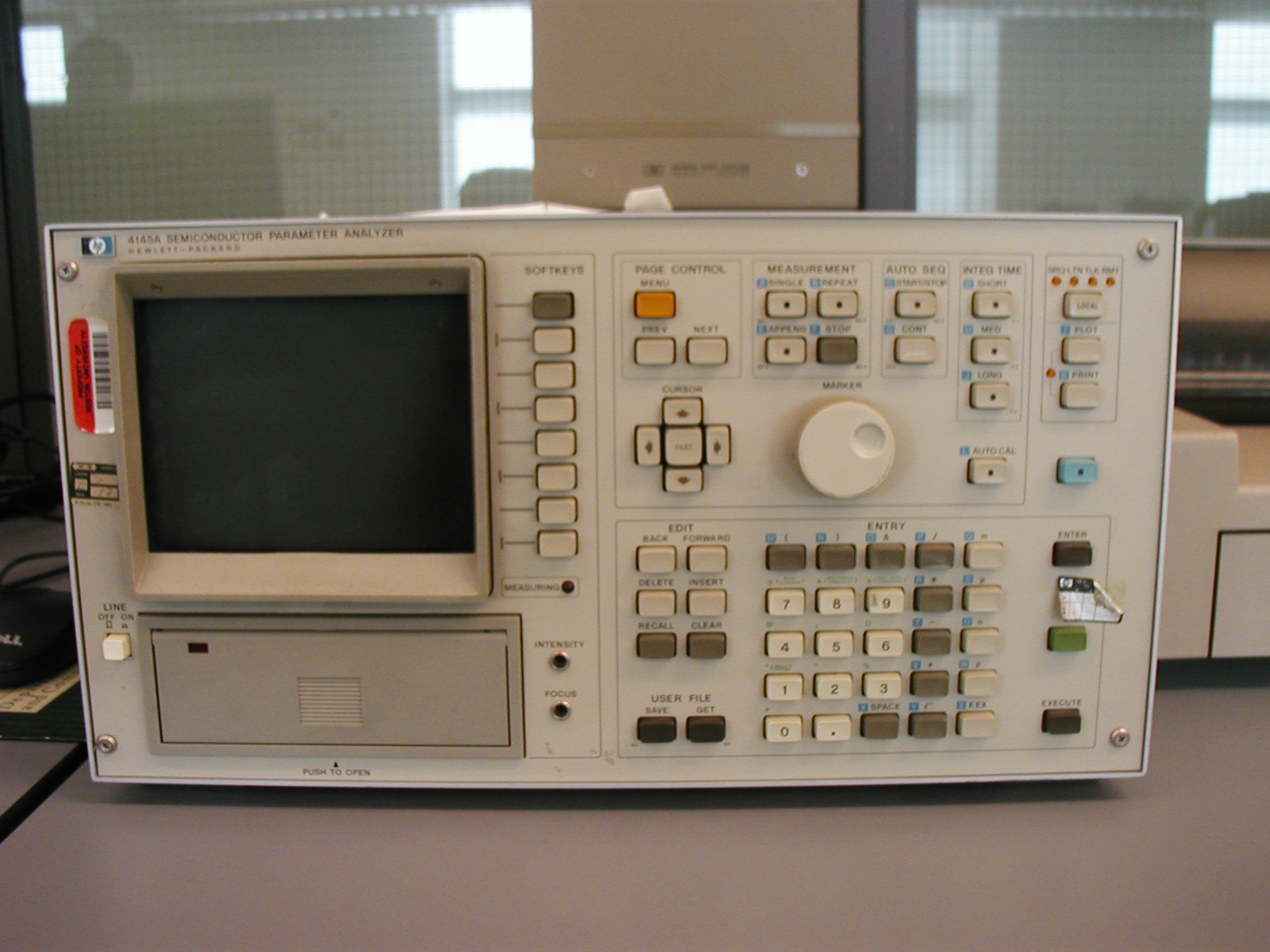
 |
... and semiconductor parameter analyzer ...
|
 |
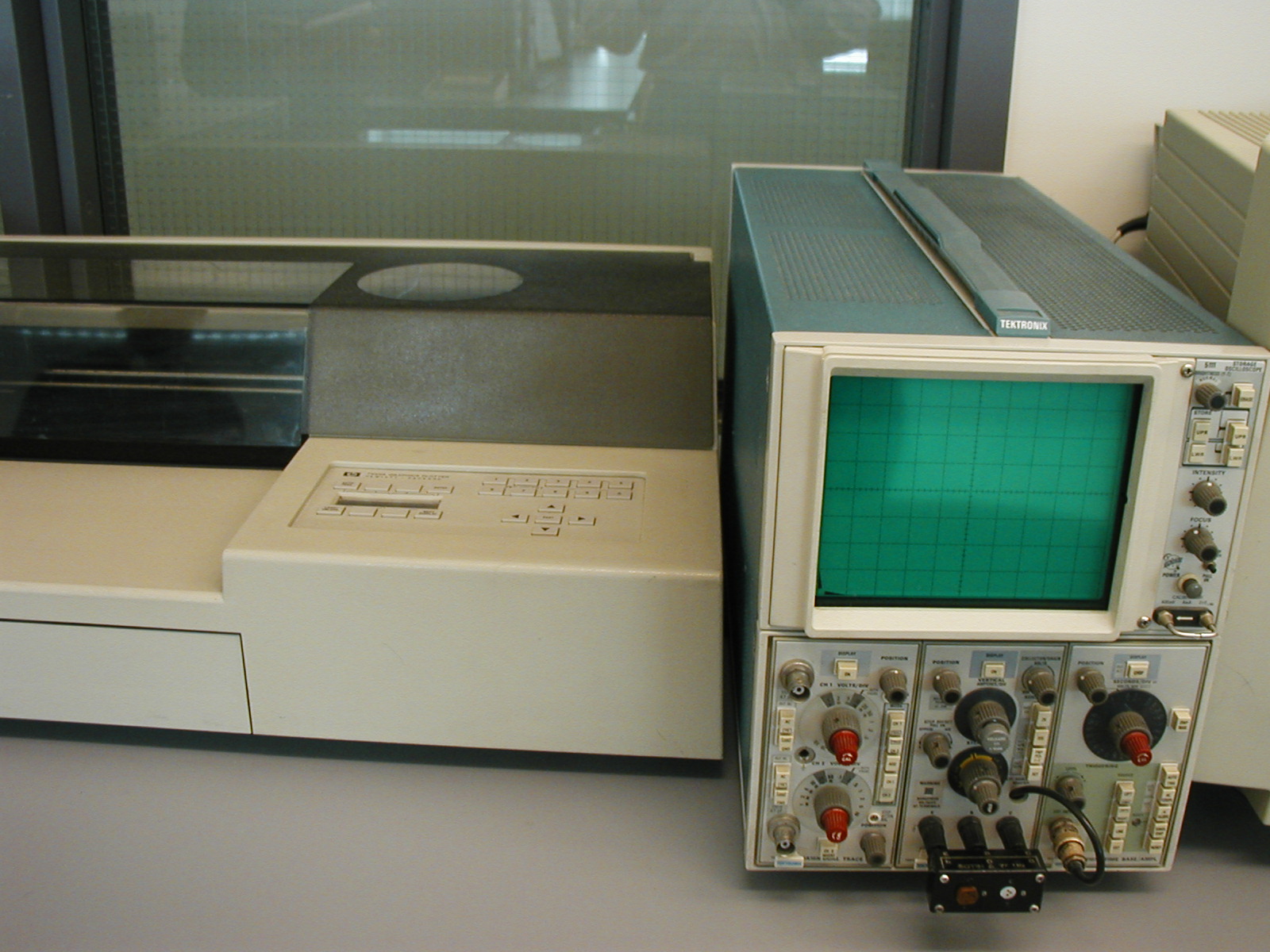
... as well as classic analog scope and plotter.
|
 |
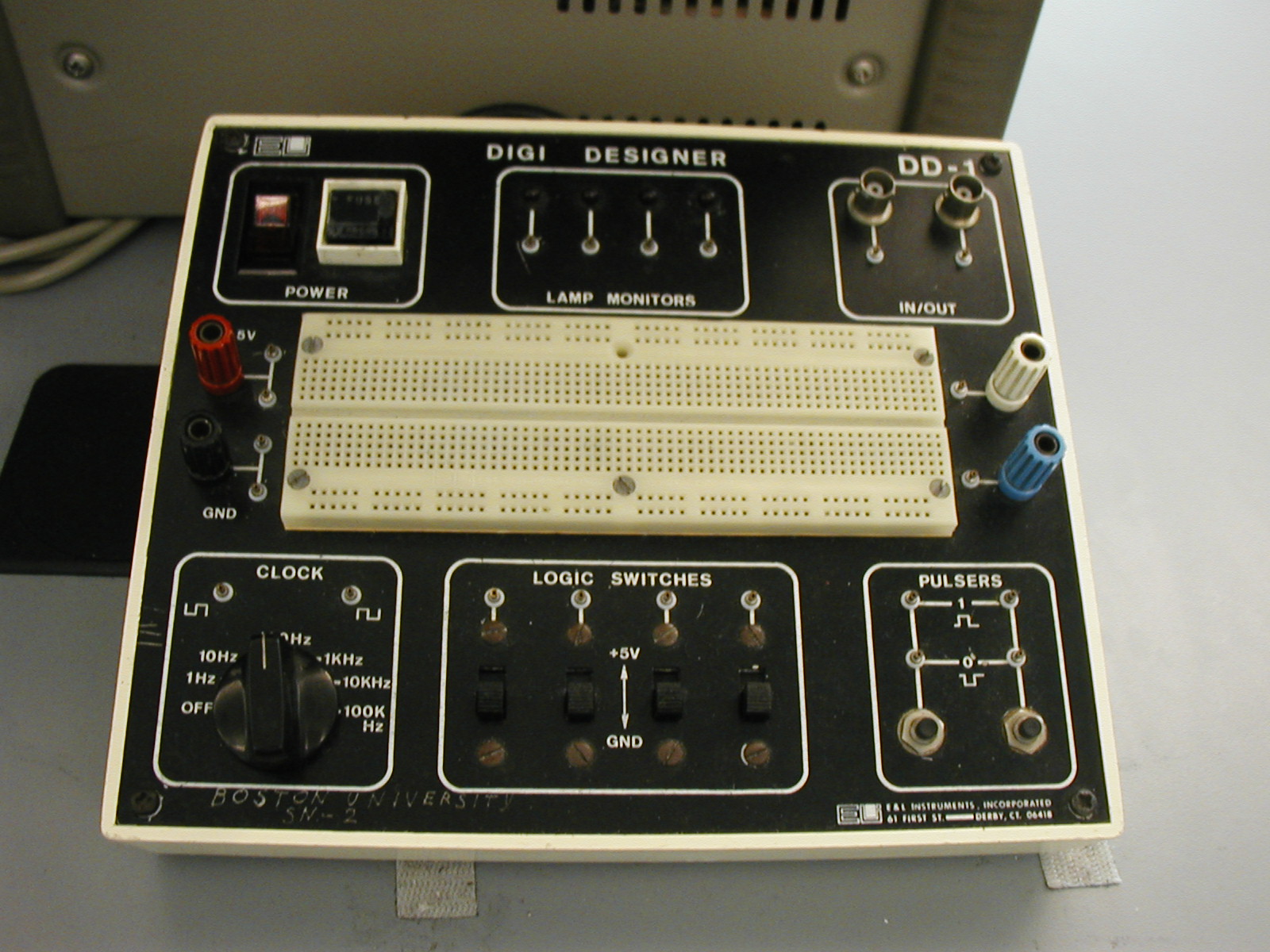
"Digi Designer" for use in digital labs. Wow.
|
 |
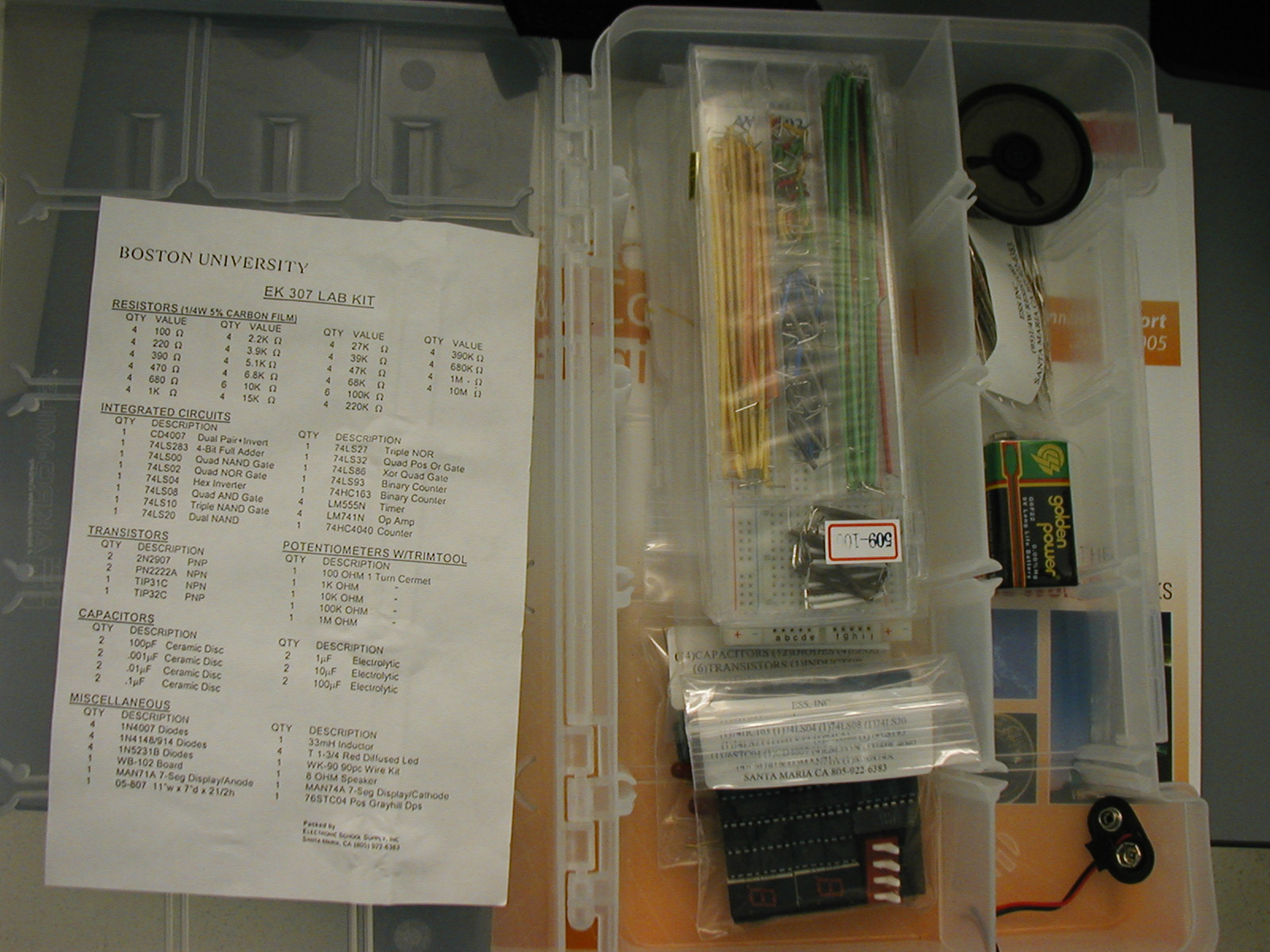
Their students purchase a lab kit, about $40. Does not
include tools (which are in bins that are signed out).
|
 |
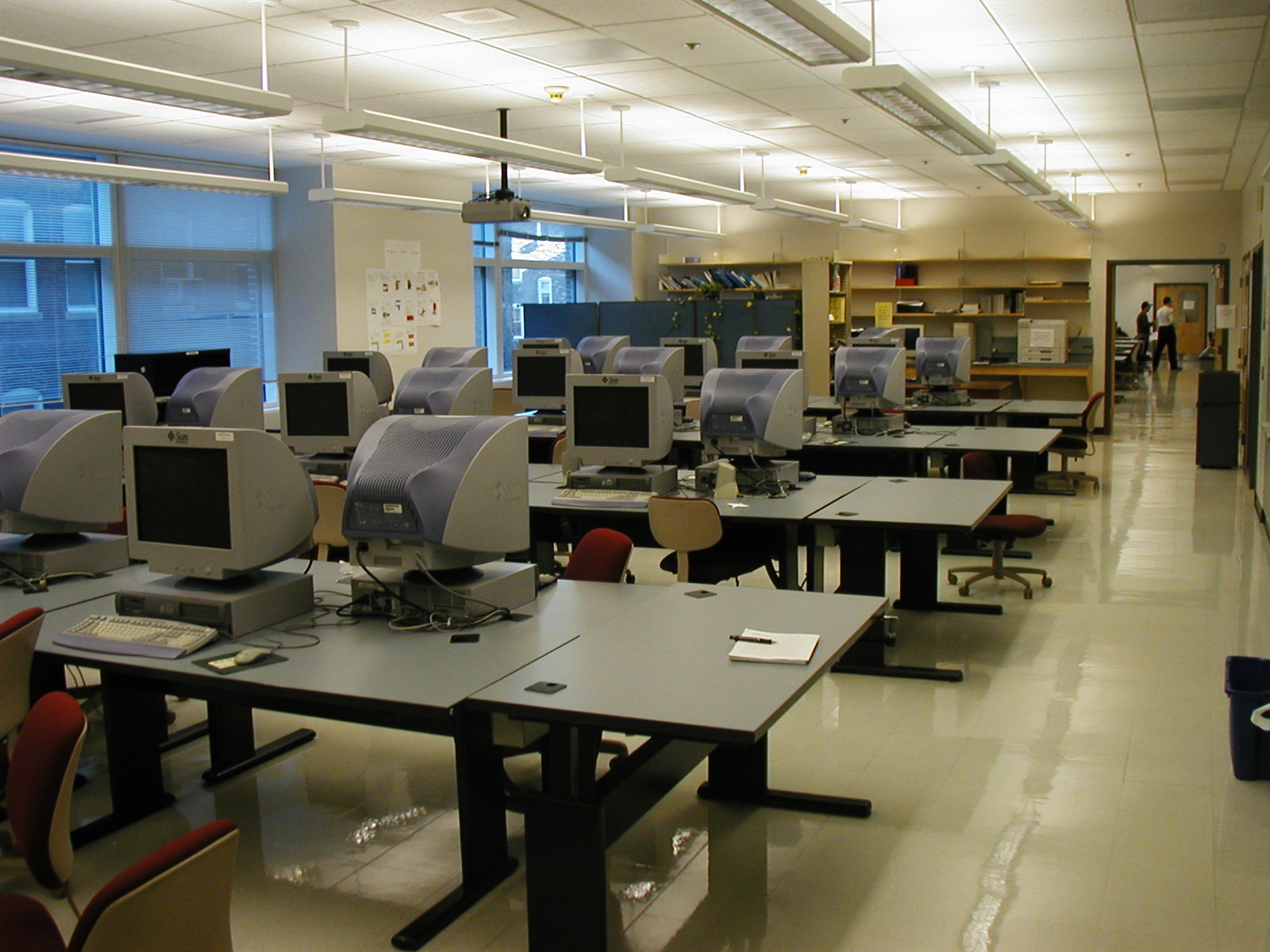
VLSI lab full of obsolete sun workstations.
|
 |
Digital / signals lab.
|
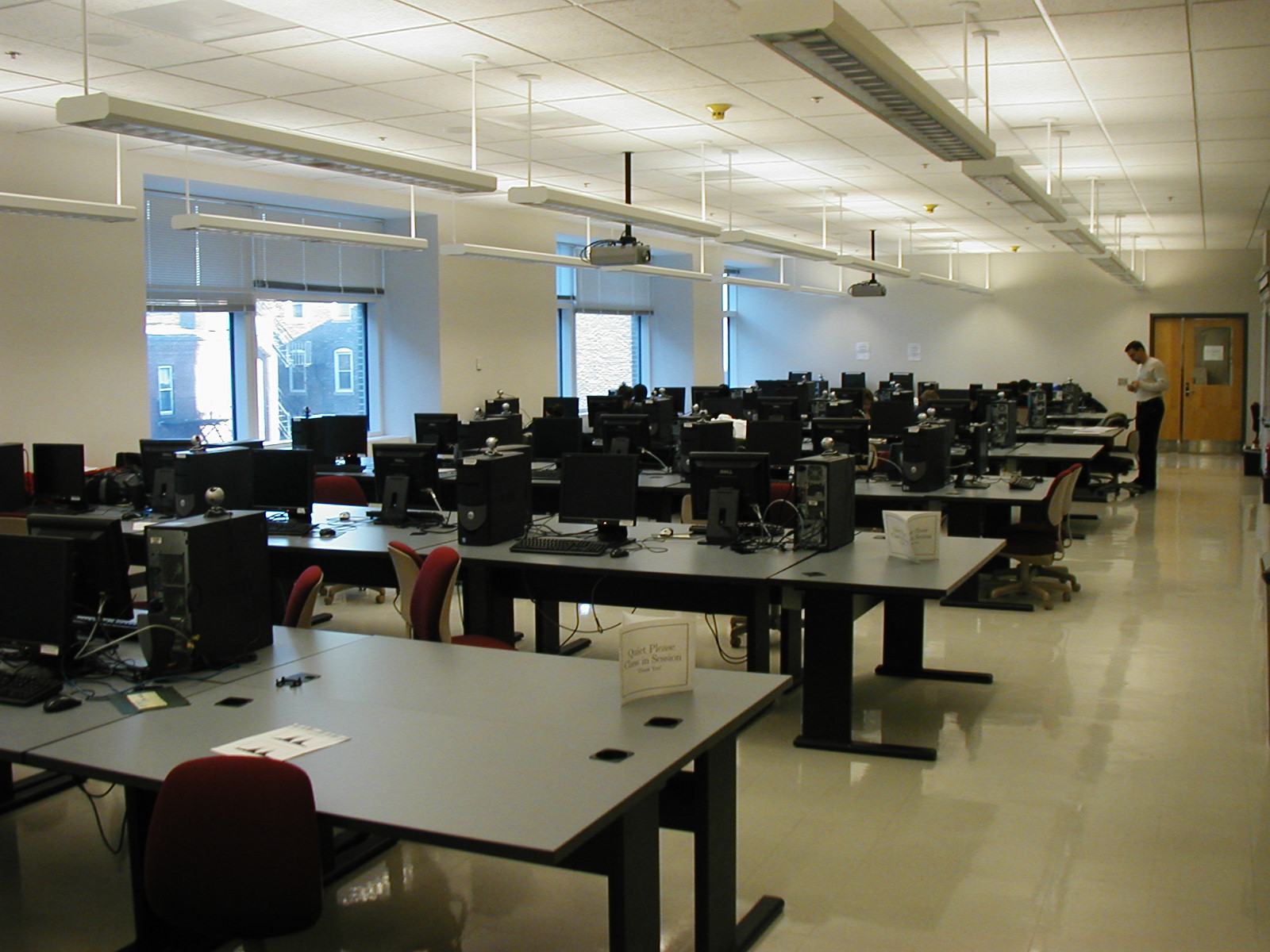 |
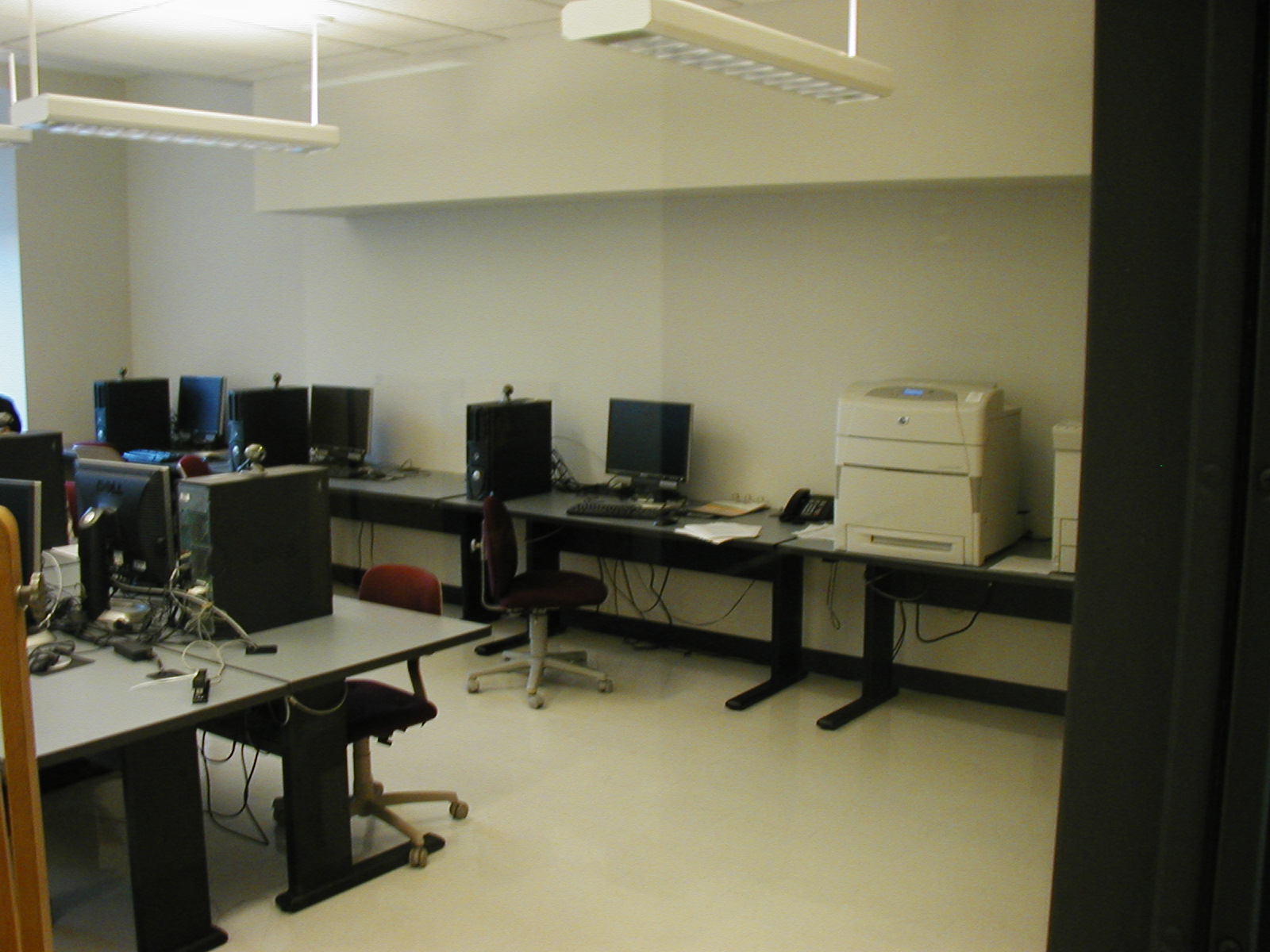
DSP lab at BU.
|
 |
Some
side trips through BU's huge Photonics Research Building which houses
ECE as well as some other things:
|
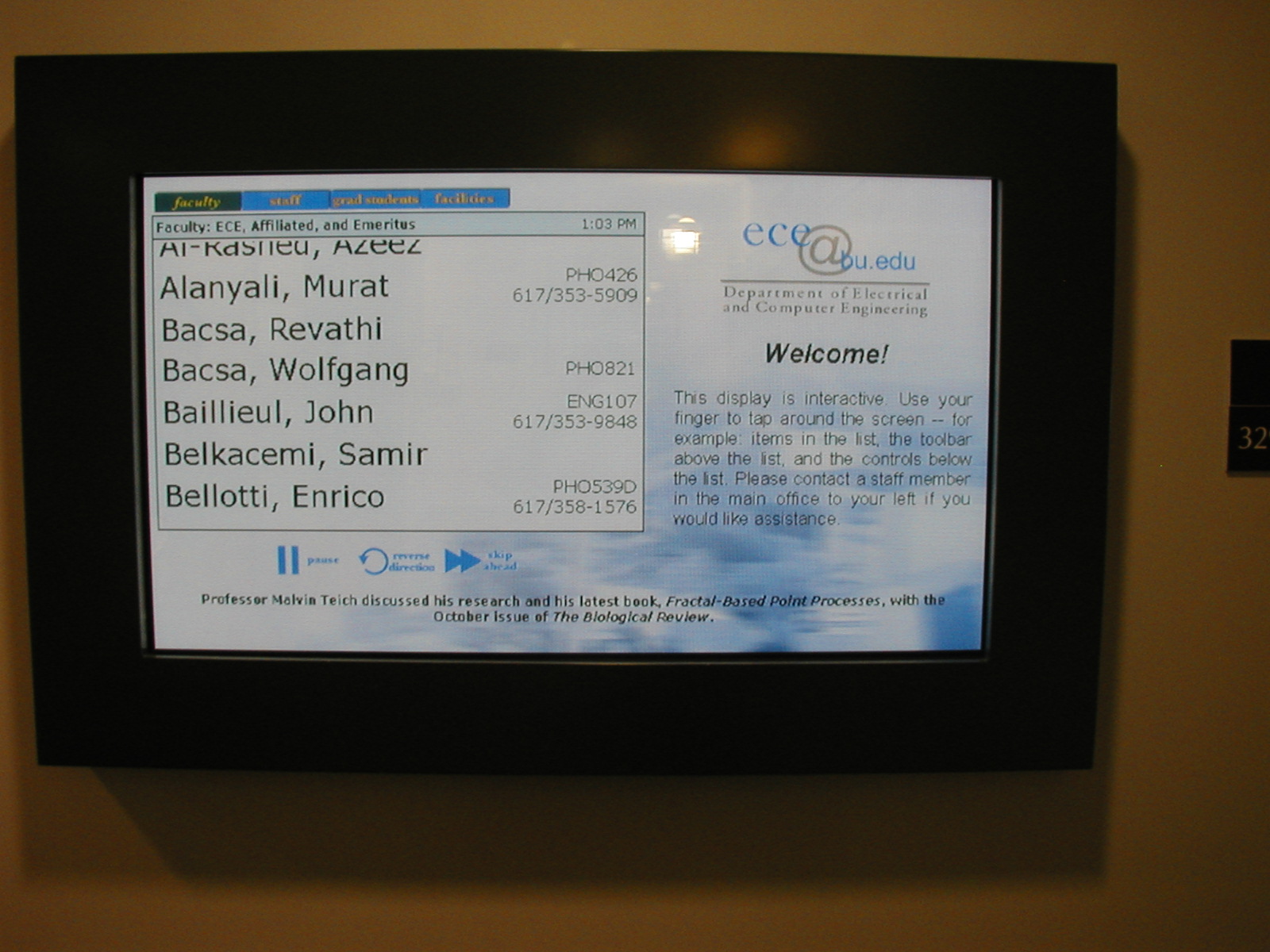
Cool touch screen directory at main office.
|
 |
One floor of Photonics building appears to be dedicated to
business incubators.
|
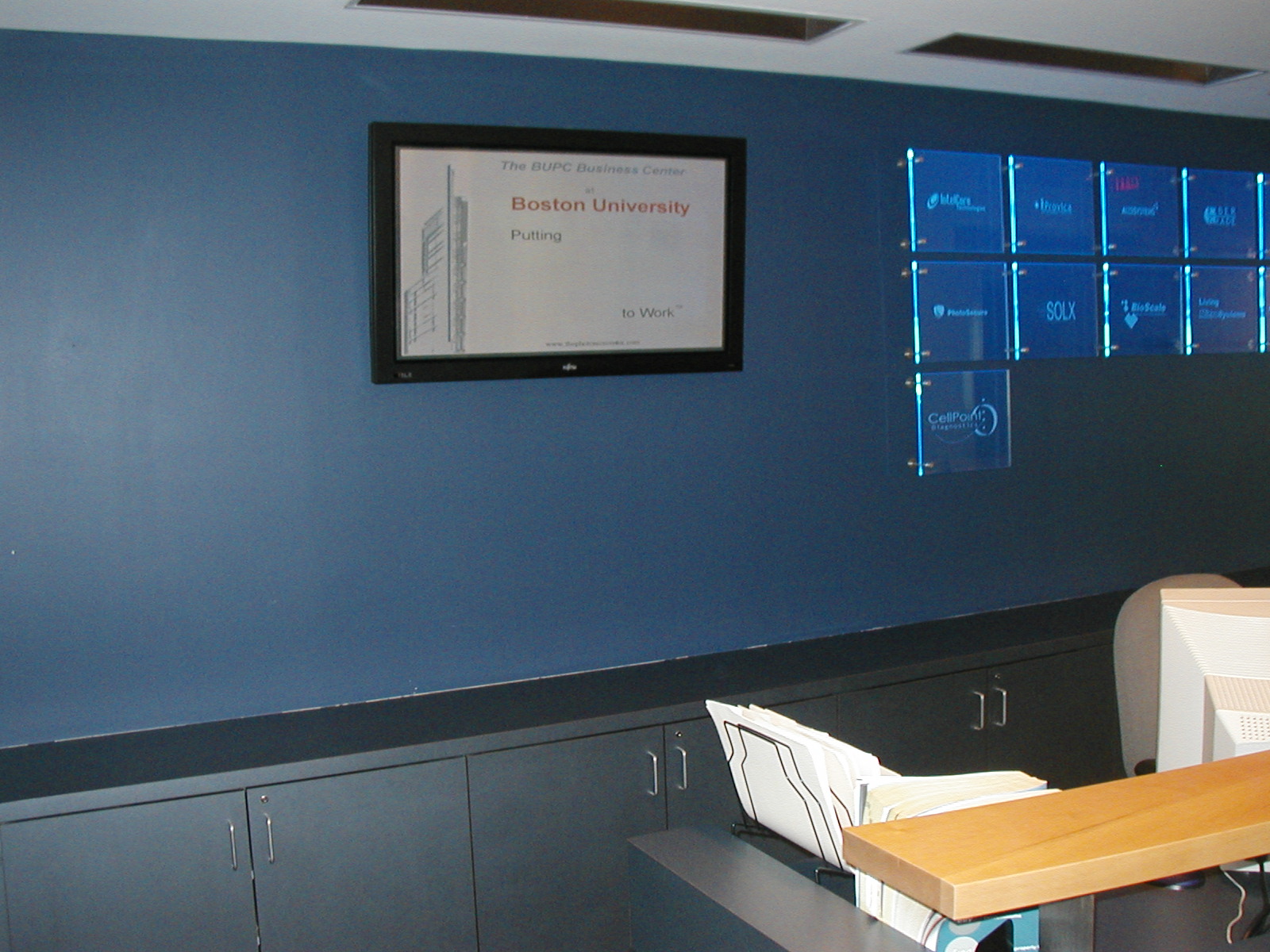 |
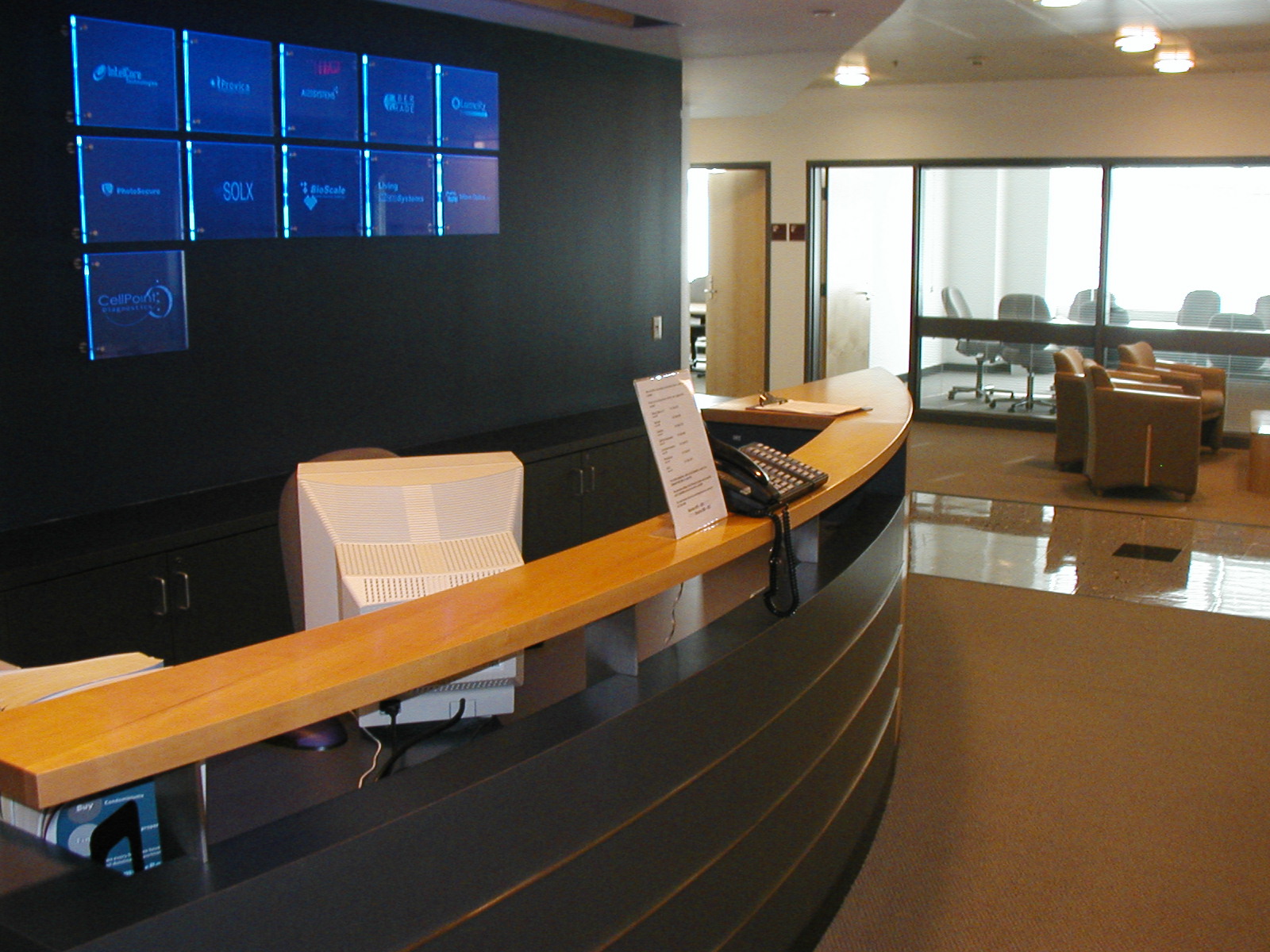
Polished reception area, conference rooms for fleecing VCs of
their money - is this what Gateway Park will be?
|
 |
Stroll
from BU, through Kenmore square, across Charles River ...
|
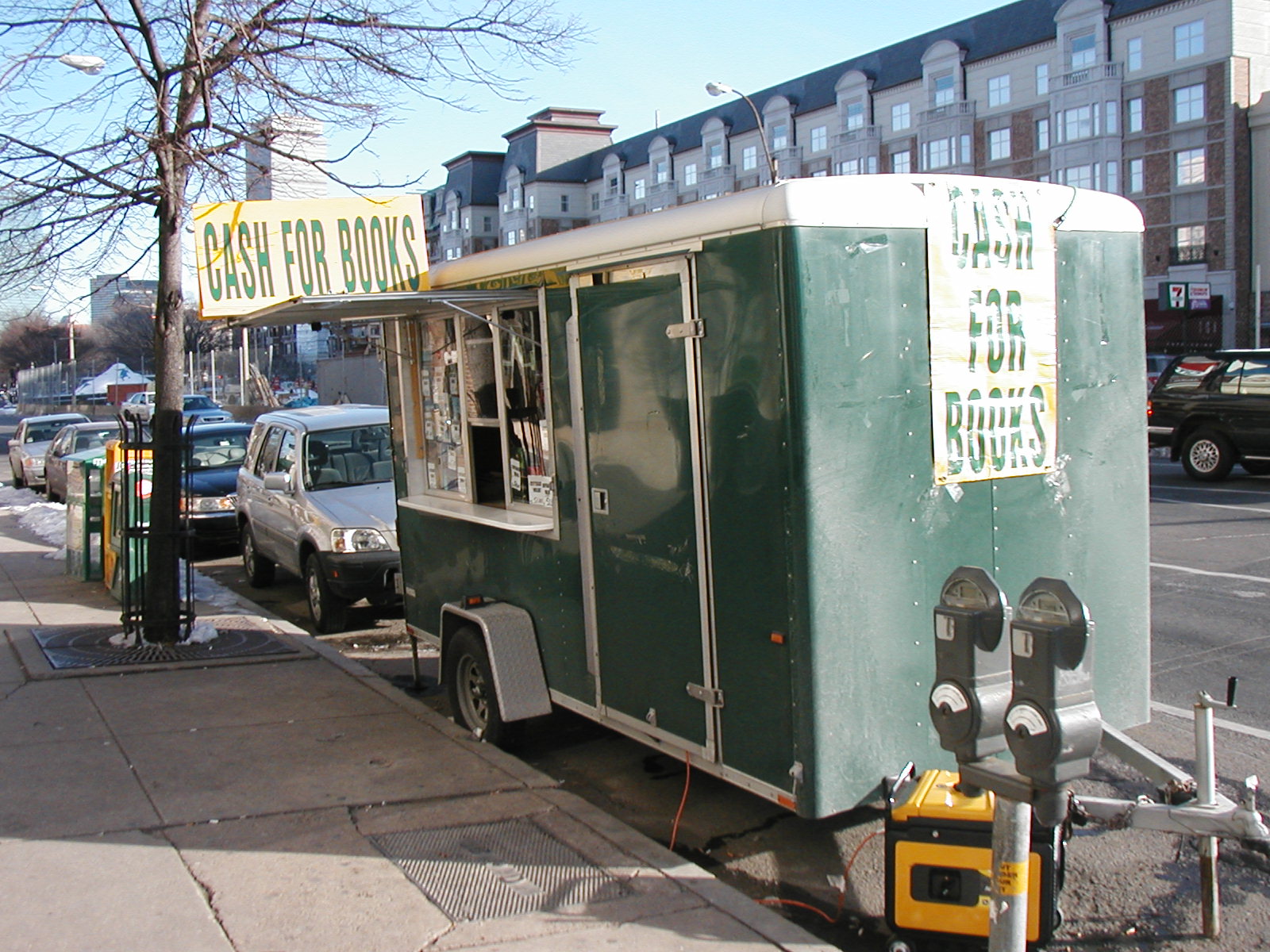
You know you're in a college town when you see this on the
street:
|
 |
M.I.T.
|
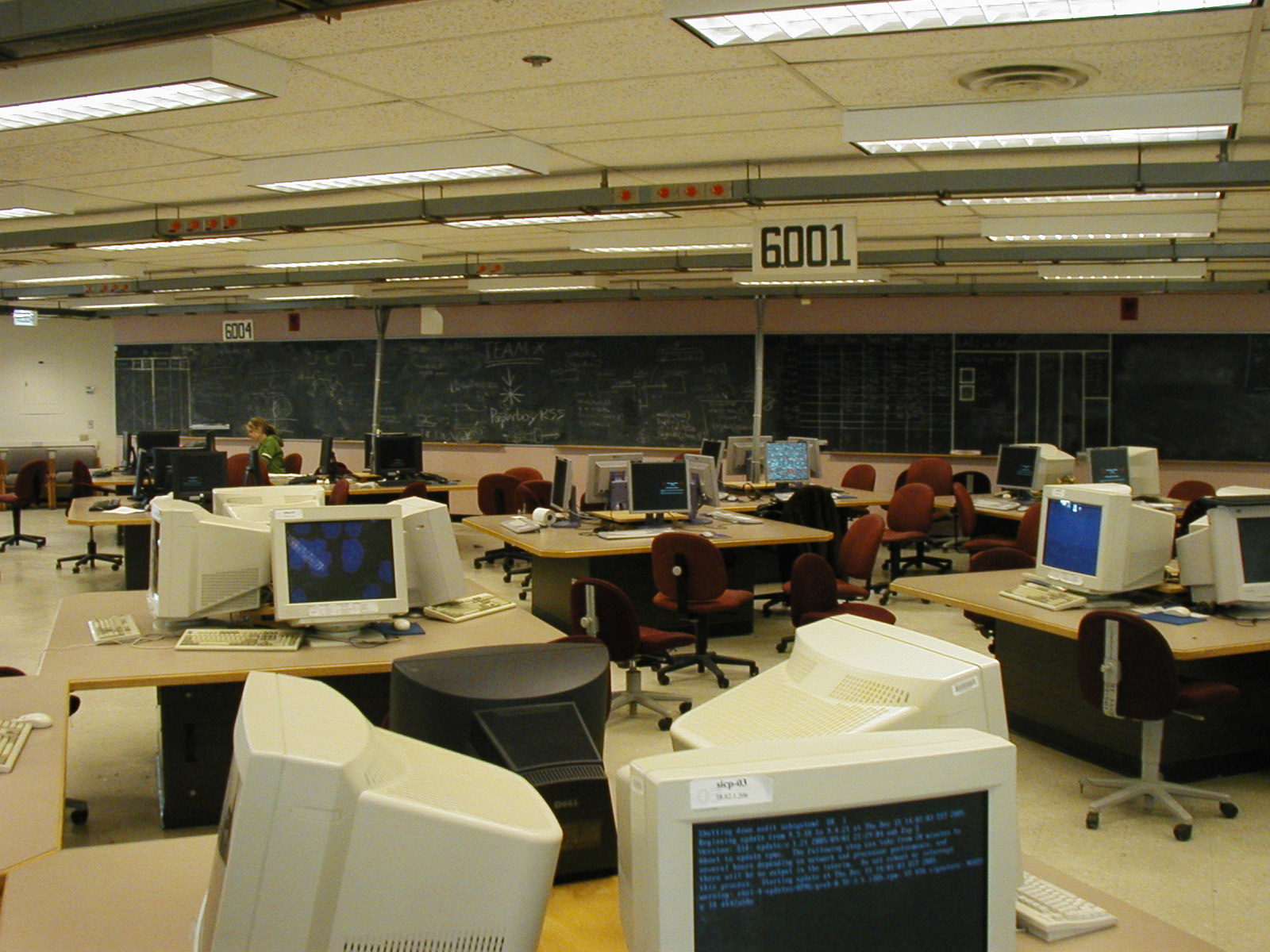
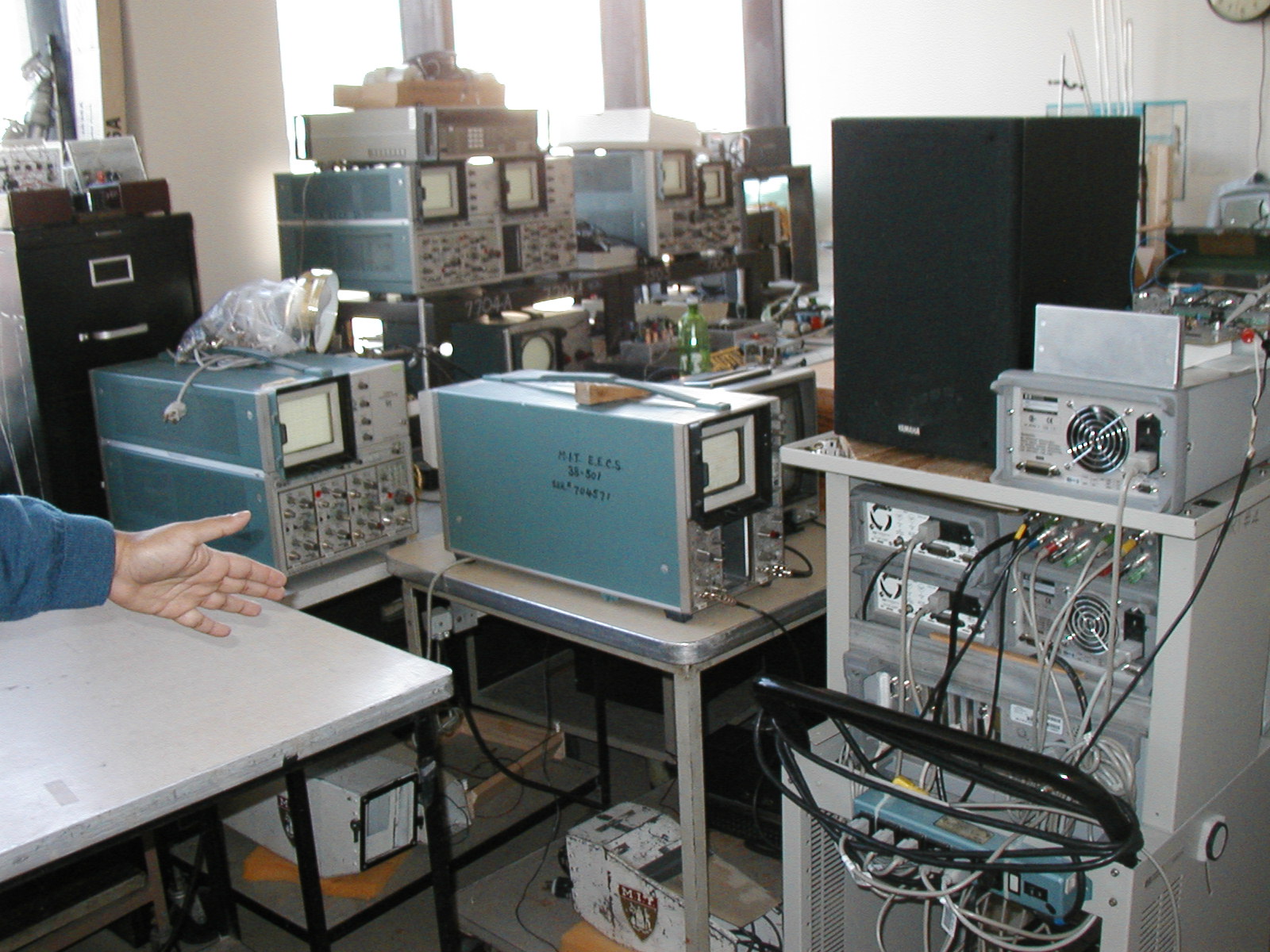
MIT has EE and CS in the same department. Their EECS
core is courses 6.001, 2, 3, 4. This is the lab for 6.001 which
is primarily a CS course. It was looking a little worn, but will
be upgraded soon.
|
 |
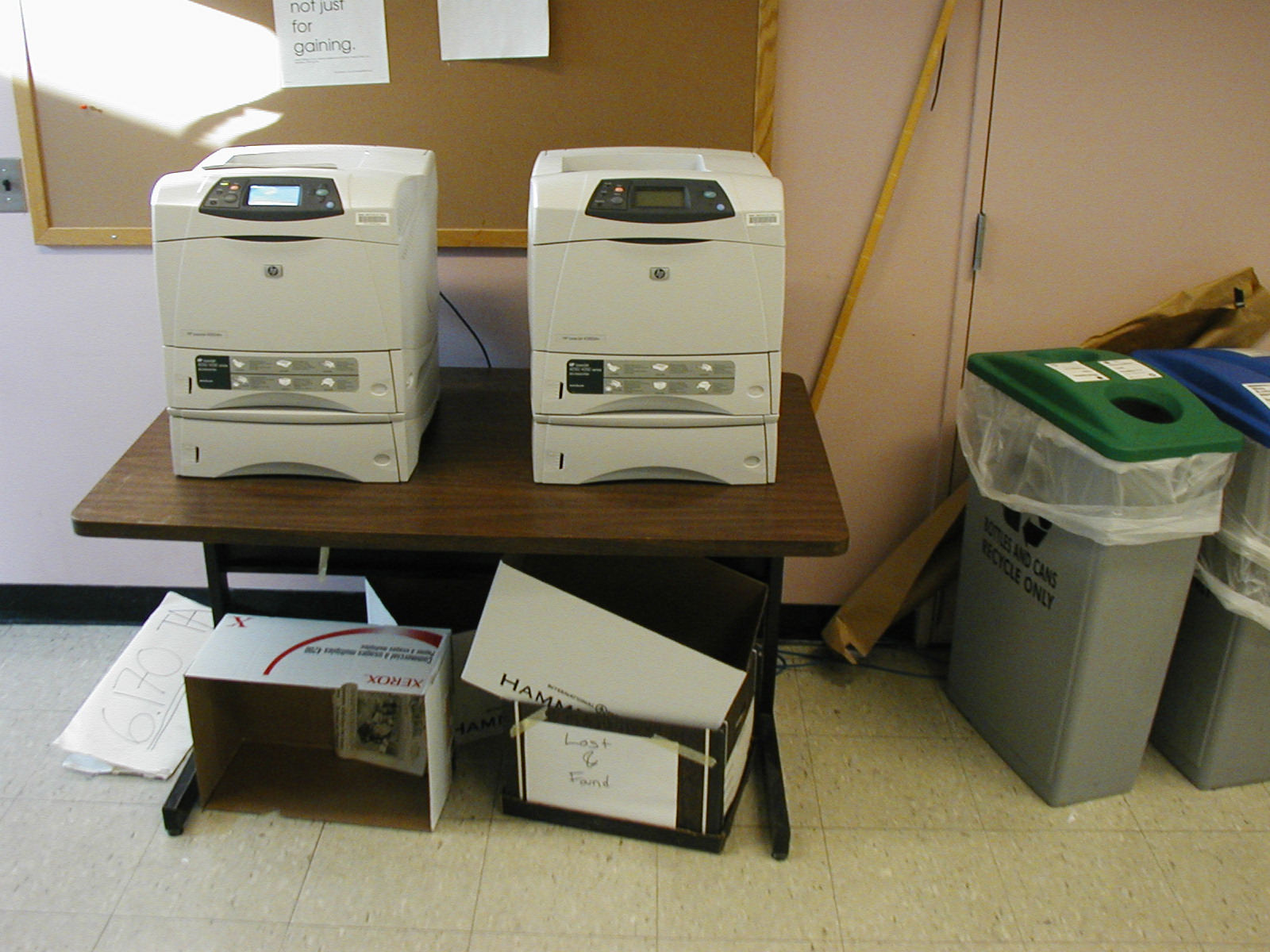
Laser printers for common use.
|
 |
| Shop. |
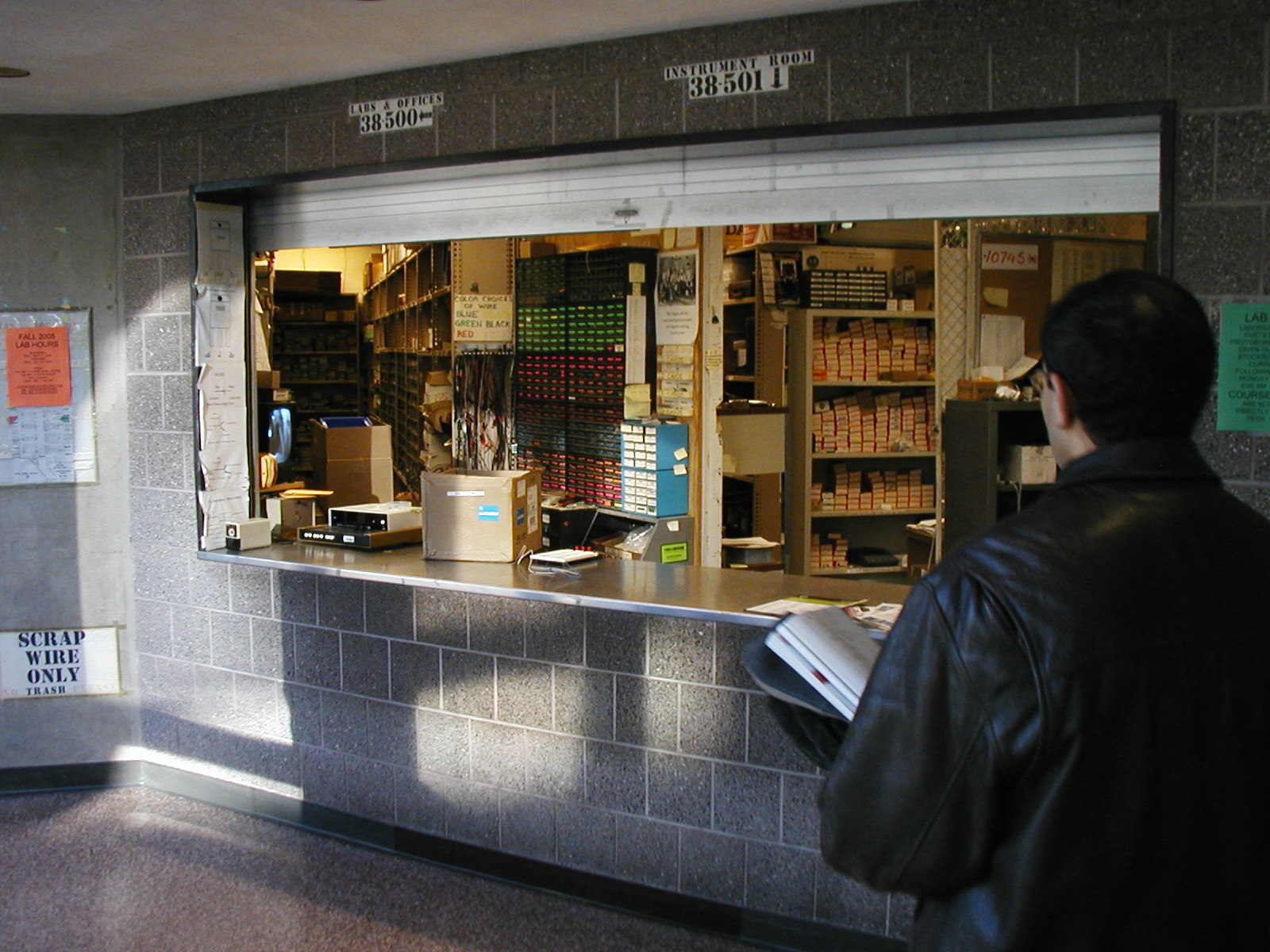 |
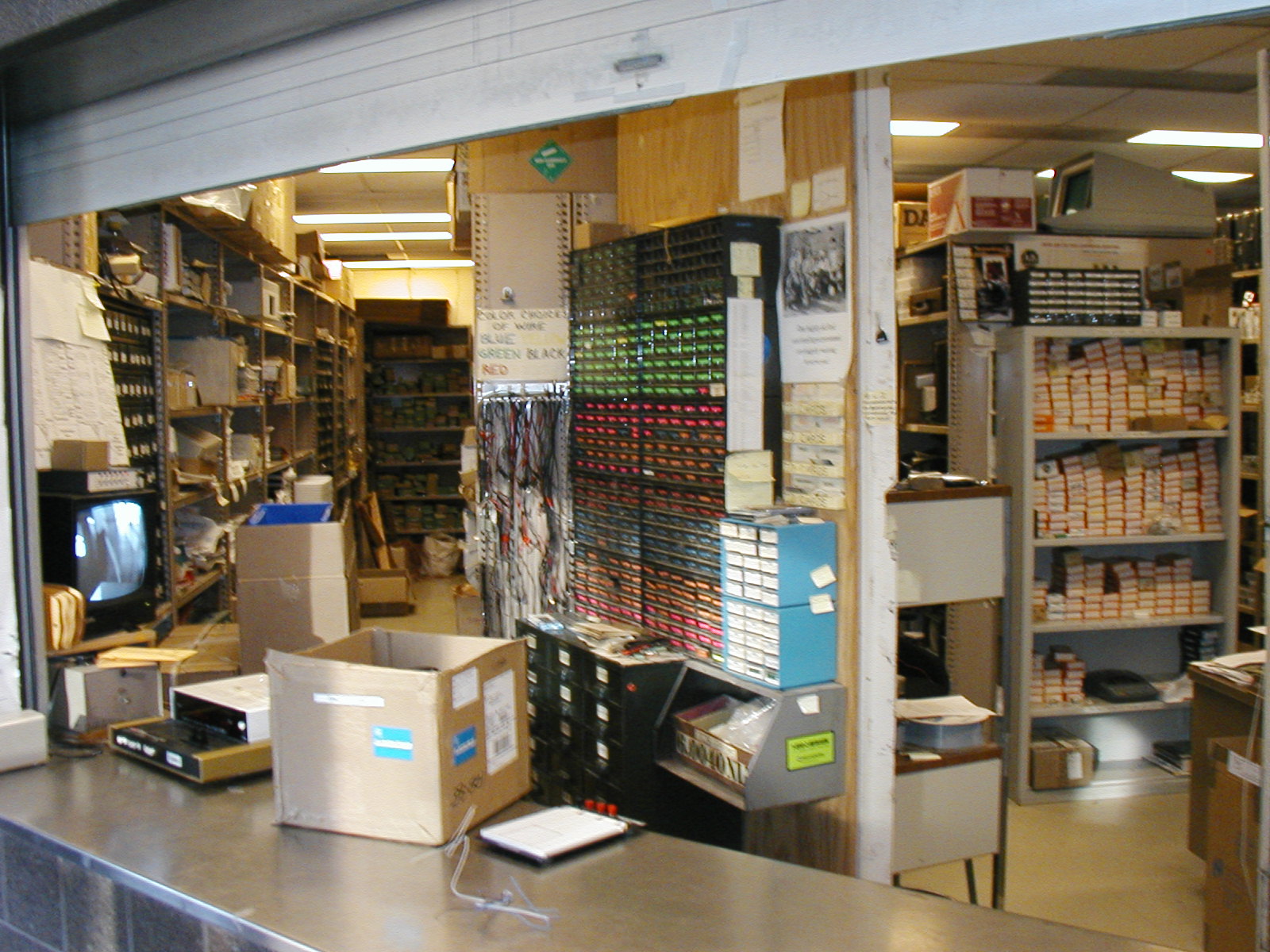
Shop. Huge. Has everything.
|
 |
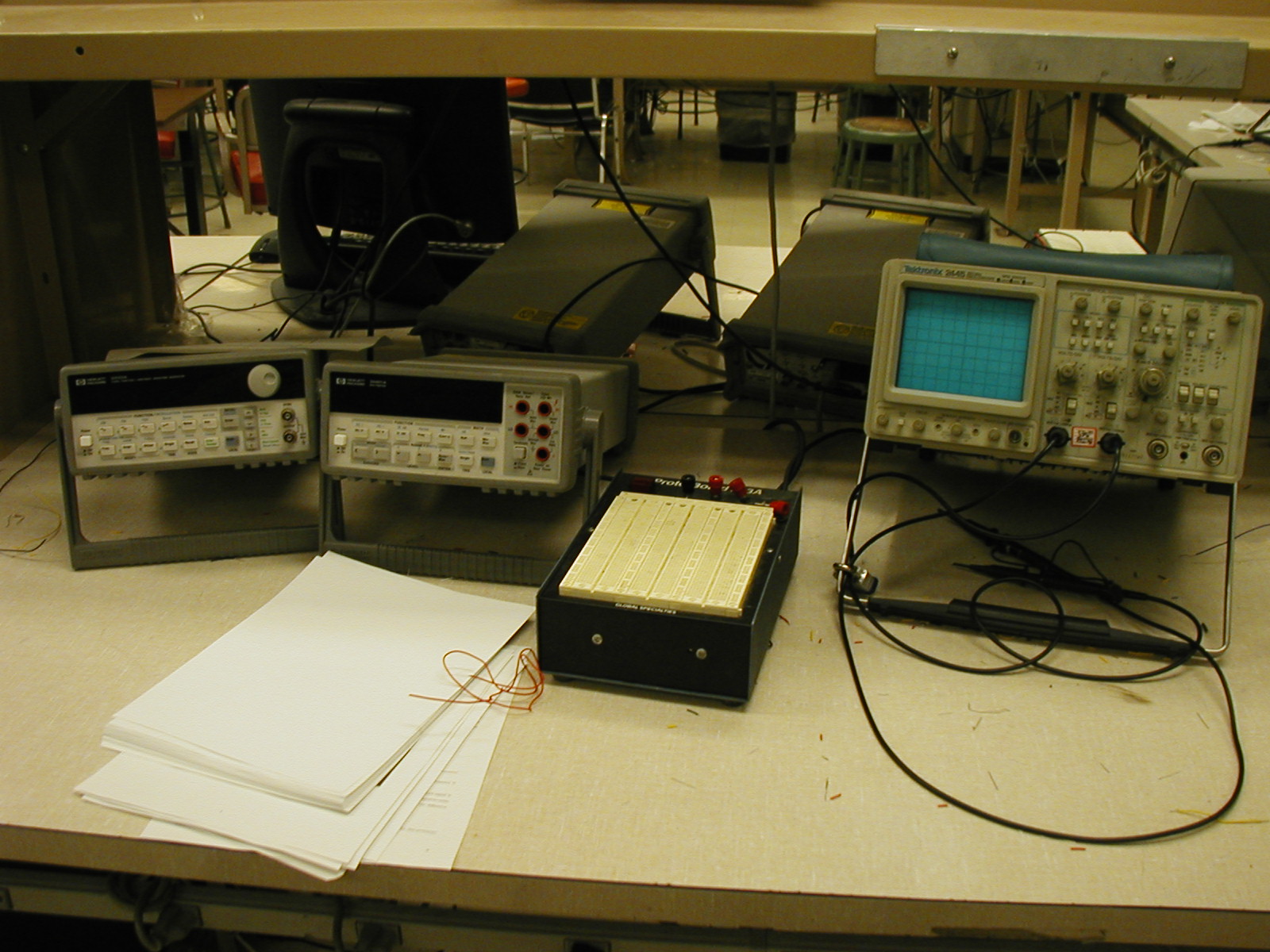
Lab bench for basic ECE course. Pretty simple, which
our host Anantha Chandrakasan says is their philosophy for the
introductory courses. No need for LabView at this stage in their
opinion. Student who want pictures of waveforms can sketch in
their lab notebooks or use digital cameras!
|
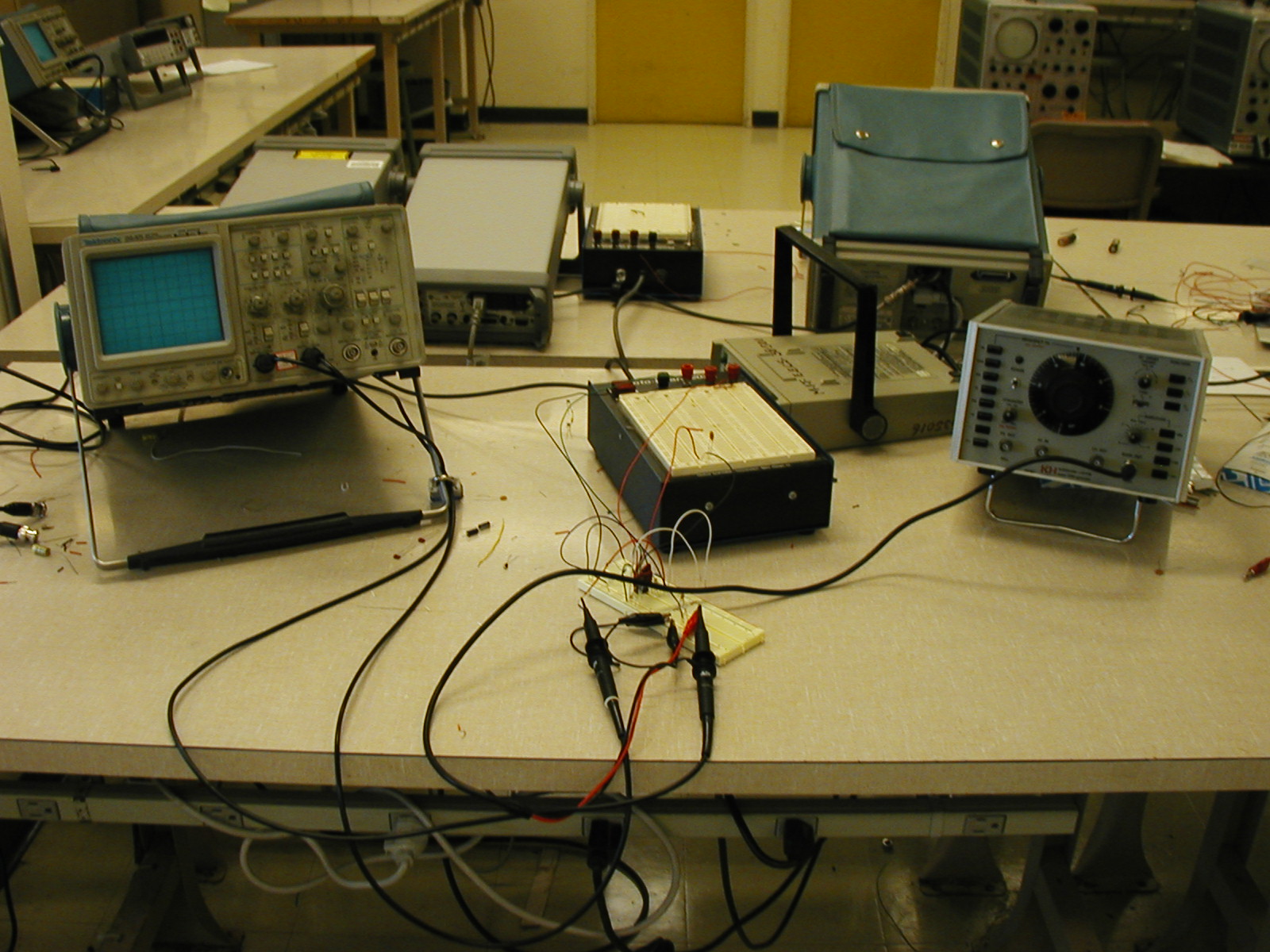
 |
Another basic EE bench.
|
 |
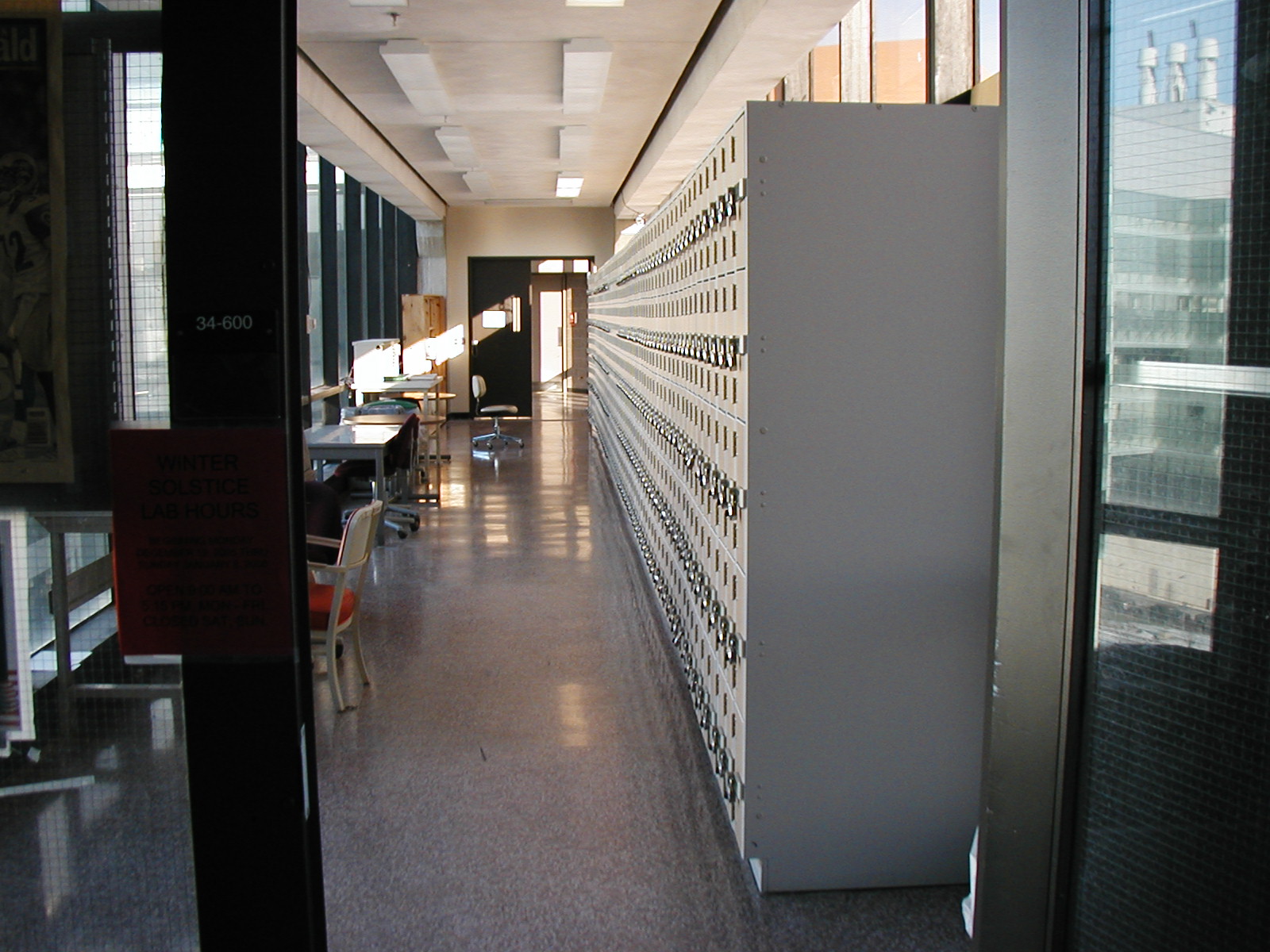
They're short on storage space too.
|
 |
Every student has a locker for keeping their proto boards,
parts, etc.
|
 |
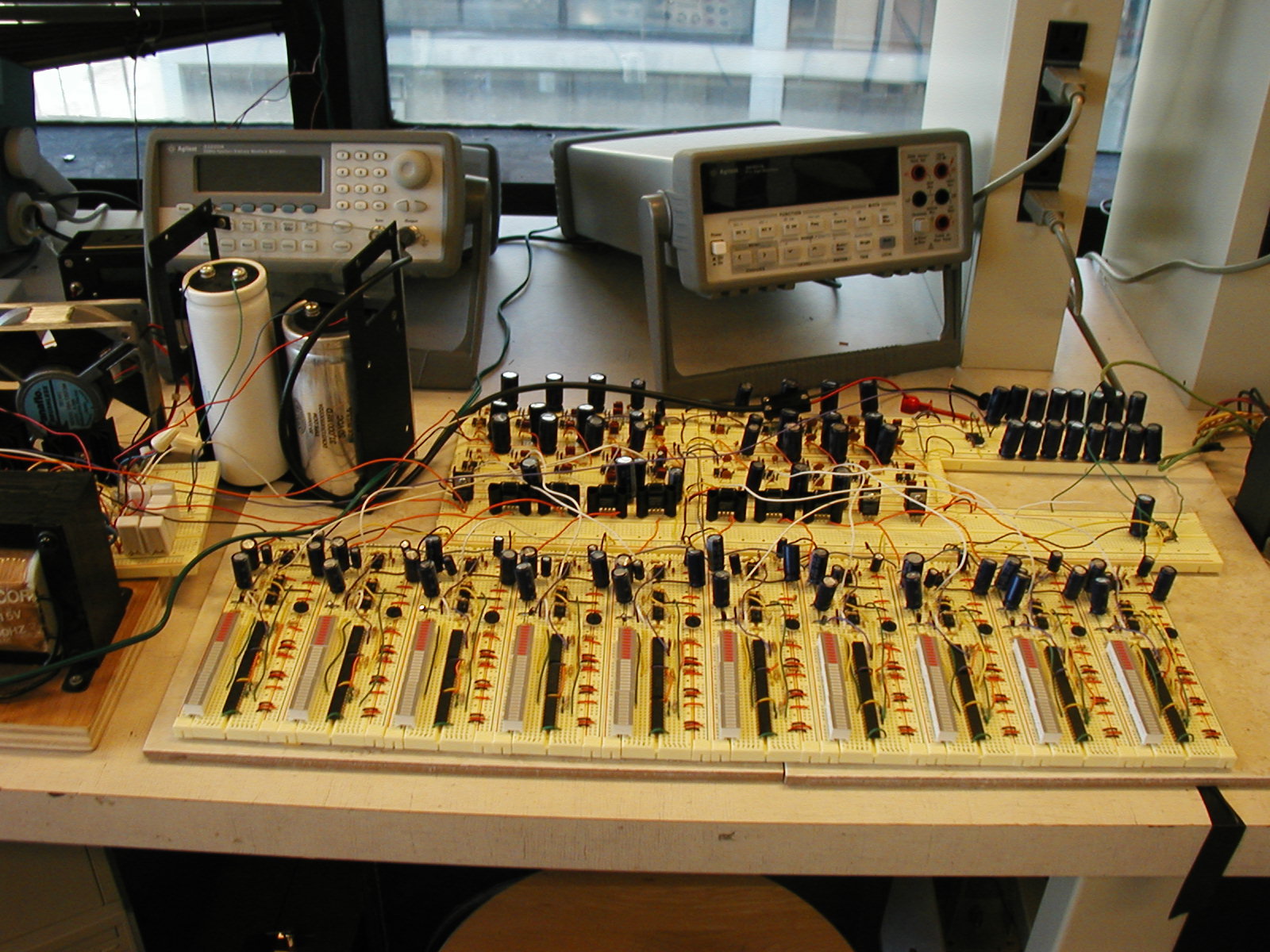
A term project in the advanced analog lab, for a
course. Lots of proto boards!
|
 |
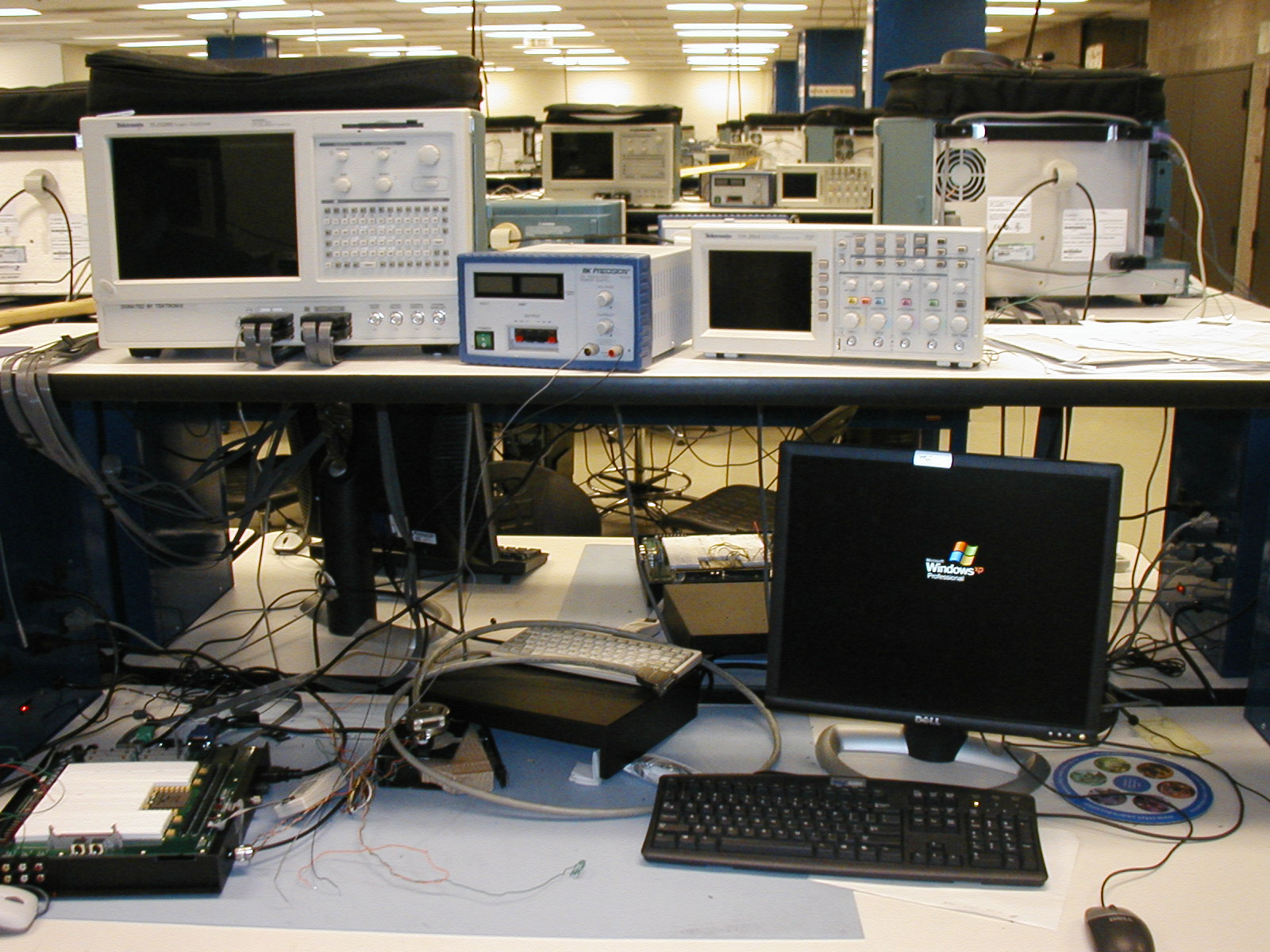
Anantha's pride and joy, the lab for 6.111 (digital course).
They go directly to FPGAs. Check out the Open
CourseWare information on this most excellent course.
|
 |
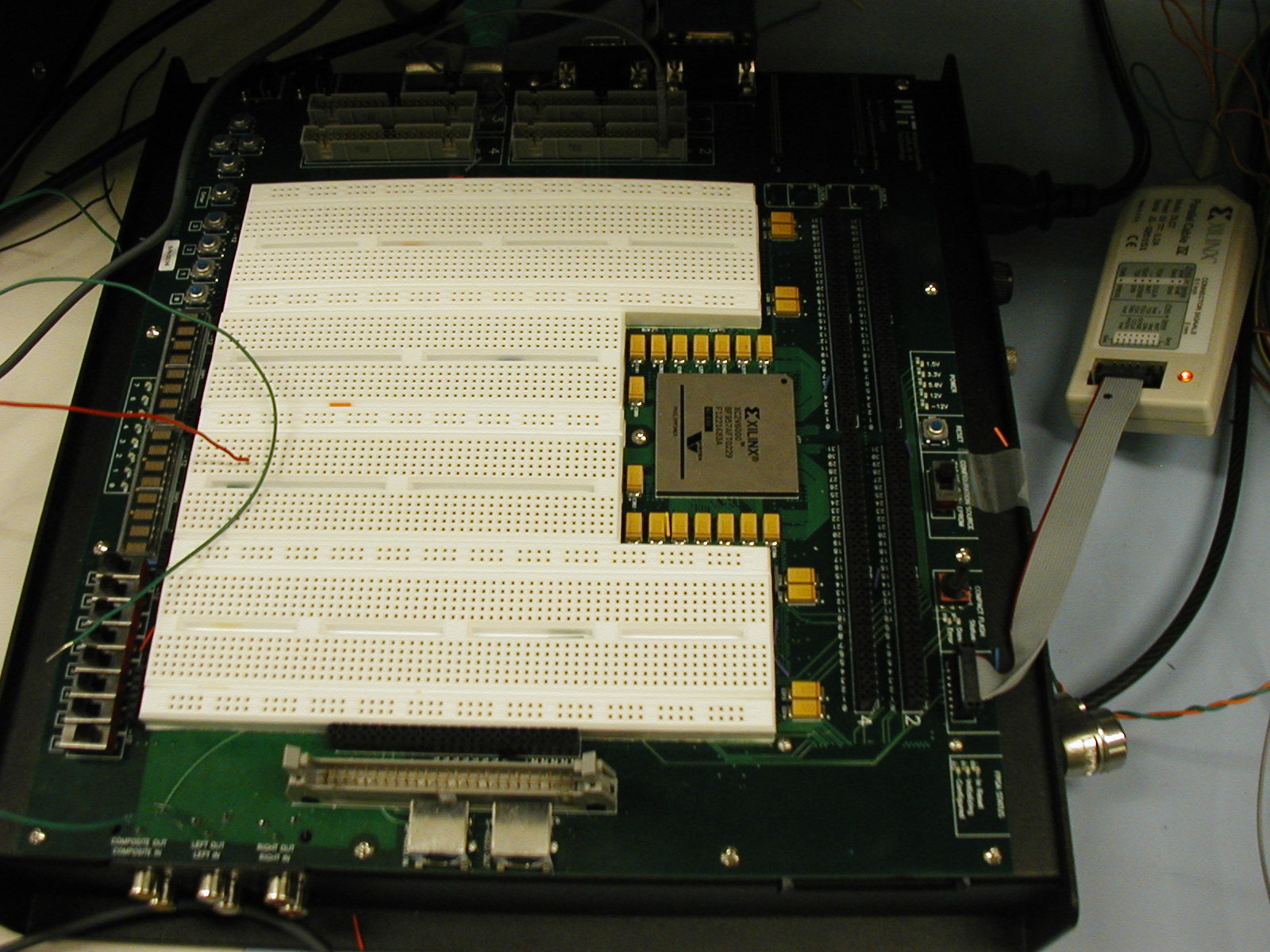
Custom FPGA board, designed by Anantha.
|
 |
'Nuf said
|
 |
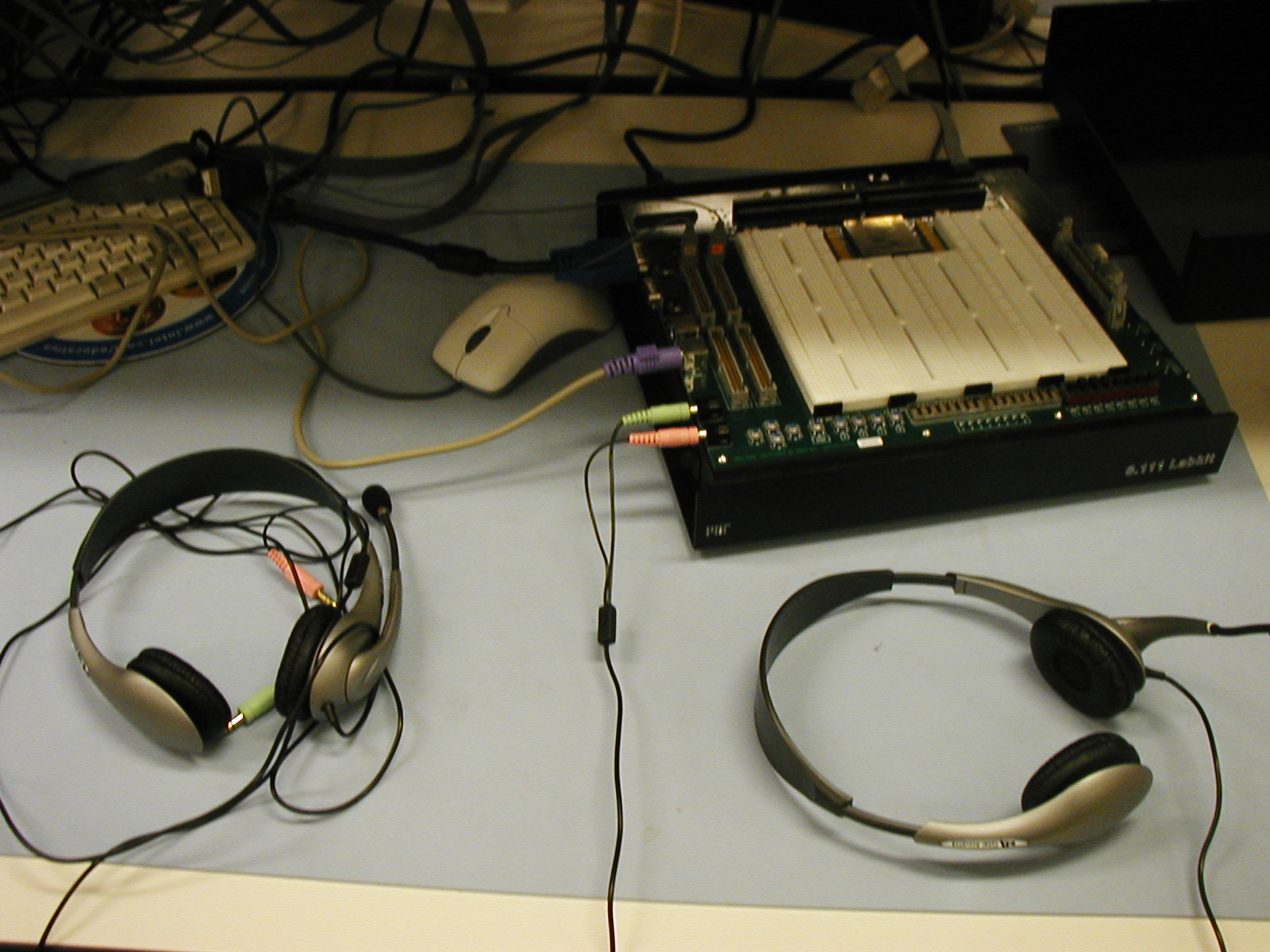
Here is one project in 6.111 that did digital audio using
FPGA
board.
|
 |
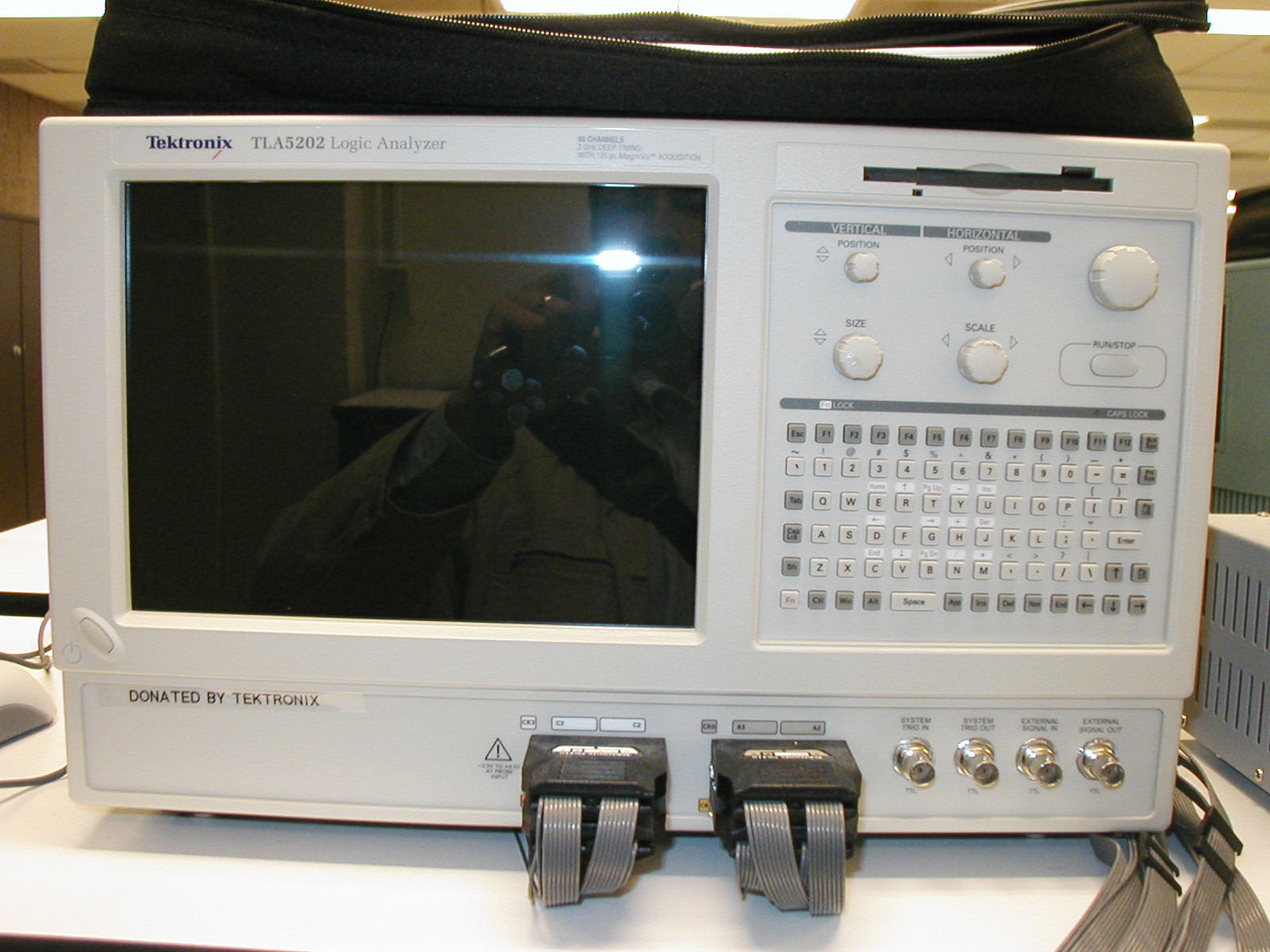
Logic analyzer at bench for 6.111 course.
|
 |
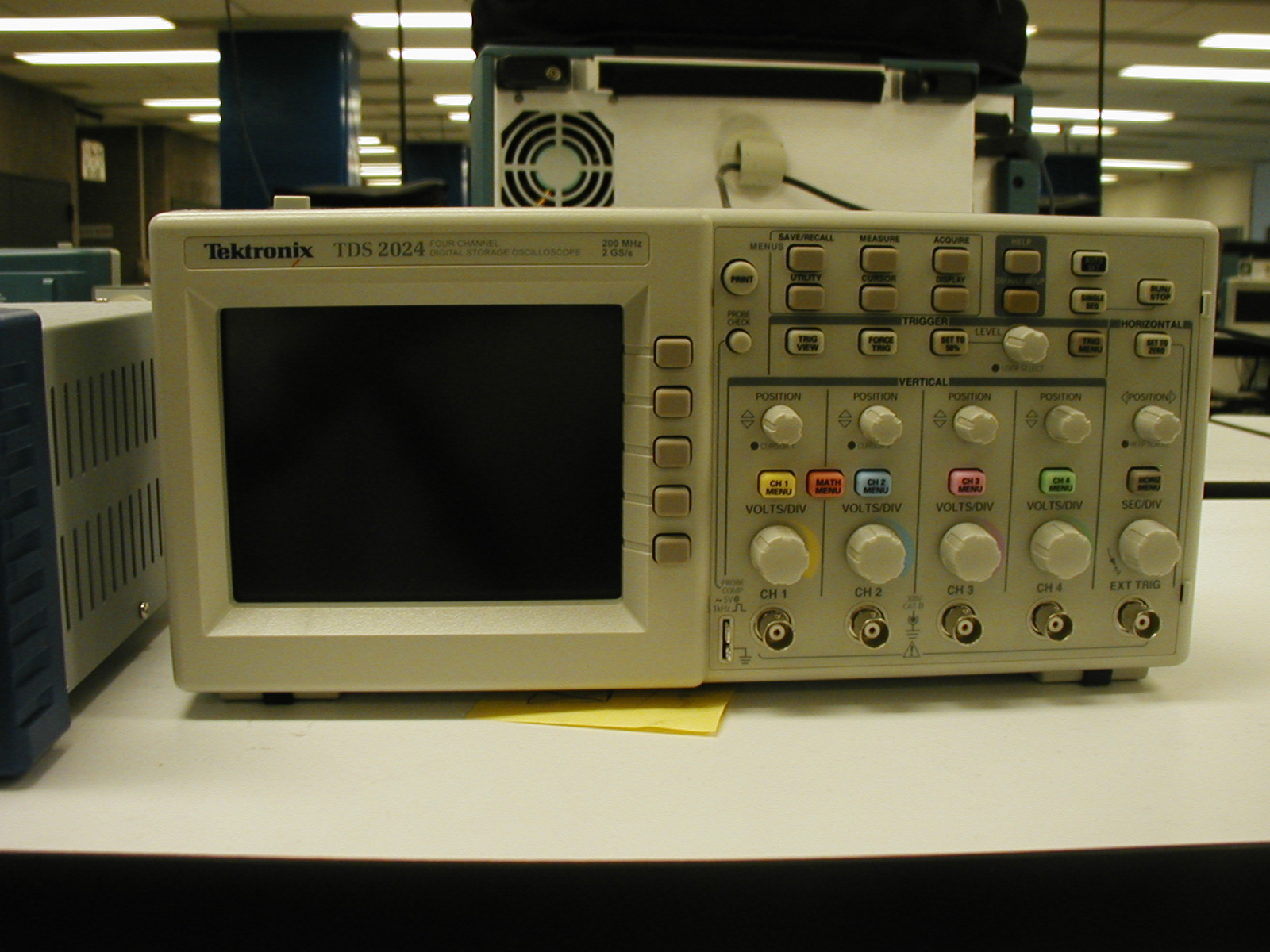
4-channel scope used in 6.111 lab
|
 |
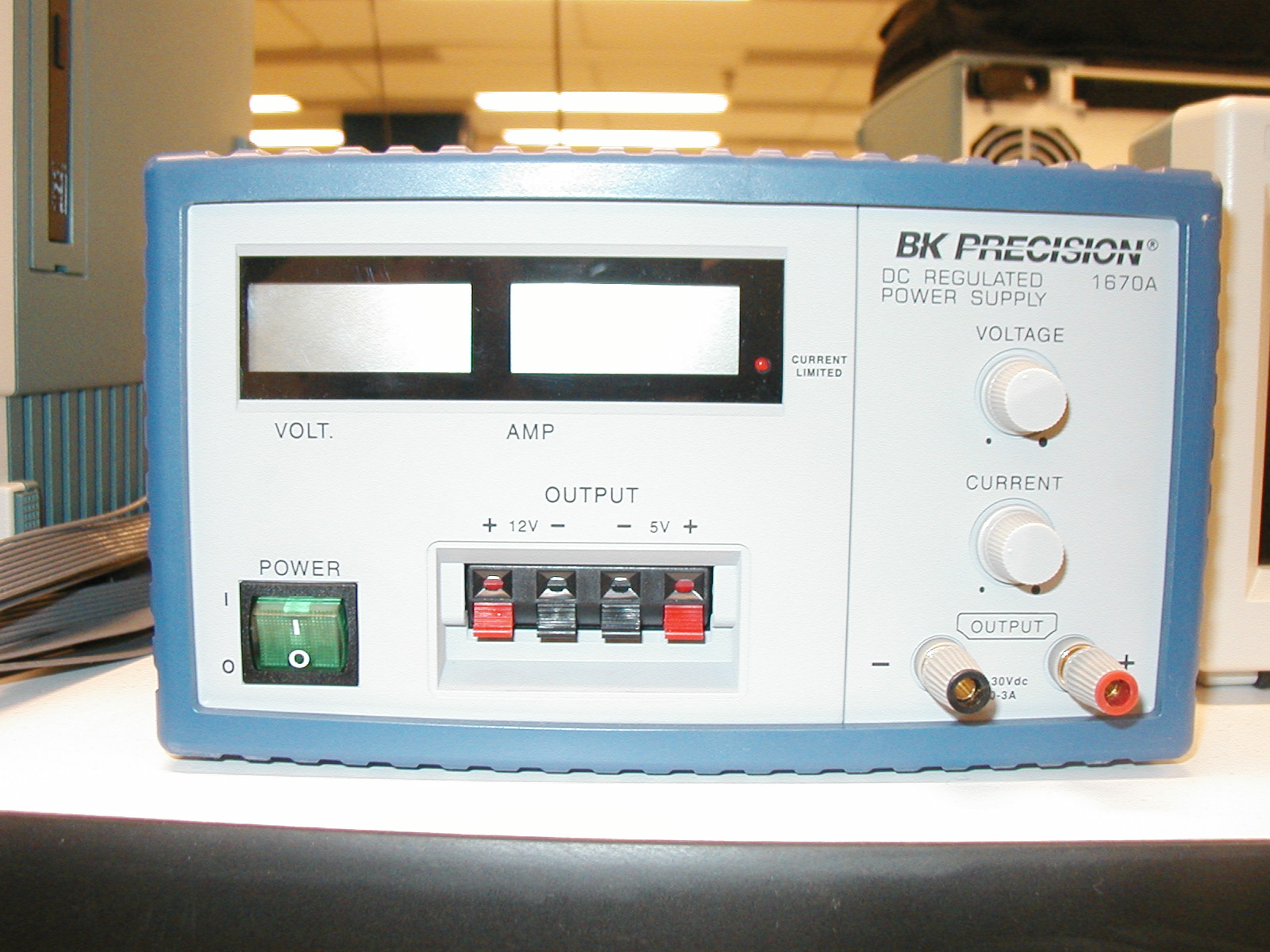
Power supply with nice LCD readout of V, I in 6.111 lab.
|
 |
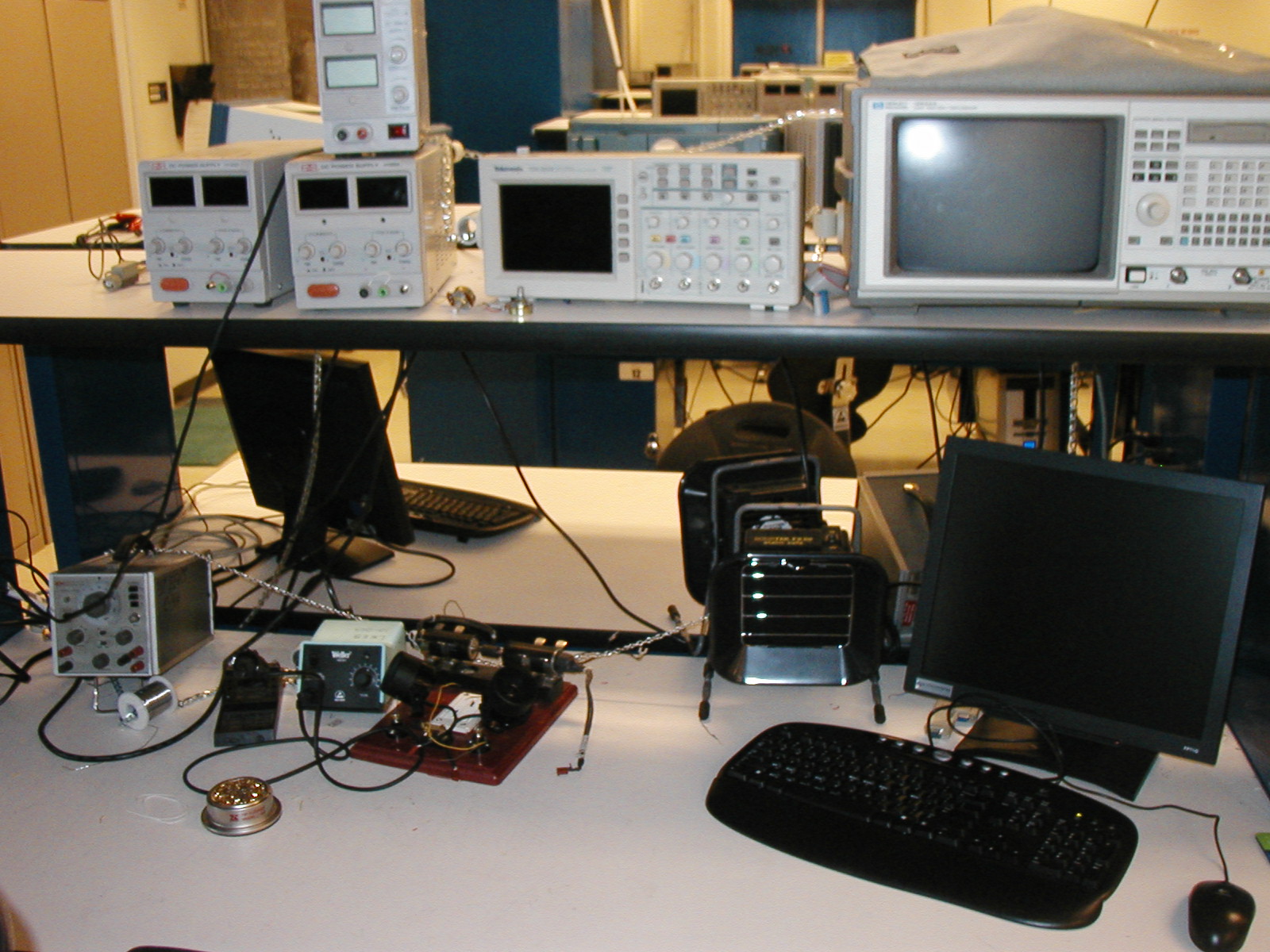
Bench setup in power lab. Note soldering iron!
|
 |
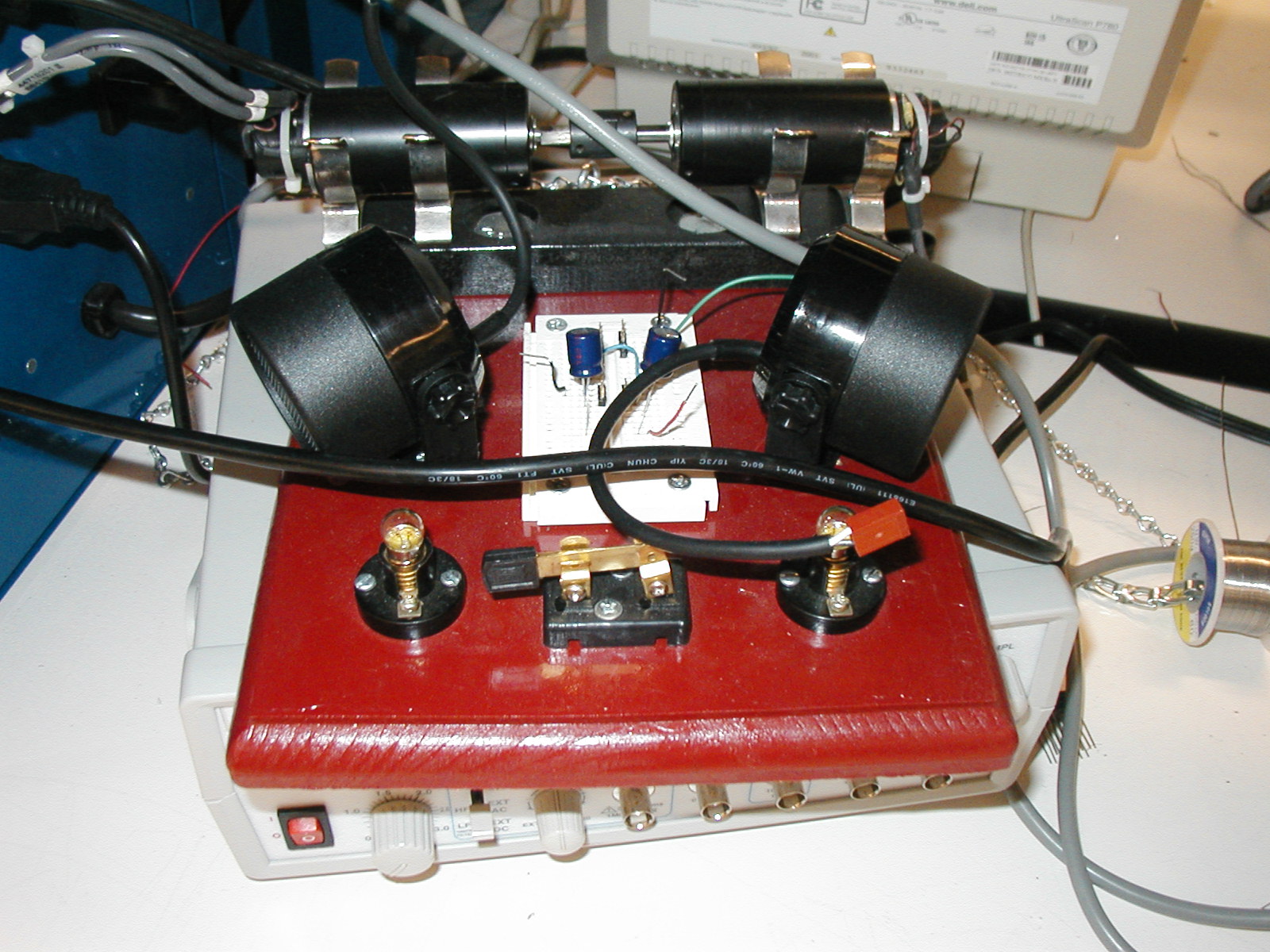
Custom hardware in power lab bench setup.
|
 |
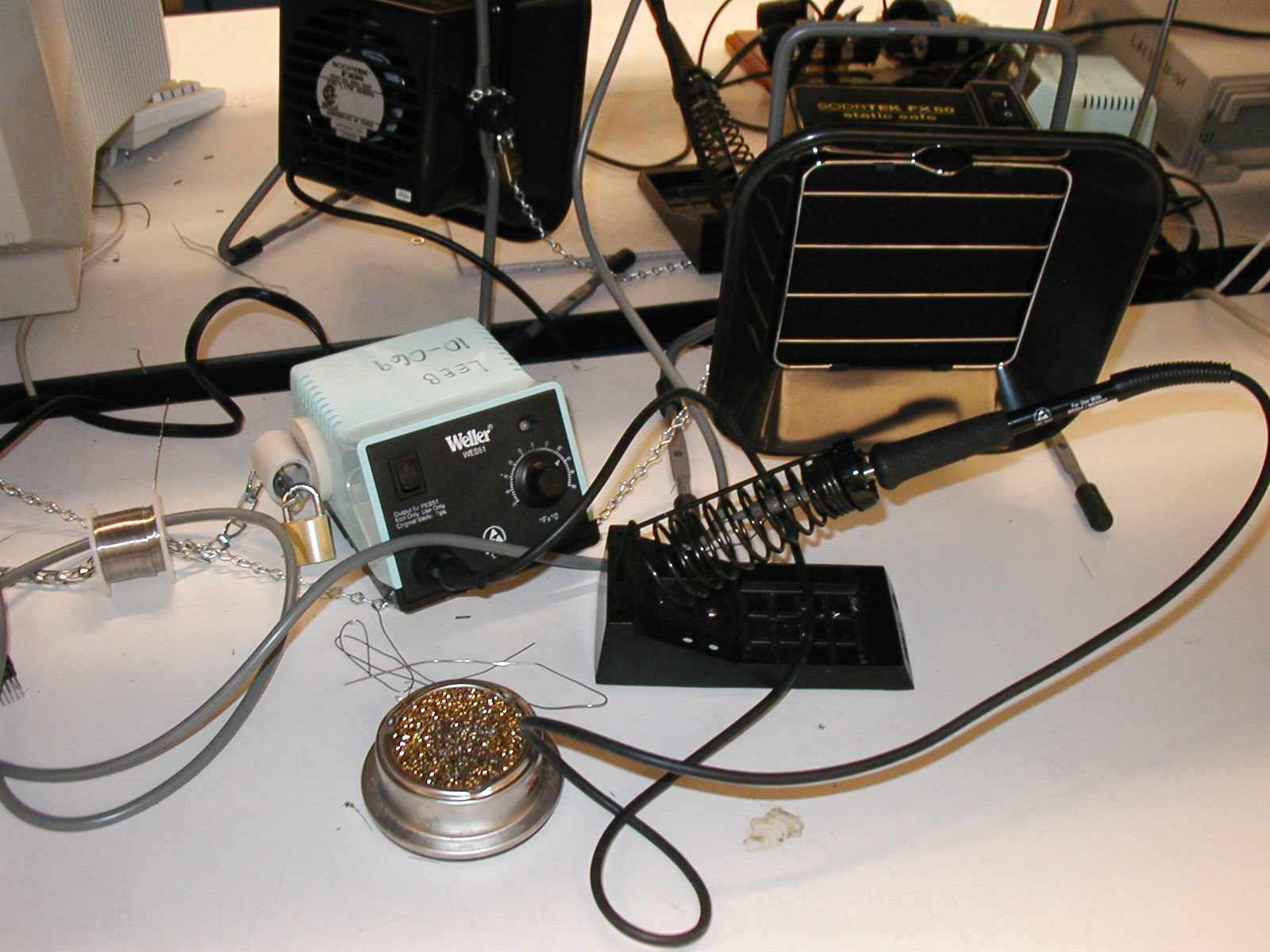
Soldering iron with air cleaner / antistatic fan at each
bench in power lab.
|
 |
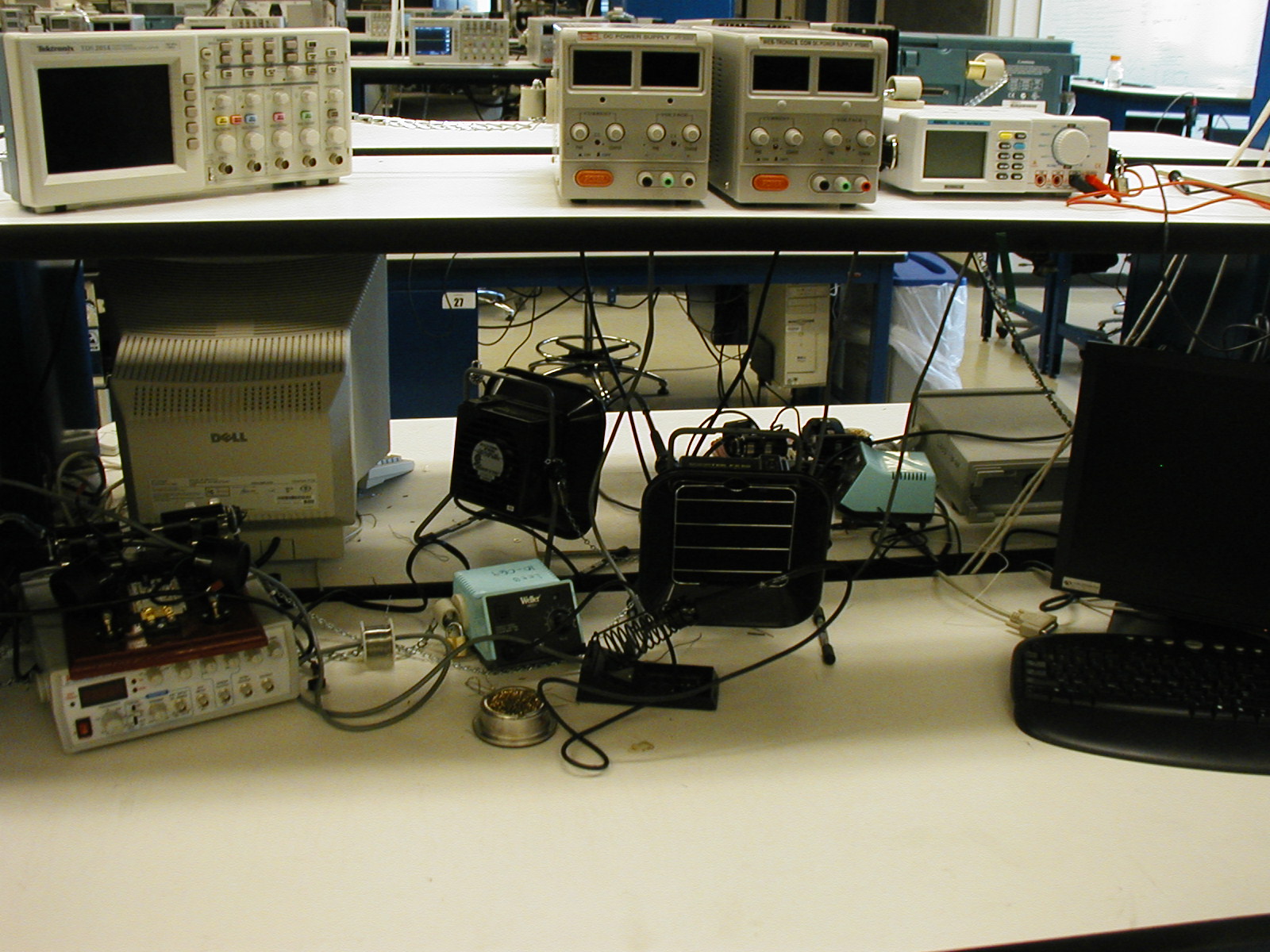
View of another banch in power lab - not every bench had
logic analyzer (about half did)
|
 |
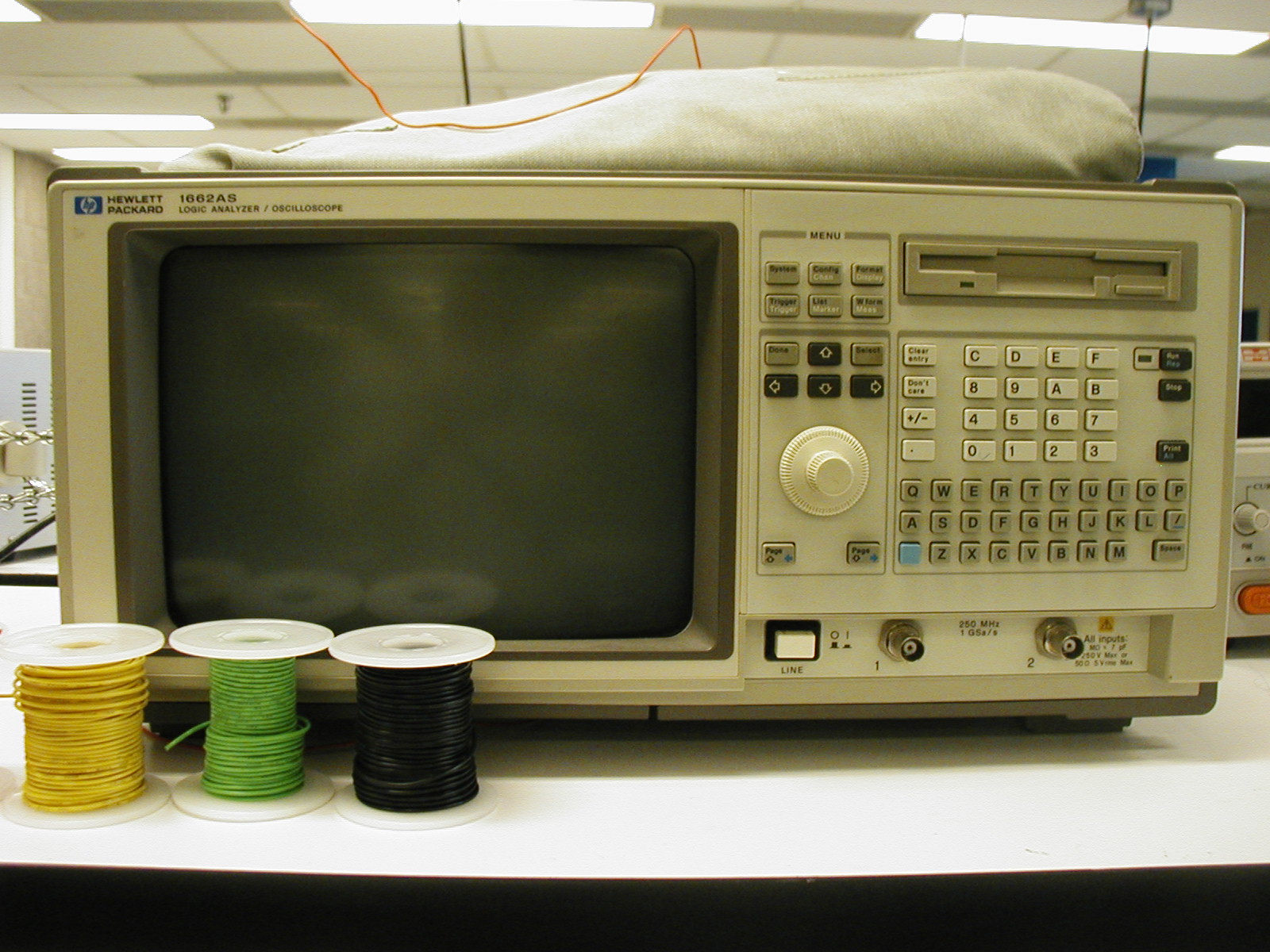
HP1662AS logic analyzer used in power lab. Used for
digital control in robotics course.
|
 |
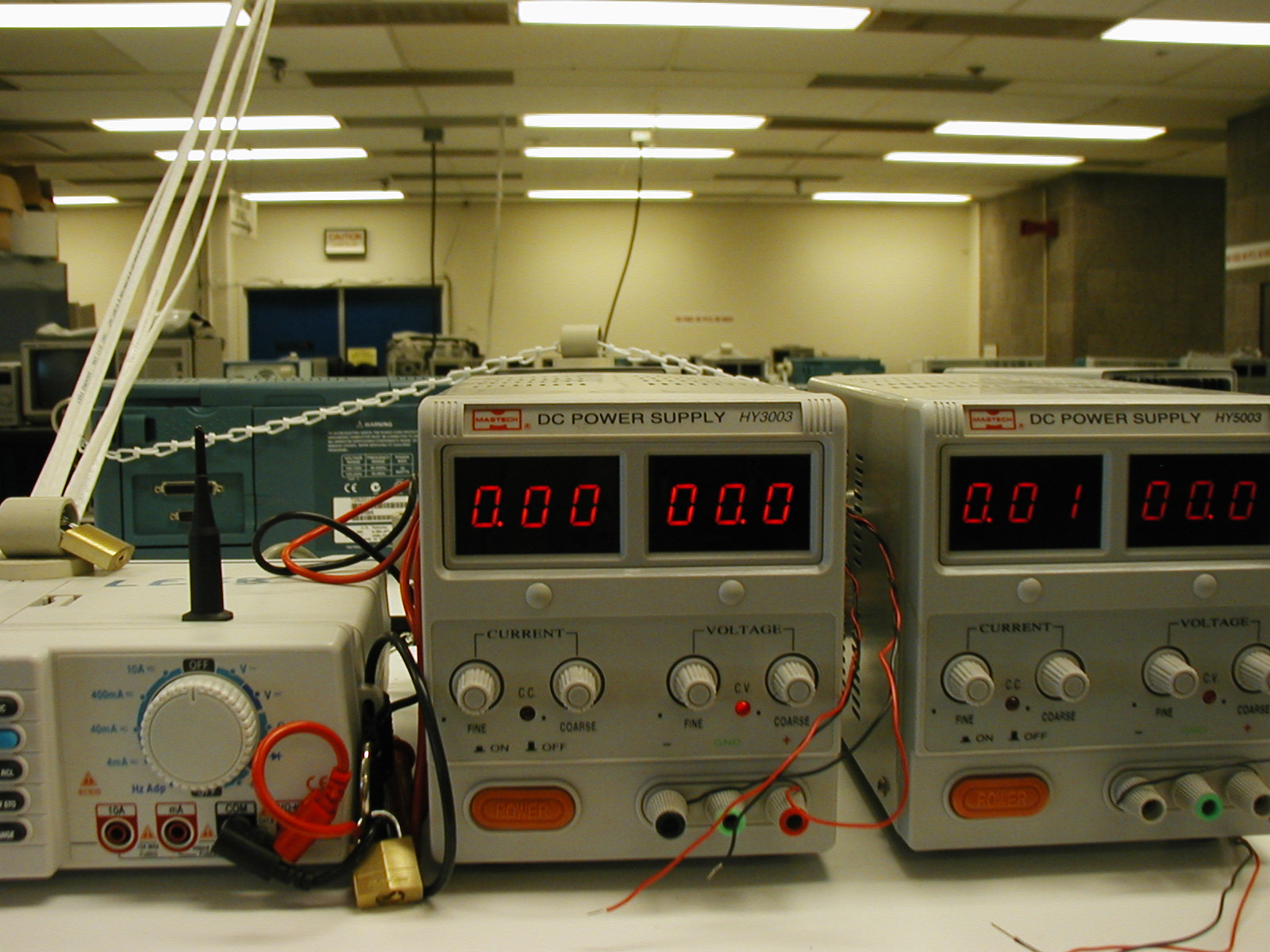
Nice power supplies in power lab.
|
 |
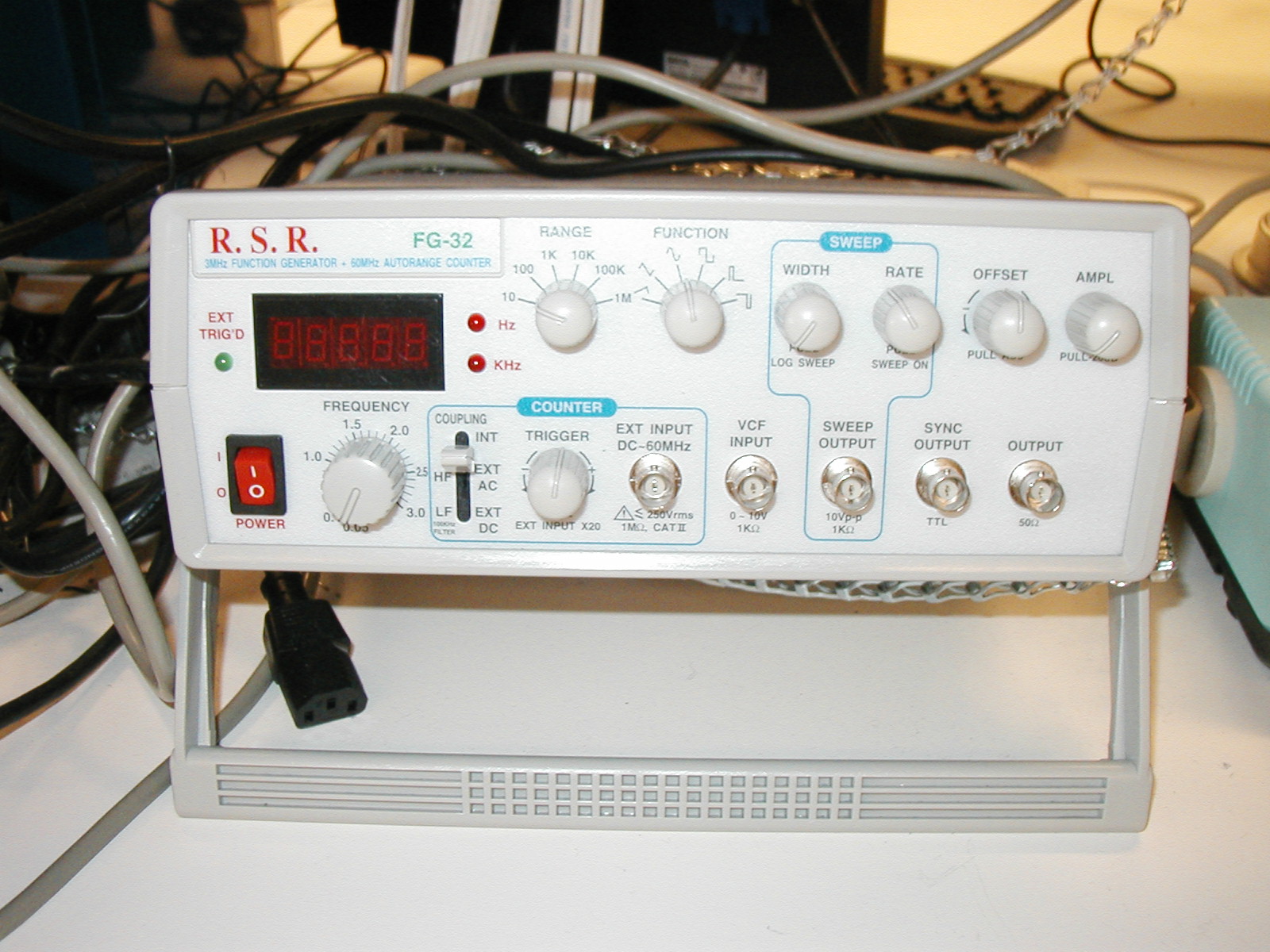
RSR FG-32 3MHz function generator / 50MHz counter.
|
 |
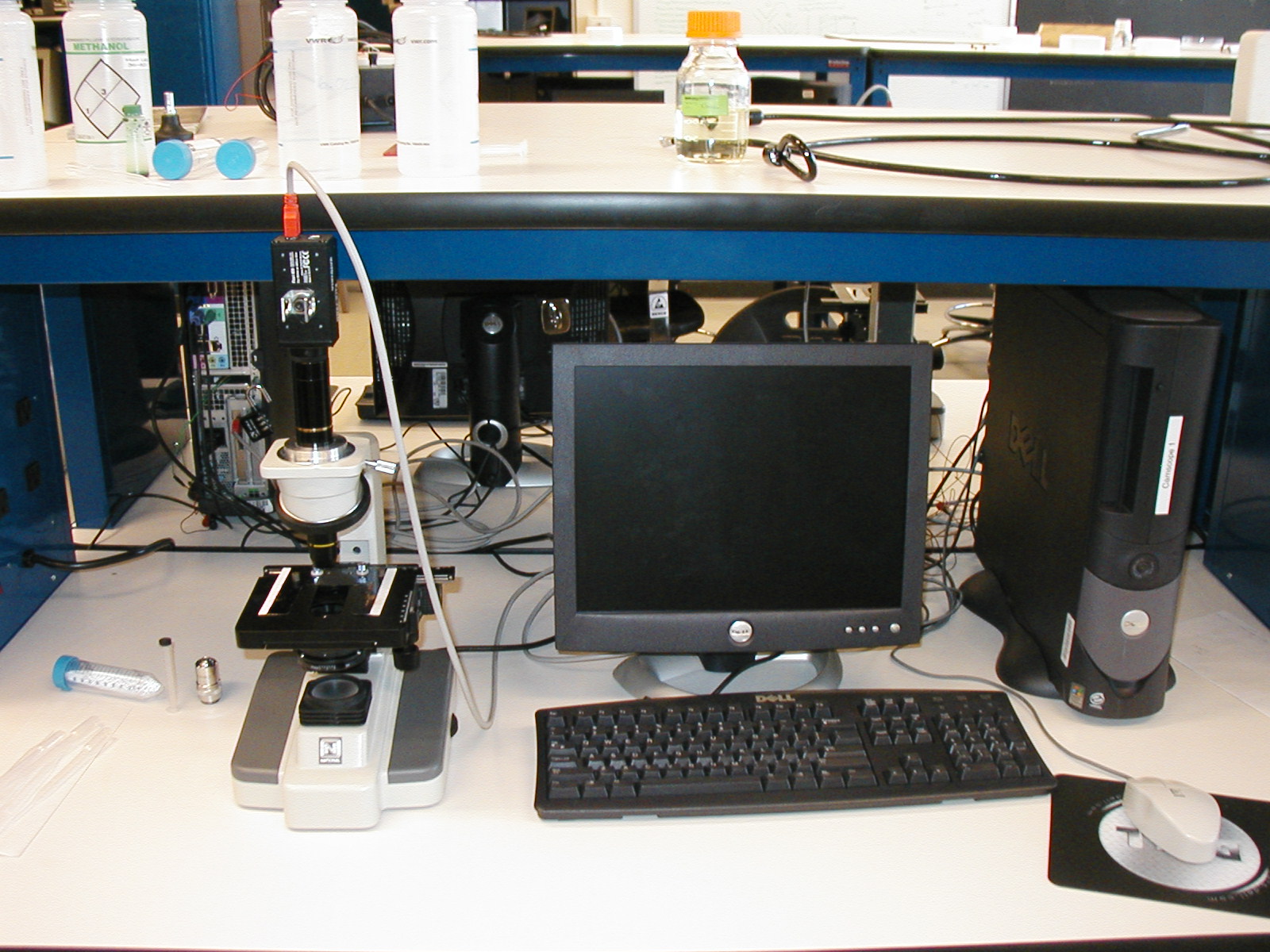
One of 8 biomedical stations off to the side of the
power/controls lab.
|
 |
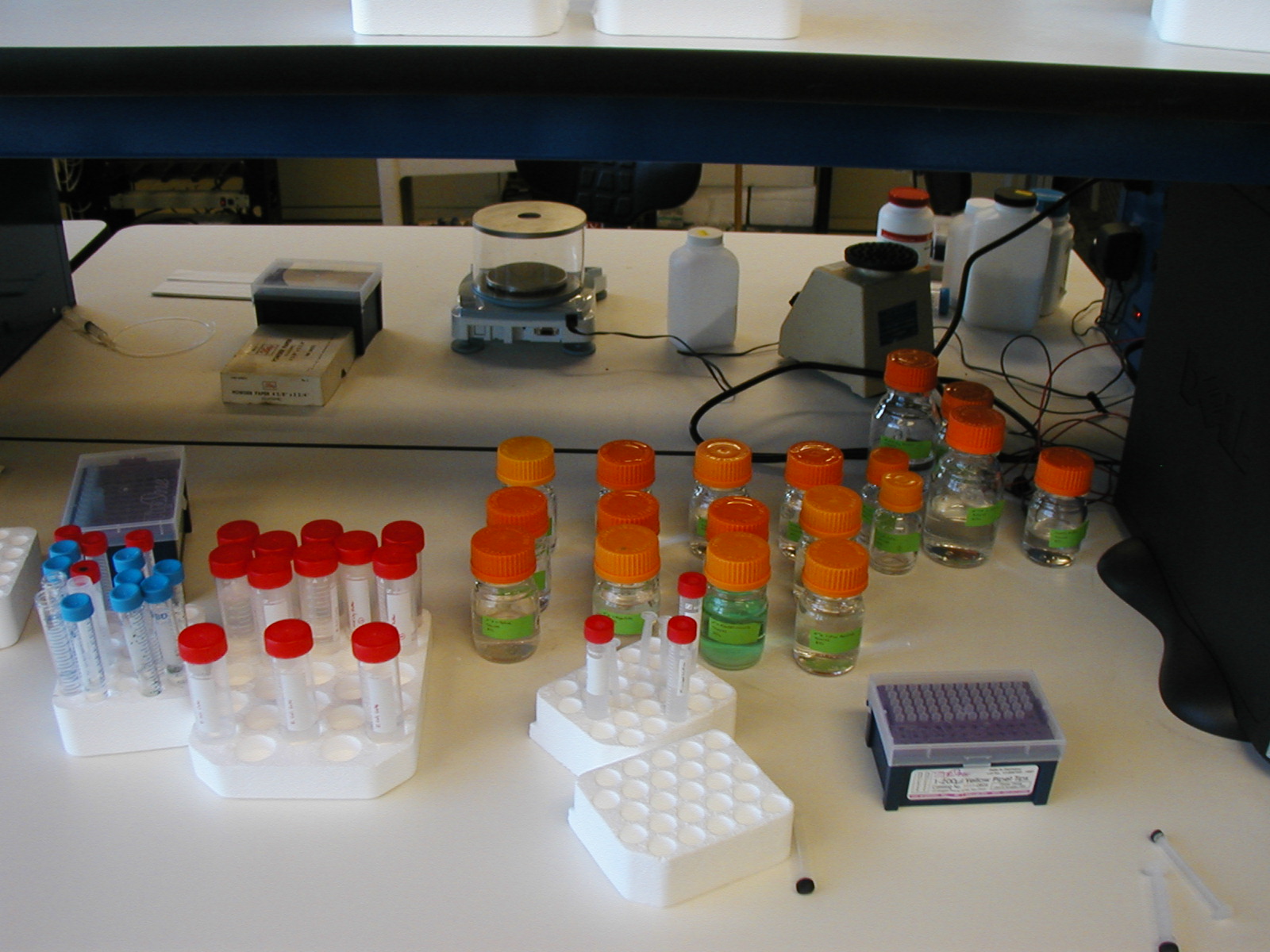
They wouldn't tell us what was in these.
|
 |
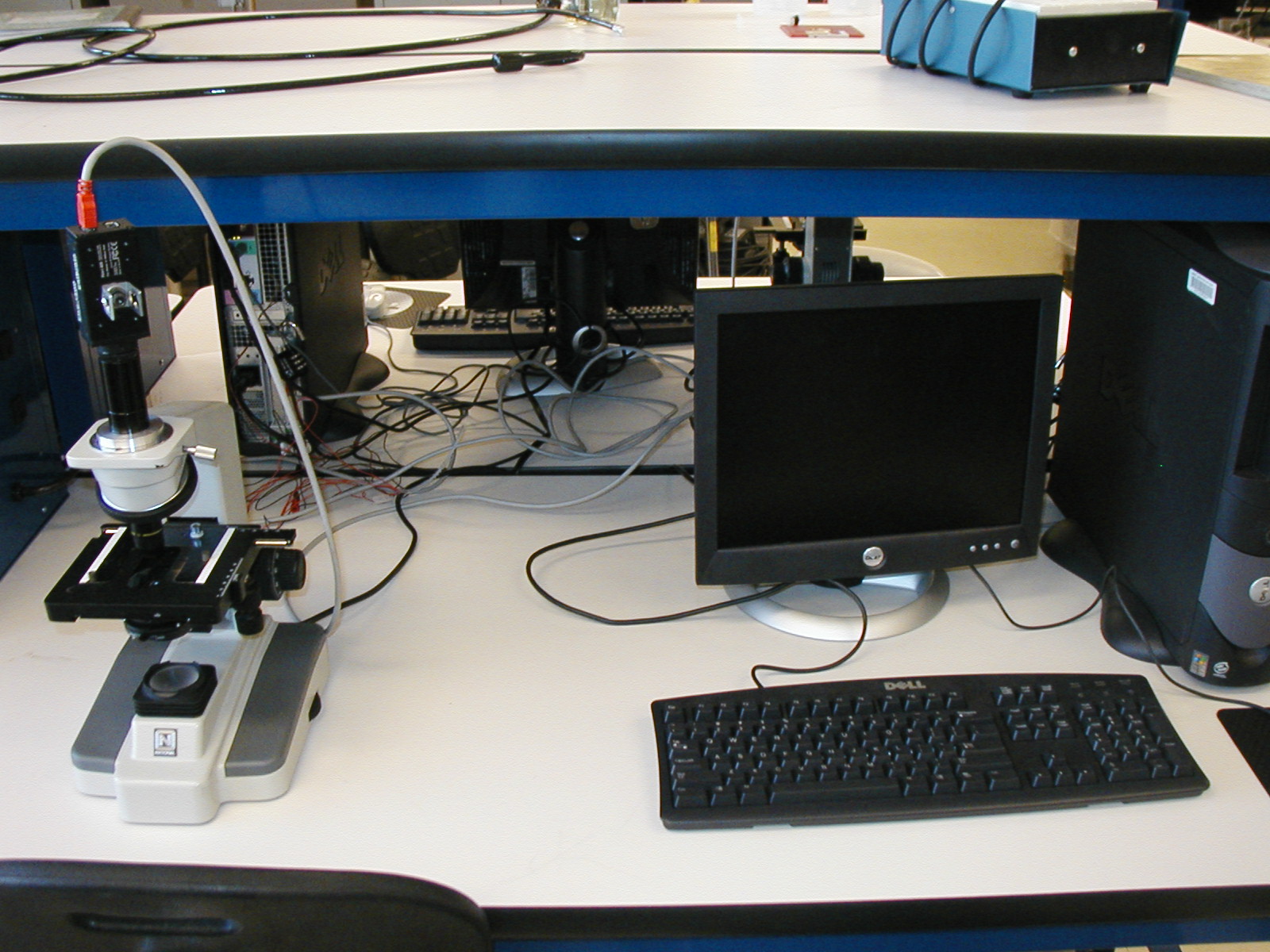
Another view of biomedical station. Our host wasn't
100% positive, but was pretty sure the microscope image could be
acquired by the PC.
|
 |
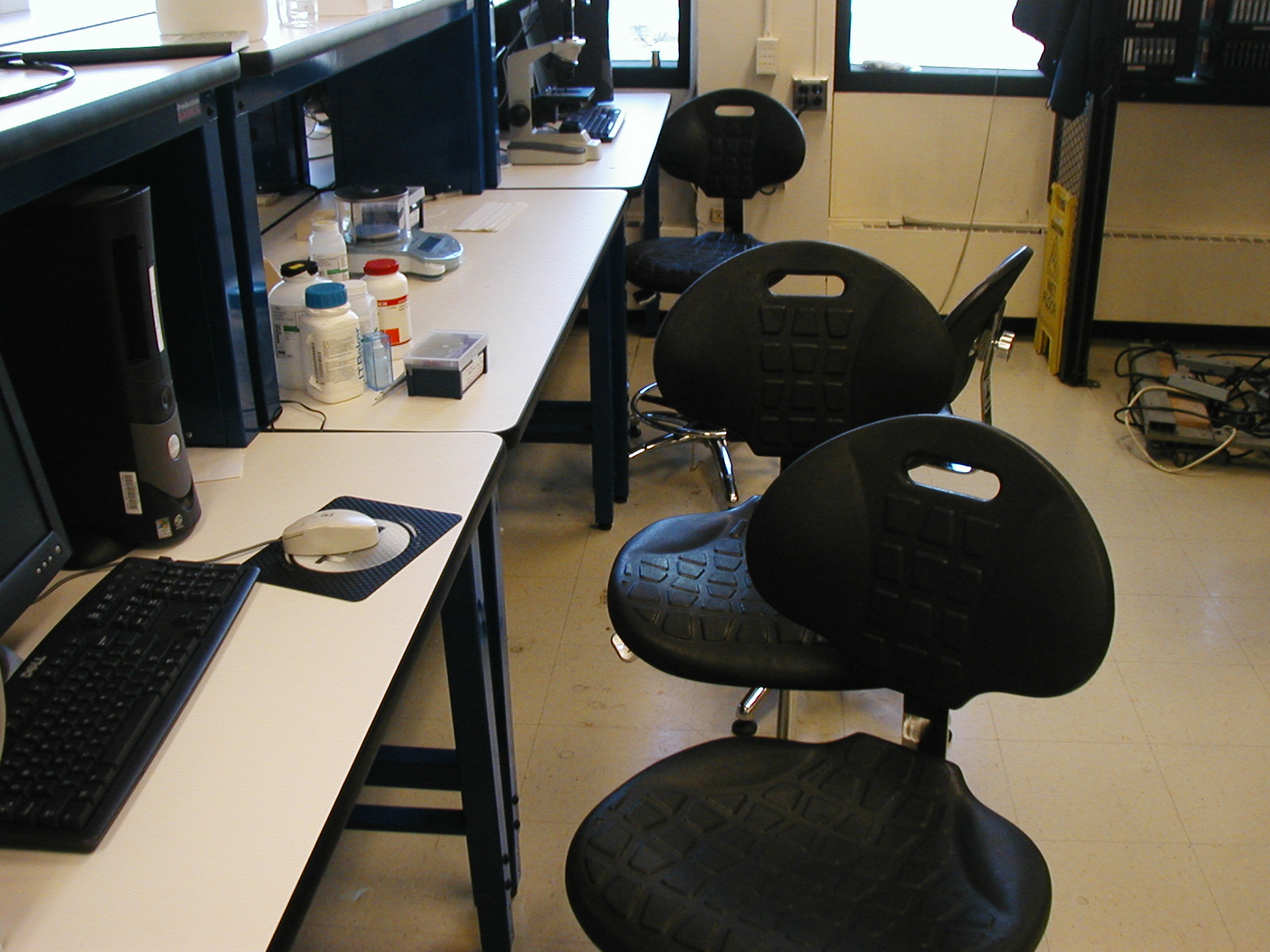
Nice furniture in these labs.
|
 |
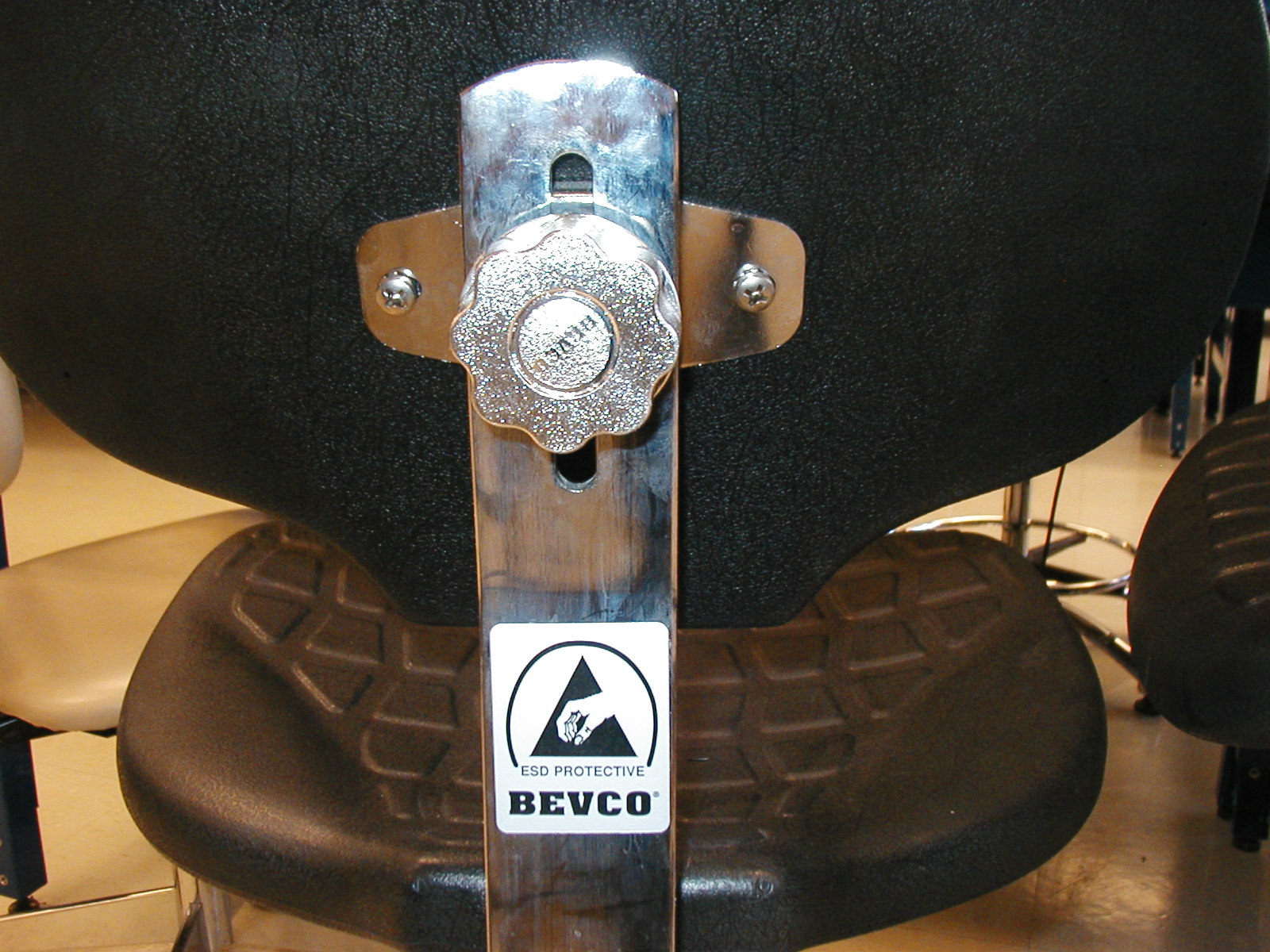
Closeup of furniture: ESD
protective (probably expensive, not all furniture was this nice)
|
 |
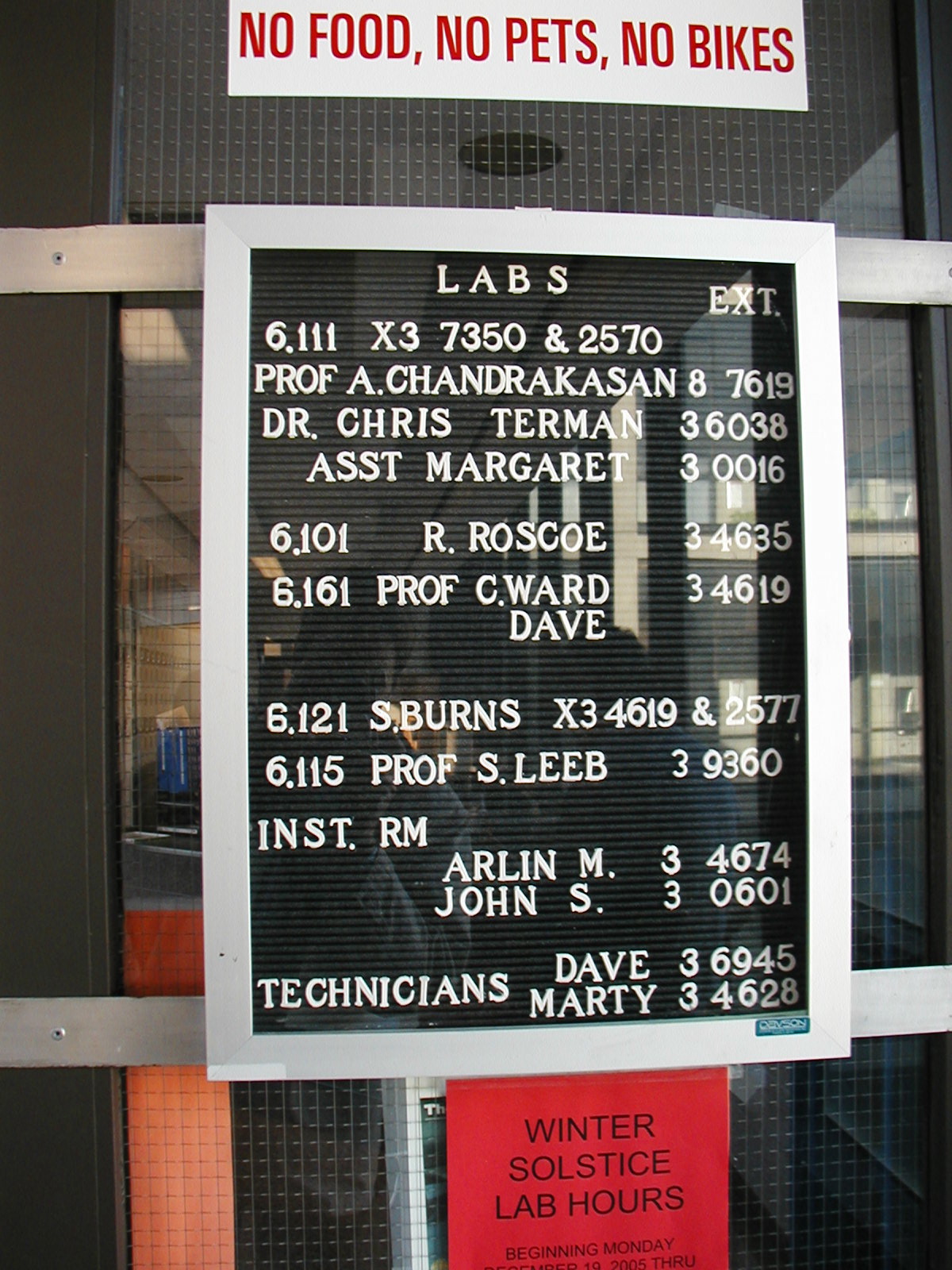
Labs had directories for courses using labs that semester,
and associated faculty and assisting staff and technicians.
|
 |
Bonus!
Tour of Prof. Chandrakasan's research lab.
|
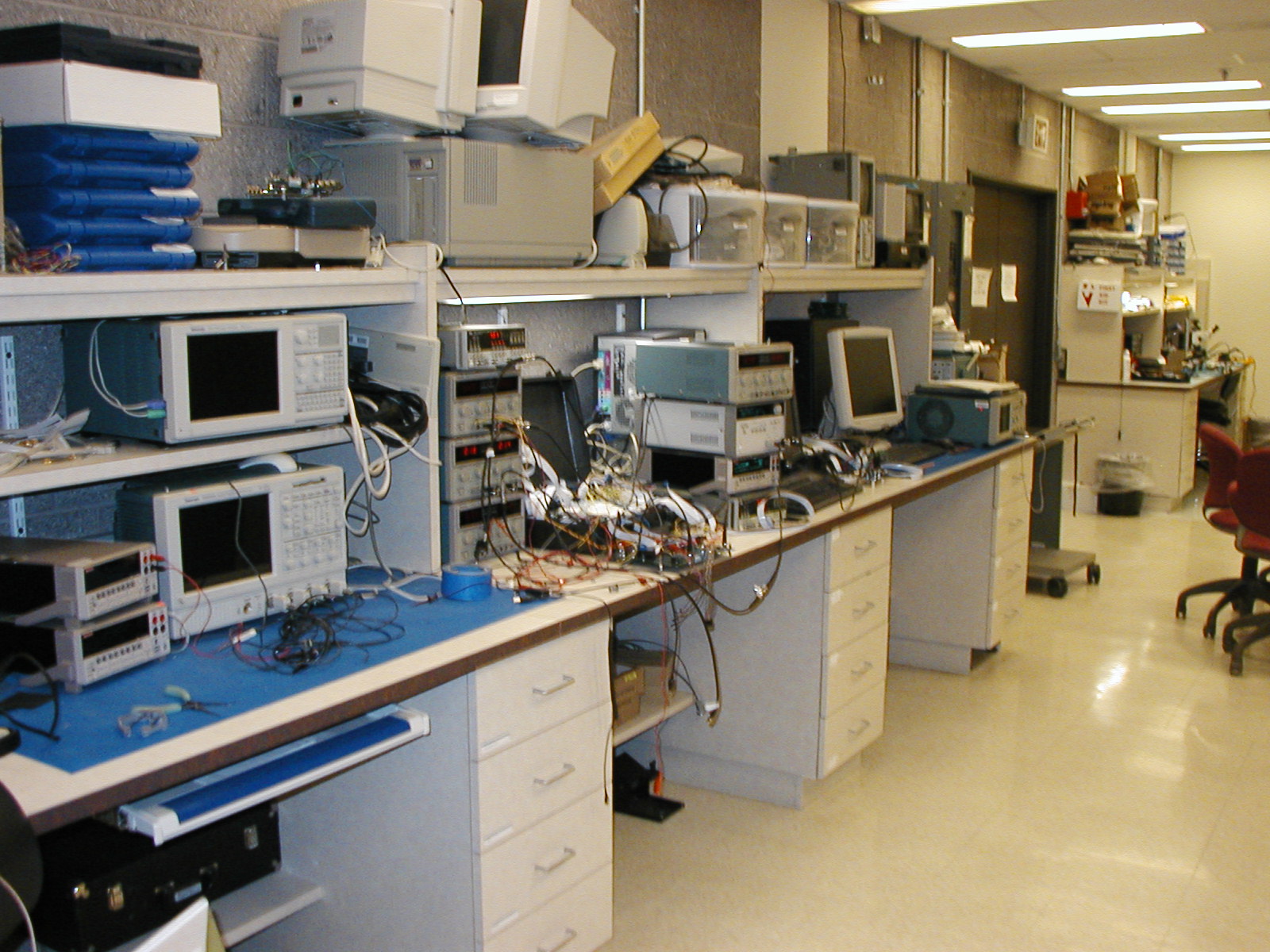
Prof.
Chandrakasan's research lab. Not shown is the cubicle farm
for his 20 PhD students.
|
 |
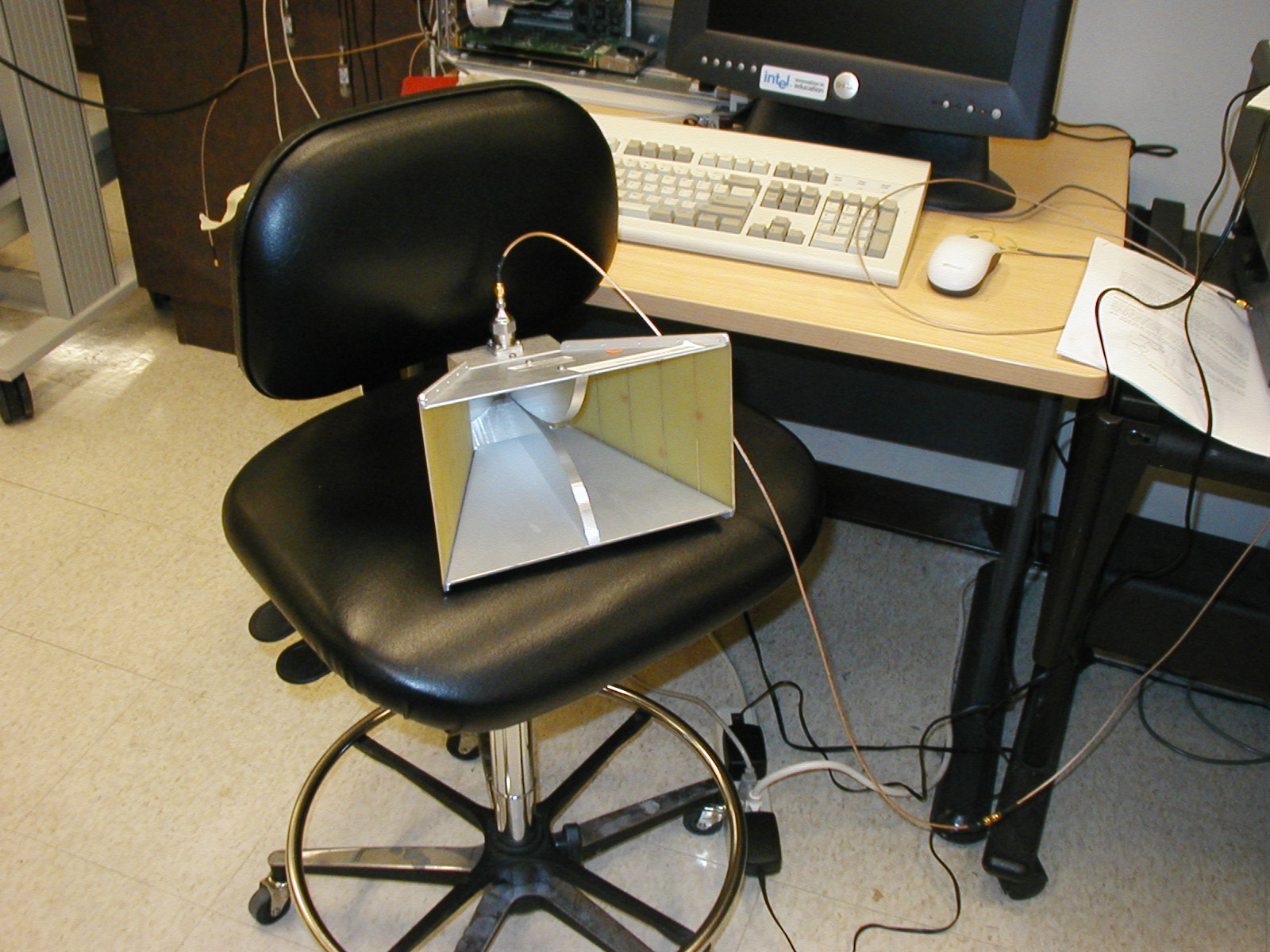
An ultrawideband
antenna, comfortably seated.
|
 |
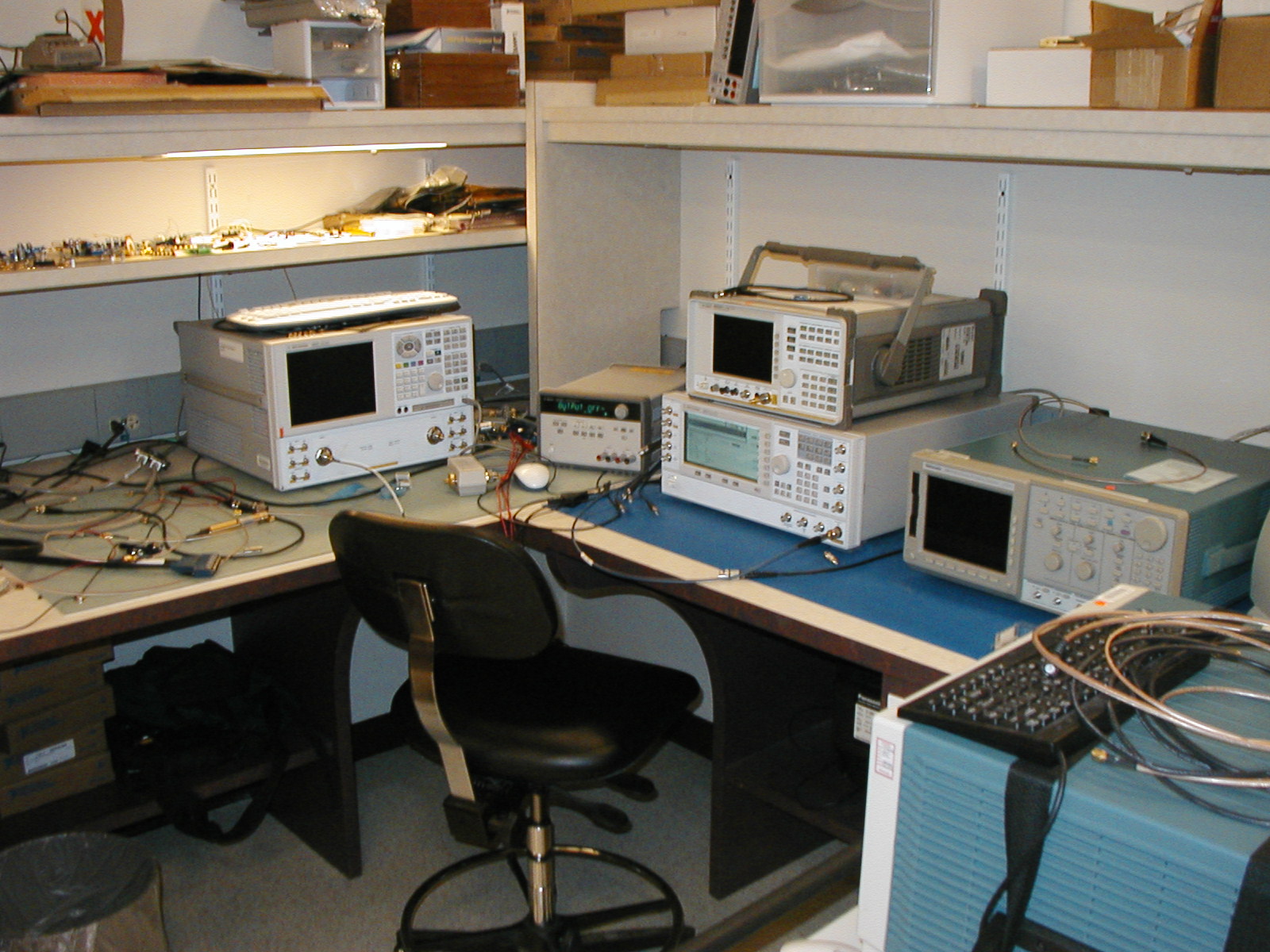
Expensive test equipment.
|
 |
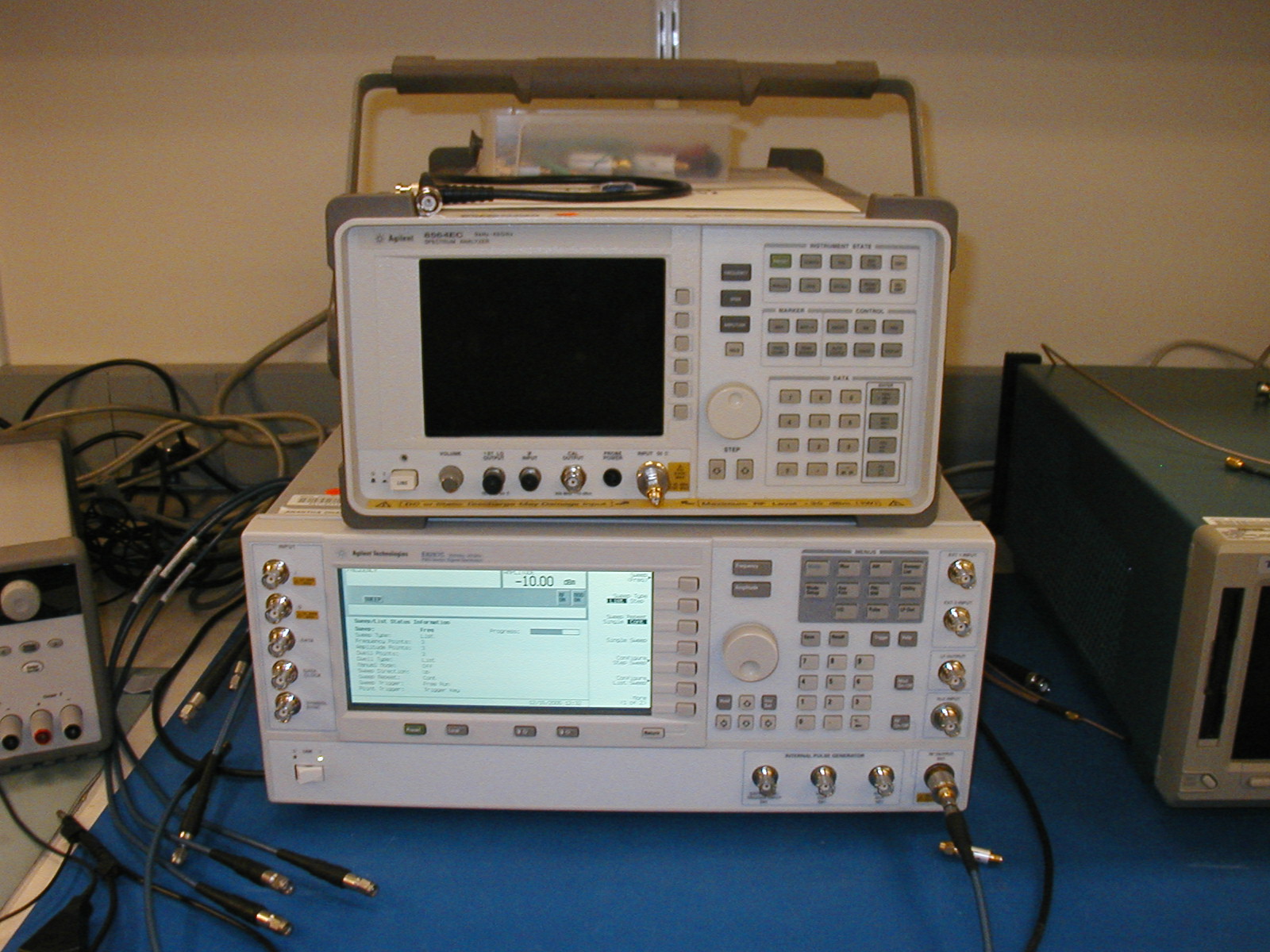
More expensive test equipment.
|
 |
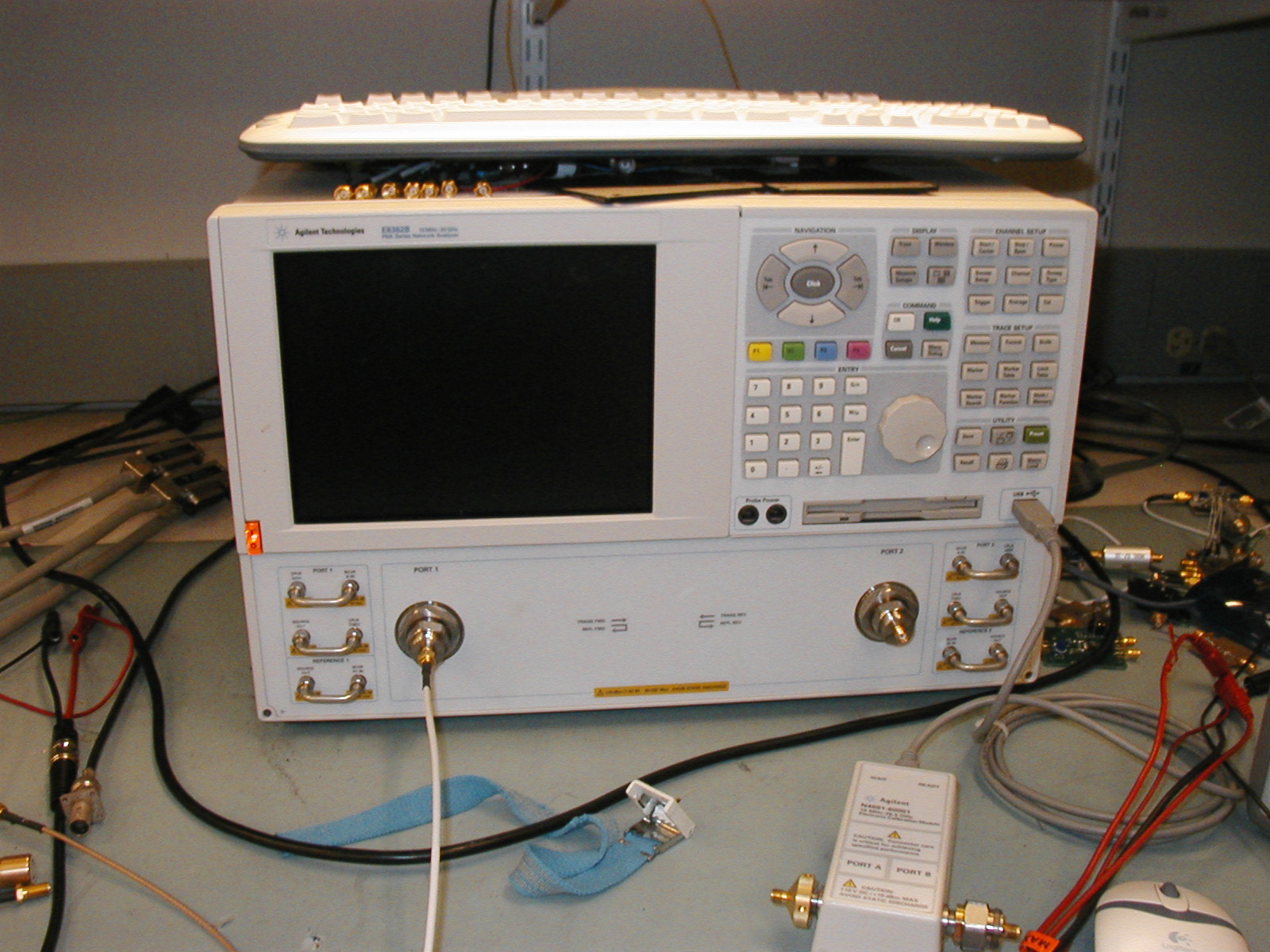
Even more expensive test equipment.
|
 |
This
concludes our tour! Back to main lab
upgrade page.
|